Pipe & Nipples
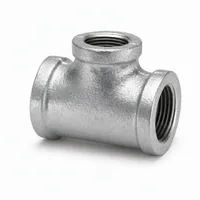
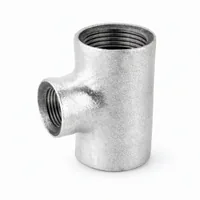
GI Reducing Tee 15 mm
| Type | Sand / shot blasting spare |
|---|---|
| Fitment | Confirm make & model |
| Material | As per drawing / OEM |
| MOQ | 1 pc |
| Warranty | As applicable |
| Availability | Confirmed on enquiry |
| Delivery | Domestic & export |
- Tested before dispatch
- Demo / site visit
- Installation support
- GST invoice
Sizes & Price
Compare size and fitment — then get the best price.
| Size | Fits | Material | Best for | |
|---|---|---|---|---|
| StandardPopular | Common models | As specified | Replacement | |
| Heavy duty | Production lines | As specified | Long life |
Specifications
Technical details for planning, quotation and supply.
| Product | GI Reducing Tee 15 mm |
|---|---|
| Product Name | GI Reducing Tee |
| Nominal Size | 15 mm |
| Material | Galvanized Iron (GI) |
| Fitting Type | Reducing Tee |
| Thread Standard | BSP (likely, needs confirmation) |
| Pressure Rating | Needs confirmation |
| Compatible Equipment | Abrasive blasting compressed air lines, shot blasting machine piping, dust collector manifolds |
| Packing | Standard industrial packing (needs confirmation on bulk quantity options) |
Product description
Details buyers use to confirm grade, use and supply.
Role of a GI Reducing Tee in Abrasive Blasting Systems
In a typical abrasive blasting setup, a network of pipes delivers compressed air and abrasive media from a pot to the blast nozzle. A reducing tee is used when a branch line requires a smaller diameter than the main header. For instance, a 15 mm branch might feed a secondary blast station, a pressure gauge line, or a pneumatic control circuit. Using a reducing tee eliminates the need for an additional reducer fitting, saving space and reducing potential leak points.
The galvanized iron construction offers a practical balance of strength and corrosion resistance. While not as chemically resistant as stainless steel, GI fittings are widely used in compressed air and non-potable water lines within industrial environments. The zinc coating helps prevent rust when the fitting is exposed to moisture or condensation, which can occur in air lines during continuous blasting operations.
Key Selection and Compatibility Considerations
Before ordering a GI Reducing Tee 15 mm, verify the following points to ensure it fits your equipment and application:
- Thread Standard: Confirm whether your system uses BSP (British Standard Pipe), NPT (National Pipe Thread), or another standard. Mismatched threads will cause leaks or damage.
- Run and Branch Sizes: The 15 mm designation typically refers to the nominal bore of the main run or the branch. Clarify the exact dimensions of all three ports with your supplier.
- Pressure Rating: Ensure the fitting's pressure class matches or exceeds your system's maximum operating pressure. Compressed air lines in blasting often operate between 6 and 8 bar (90-120 psi).
- Media Compatibility: If the tee will carry abrasive media directly, consider the wear rate. GI fittings are best suited for air-only lines or media lines with low velocity and gentle bends.
About SPA2Z — Your Source for GI Reducing Tee 15 mm
SPA2Z is a supplier of industrial spare parts focused on the abrasive blasting, shot blasting, and surface preparation sectors. We understand that a single failed pipe fitting can shut down a production line. Our role is to help you source the correct GI Reducing Tee 15 mm quickly and with the technical details you need to make a confident decision.
When you enquire with SPA2Z, we support you with:
- Confirmation of available dimensions, thread types, and wall thicknesses for the 15 mm reducing tee.
- Guidance on whether a GI fitting is suitable for your specific application, or if an alternative material should be considered.
- Competitive quotation and information on bulk order options for maintenance, repair, and operations (MRO) stock.
Contact SPA2Z today to request a quote or enquire about compatibility for the GI Reducing Tee 15 mm.
Applications
Where these spares are commonly fitted.
Compressed Air Branch Lines
Creates a 15 mm branch from a larger compressed air header to supply a secondary blast station or pneumatic control circuit.
Dust Collector Manifolds
Used in ducting to connect a smaller diameter extraction point to a main dust collection pipe in a blasting room.
Abrasive Feed Piping
Can be used in low-velocity abrasive feed lines where a smaller branch is needed, subject to wear rate assessment.
FAQ
How do I know which size to choose?
Will this spare part fit my machine?
Can I order more than one piece?
How do I get the price and delivery time?
Related products
Related spares and machine parts.