Thermal Spray Gun > Coating Powder
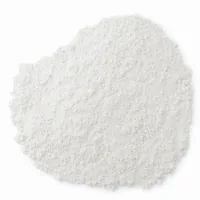
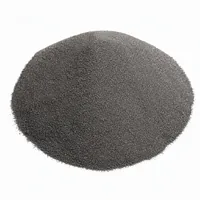
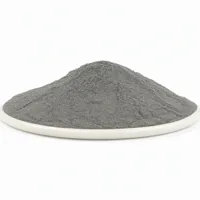
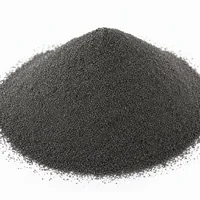
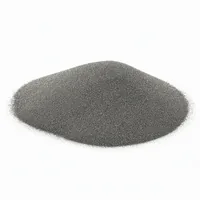
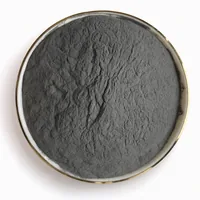
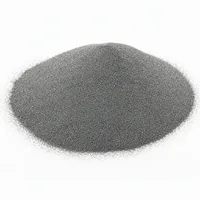
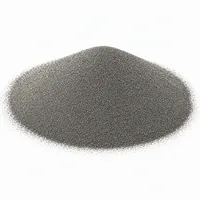
Nickel-Chrome Powder [-140+325]
| Powder | Thermal spray powder |
|---|---|
| Mesh | Multiple meshes |
| Process | HVOF / plasma |
| Pack | Sealed packs |
| MOQ | 1 pack |
| Availability | Confirmed on enquiry |
| Delivery | Domestic & export |
- Tested before dispatch
- Demo / site visit
- Installation support
- GST invoice
Mesh & Price
Compare mesh and packing — then request price.
| Mesh | Density | Process | Best for | |
|---|---|---|---|---|
| −140 +325Popular | — | HVOF / plasma | Popular mesh | |
| −325 | — | Plasma | Fine coat |
Specifications
Technical details for planning, quotation and supply.
| Product | Nickel-Chrome Powder [-140+325] |
|---|---|
| Material | Nickel-Chrome (NiCr) Alloy |
| Product Form | Thermal Spray Powder |
| Mesh Size | -140+325 (approx. 44–105 µm) |
| Morphology | Spherical / Spheroidal (typical for thermal spray) |
| Suitable Processes | HVOF, Plasma Spray, Flame Spray |
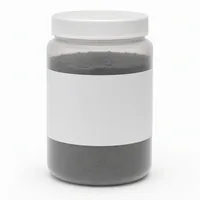
| Pack Sizes | 5 kg tin, 10 kg tin, 25 kg pail |
| Nominal Chemistry (Ni:Cr) | 80:20 or 50:50 (grade-dependent) |
| Coating Hardness | Grade-dependent; confirm on enquiry |
| Availability | Ex-stock or short lead time; confirm on enquiry |
Product description
Details buyers use to confirm grade, use and supply.
Why Nickel-Chrome for Thermal Spray?
Nickel-chrome (NiCr) alloys are widely specified as bond coats and build-up layers in thermal spraying. The chromium content promotes the formation of a protective oxide scale at elevated temperatures, while the nickel matrix provides toughness and adhesion. Typical coating characteristics include good resistance to oxidation, hot gas corrosion, and fretting wear. This makes NiCr a common choice under ceramic topcoats or as a standalone coating on shafts, journals, and boiler tubes.
Mesh Cut and Process Fit
The -140+325 mesh designation indicates a controlled particle size distribution: powder passes through a 140-mesh screen (approx. 105 microns) and is retained on a 325-mesh screen (approx. 44 microns). This mid-range cut flows smoothly through powder feeders and melts consistently in the thermal spray jet. It is compatible with combustion-driven processes (HVOF, flame spray) and plasma spray systems. If your equipment requires a tighter or coarser cut, let us know during the enquiry — we can discuss available alternatives.
Selection and Handling Tips
- Process match: Confirm your gun model and nozzle configuration before ordering. HVOF, plasma, and flame each have different thermal histories, and powder feed behaviour matters.
- Storage: Keep powder containers sealed and stored in a dry, temperature-stable environment. Moisture pickup can cause feeding inconsistencies and coating porosity.
- Trial batch: For new applications, start with a smaller pack size to validate deposition efficiency and coating microstructure before committing to volume.
About SPA2Z — Your Source for Nickel-Chrome Powder [-140+325]
SPA2Z is a practical industrial supplier focused on surface preparation and coating consumables. For buyers of Nickel-Chrome Powder [-140+325], we simplify the procurement process: you tell us your spray process, substrate, and performance targets, and we respond with a clear quotation for the appropriate grade. We do not push unnecessary variants or overcomplicate the conversation.
Our role is to connect you with coating powders that match your equipment and application, backed by straightforward commercial terms. If you need a different mesh cut, a specific lot size, or technical guidance on process compatibility, reach out through the enquiry form. We are here to support your coating operations with reliable supply and honest advice.
Applications
Where this powder is commonly sprayed.
Bond Coats for Ceramic Topcoats
Applied as an intermediate layer under alumina or zirconia topcoats to improve adhesion and thermal stress accommodation.
Corrosion Protection
Used on boiler tubes, chemical processing equipment, and structural steel exposed to hot gases or corrosive atmospheres.
Dimensional Restoration
Builds up worn shafts, journals, and bearing housings prior to final machining, offering good machinability and bond strength.
Fretting and Wear Resistance
Protects mating surfaces subjected to low-amplitude oscillatory motion, common in aerospace and power generation components.
FAQ
Which mesh size should I choose?
Which spray processes are supported?
Can I order a sample or bulk powder?
Can you share a certificate or material data sheet?
Related products
Related powders and coating consumables.