Thermal Spray Gun > Coating Wires
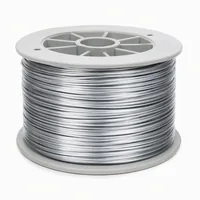
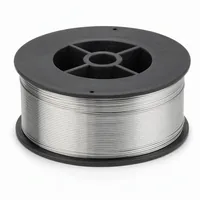
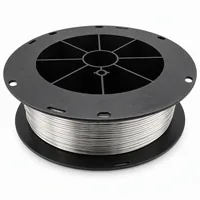
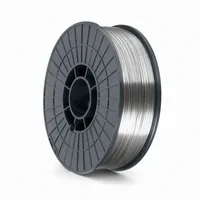
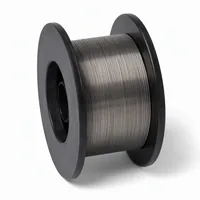
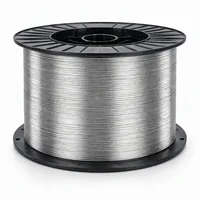
Nickel Alloy Spray Wire 2.0 mm
| Wire type | Thermal spray wire |
|---|---|
| Diameter | Multiple sizes |
| Process | Arc / flame spray |
| Spool | Standard spools |
| MOQ | 1 spool |
| Availability | Confirmed on enquiry |
| Delivery | Domestic & export |
- Tested before dispatch
- Demo / site visit
- Installation support
- GST invoice
Sizes & Price
Compare diameter and spool — then get the best price.
| Diameter | Spool | Process | Best for | |
|---|---|---|---|---|
| 1.6 mm | 15 kg | Arc spray | General coating | |
| 2.0 mmPopular | 15 kg | Arc spray | Popular size | |
| 3.2 mm | 15 kg | Arc spray | Heavy build-up |
Specifications
Technical details for planning, quotation and supply.
| Product | Nickel Alloy Spray Wire 2.0 mm |
|---|---|
| Product Type | Thermal Spray Wire |
| Base Material | Nickel Alloy |
| Wire Diameter | 2.0 mm |
| Spray Process Compatibility | Arc Spray, Flame Spray (Confirmed on enquiry) |
| Pack Options | 15 kg Spool, 20 kg Spool, 25 kg Spool, Coil Pack |
| Alloy Grade | Confirmed on enquiry |
| Melting Point | Dependent on alloy grade |
| Coating Purpose | Corrosion Resistance, Oxidation Resistance, Dimensional Restoration |
| Availability | Subject to stock confirmation |
Product description
Details buyers use to confirm grade, use and supply.
Understanding Nickel Alloy Spray Wire for Industrial Coating
Thermal spraying with nickel alloy wire is a proven method for applying protective and restorative coatings. The process involves feeding the wire into a spray gun, where it is melted by an electric arc or an oxy-fuel flame. A compressed gas stream then atomizes the molten material and propels it onto a grit-blasted substrate, where the particles rapidly solidify to form a lamellar coating.
The 2.0 mm diameter is a common choice for many mid-to-high-output spray guns. It provides a stable feed and a good deposition rate, making it efficient for coating large areas or building up significant thickness. The performance of the coating—its porosity, bond strength, hardness, and corrosion resistance—is directly linked to the alloy's chemistry. Common nickel alloy families used for spray wire include pure nickel, nickel-chromium, nickel-copper, and nickel-chromium-iron grades, each offering a distinct set of properties for different service conditions.
Key Selection Considerations
Choosing the correct nickel alloy spray wire requires a clear understanding of the intended application. A wire that excels in resisting high-temperature oxidation may not be the optimal choice for a submerged seawater corrosion application. Key factors to discuss with our team include:
- Service Environment: The primary corrosive agent, operating temperature range, and any mechanical wear factors.
- Base Material: The composition of the substrate being coated, as this affects bond compatibility and surface preparation requirements.
- Spray Process: Confirming compatibility with your specific arc spray or flame spray equipment model.
- Coating Requirements: Target thickness, desired hardness, and acceptable porosity levels for the finished coating.
About SPA2Z — Your Partner for Nickel Alloy Spray Wire
SPA2Z supports industrial coating operations by supplying nickel alloy spray wire in the widely used 2.0 mm diameter. We understand that surface preparation and coating are interconnected processes, and a reliable wire supply is critical to maintaining your project timelines and coating quality. Our focus is on connecting you with the correct alloy grade for your specific thermal spray application, whether it's for corrosion protection, dimensional restoration, or surface engineering.
We offer this wire in practical pack sizes, including 15 kg, 20 kg, and 25 kg spools, to suit different scales of operation. Our role is to provide a straightforward procurement path: you specify your alloy grade, diameter, and quantity, and we provide a competitive quotation. For technical compatibility checks or to request a sample for a trial run, please contact our sales team.
Applications
Where this coating wire is commonly used.
Corrosion Protection
Applying a durable nickel alloy barrier to steel structures, tanks, and components exposed to corrosive industrial atmospheres, fresh water, or chemical media.
Dimensional Restoration
Rebuilding worn shafts, bearing journals, pump sleeves, and hydraulic rods back to their original dimensions before a final machining pass.
High-Temperature Oxidation Resistance
Protecting furnace parts, boiler tubes, and exhaust components from scaling and oxidation at elevated service temperatures.
Surface Engineering
Creating a specific surface chemistry on a lower-cost substrate, such as applying a nickel-chromium bond coat for a subsequent ceramic top coat.
FAQ
Which wire diameter should I choose?
Will this wire work with my arc or flame spray gun?
Do you supply spool or bulk quantities?
How do I get the price and delivery time for wire?
Related products
Related wires and coating consumables.