ABRASIVES GUIDE

Abrasive Media for Weld Joint Cleaning Before NDT

Getting a weld joint perfectly clean before non-destructive testing is a step where many fabrication shops lose time and confidence. The right abrasive choice p...

Published
13 Sep 2025
Category
Abrasives
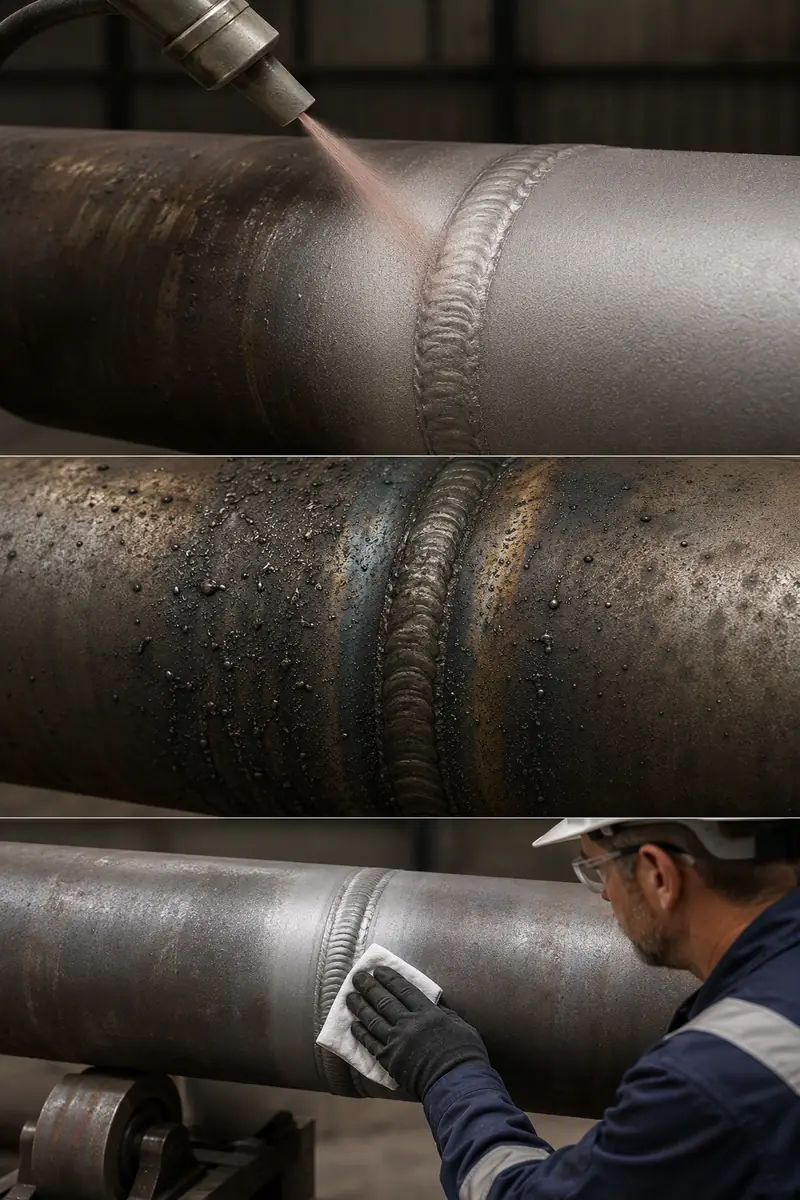
Multi-panel industrial collage showing garnet abrasive blasting of a weld joint for pre-NDT cleaning, including before, durin
FIG. 01A multi-panel view of the pre-NDT weld cle...

Featured image showing a professional multi-section collage of the abrasive blasting process for weld joint cleaning before non-destructive testing. Panels depict the initial contaminated weld, the garnet blasting operation, the resulting clean surface profile, and a quality control wipe test, highl

Introduction

Getting a weld joint perfectly clean before non-destructive testing is a step where many fabrication shops lose time and confidence. The right abrasive choice prevents false defect calls and rework, while the wrong one can hide cracks or contaminate…

Introduction

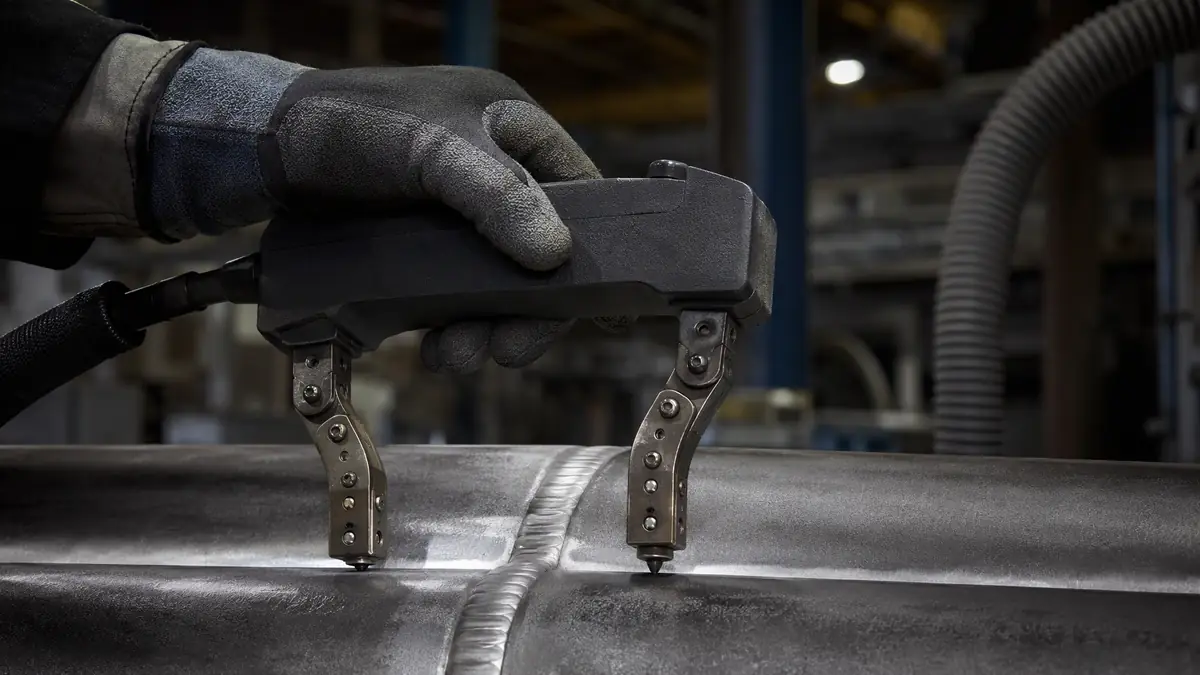
Inspector placing a magnetic particle yoke on a clean weld joint for NDT inspection in a fabrication shop.
A weld inspector applies a magnetic particle yoke to a weld joint cleaned with abrasive blasting, ensuring no surface defects are masked.

A close-up scene showing a quality control inspector performing magnetic particle inspection on a steel weld joint. The weld surface is perfectly clean and matte, prepared by garnet blasting to remove spatter and scale, ensuring accurate flaw detection without false indications.

Inspector placing a magnetic particle yoke on a clean weld joint for NDT inspection in a fabrication shop.

When a weld inspector places a magnetic particle yoke or applies penetrant to a joint, the cleanliness of that surface directly determines whether a dangerous flaw is found or missed. Weld spatter, heat tint, mill scale, and smeared metal can all mask discontinuities or create misleading indications. For quality control teams in fabrication, the question is not whether to clean the weld before NDT — it is which abrasive medium will remove the contaminants without damaging the surface or leaving residue that interferes with the inspection method.

This article explains how abrasive blasting fits into pre-NDT surface preparation, what makes an abrasive suitable or unsuitable for the task, and how to select media that supports reliable MPI and DPI results without introducing new problems.

Why Weld Cleaning Before NDT Matters

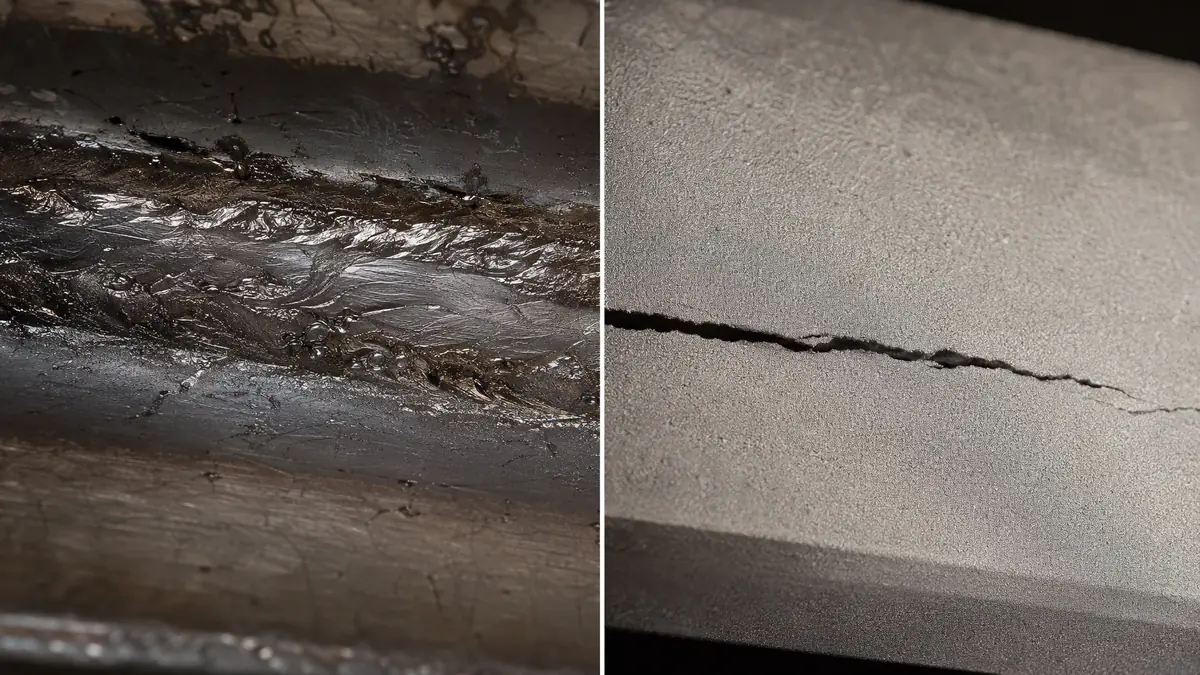
Macro comparison of a weld crack masked by smeared metal versus a clean crack visible after abrasive blasting.
A visual comparison showing how smeared metal can hide a weld defect, while proper abrasive cleaning reveals the crack for NDT.

A detailed macro comparison image illustrating the importance of weld cleaning before NDT. One side shows a surface-breaking crack hidden by smeared metal and residue, while the other shows the same type of crack clearly visible on a surface properly prepared by garnet abrasive blasting.

Macro comparison of a weld crack masked by smeared metal versus a clean crack visible after abrasive blasting.

Non-destructive testing methods — particularly Magnetic Particle Inspection (MPI) and Dye Penetrant Inspection (DPI) — rely on a clean, open surface to function correctly. Any barrier between the test medium and the base metal can produce a false negative, meaning a real defect goes undetected.

The main problems that inadequate cleaning creates include:

  • Smeared metal masking crack openings. Grinding or wire brushing can fold surface metal over a discontinuity, sealing it from penetrant or magnetic particles.
  • Residue filling surface-breaking flaws. Oil, grease, paint, or loose corrosion products physically block the test medium from entering a defect.
  • Background interference in MPI. Surface irregularities, tight scale, or embedded abrasive particles create magnetic flux leakage patterns that mimic real indications.
  • Contamination of penetrant materials. Residues left on the surface can react with penetrant chemicals, reducing their performance or causing false indications.

For these reasons, codes such as ASME Section V and AWS D1.1 specify that surfaces must be clean and free of contaminants before NDT. The challenge is achieving that cleanliness without altering the surface in ways that compromise the inspection.

What Makes Weld Cleaning for NDT Different

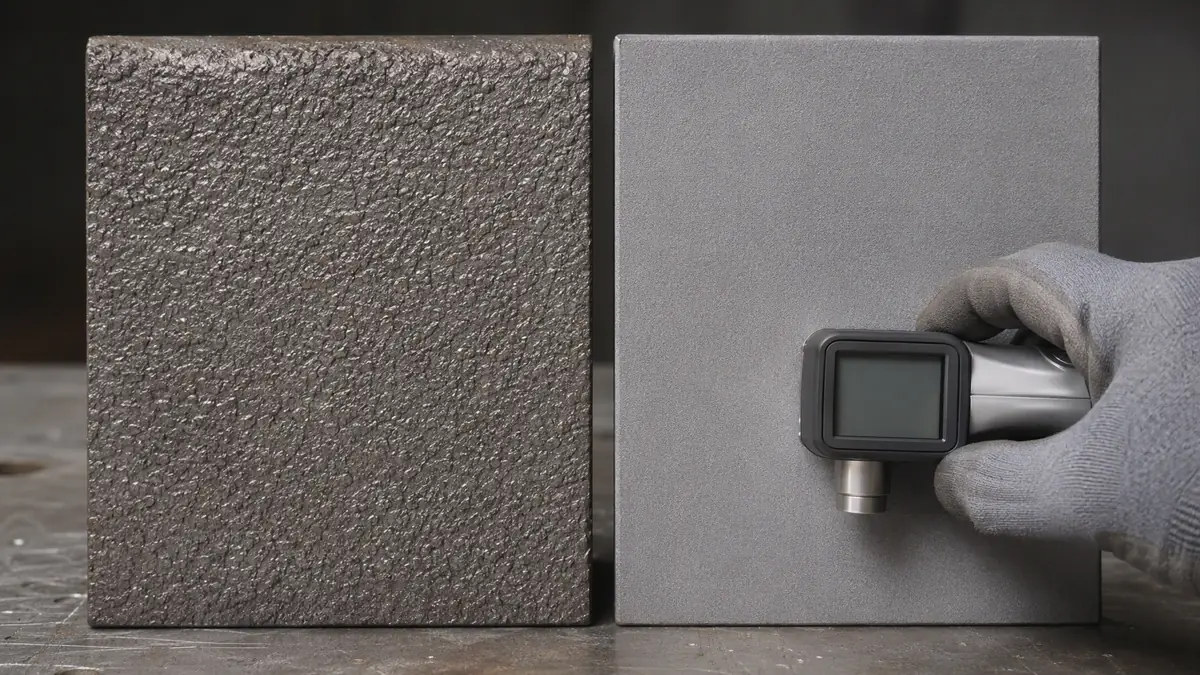
Comparison of steel surface profiles: aggressive steel grit finish versus gentle garnet blast finish for NDT prep.
A comparison of surface profiles: the aggressive steel grit finish risks peening, while the garnet finish is ideal for pre-NDT cleaning.

An industrial comparison image showing two different abrasive blasting results on steel. The left sample shows a rough, peened surface from aggressive steel grit blasting, which can mask defects. The right sample shows a smooth, matte, low-profile finish from garnet blasting, suitable for sensitive

Comparison of steel surface profiles: aggressive steel grit finish versus gentle garnet blast finish for NDT prep.

Abrasive blasting for pre-NDT cleaning is not the same as blasting for coating adhesion. The objectives are fundamentally different, and the selection criteria shift accordingly.

Gentle but Effective Cleaning

The goal is to remove only the unwanted layer — spatter, oxide, light scale — without peening the surface, eroding the weld profile, or embedding abrasive particles. Aggressive blasting can close crack openings by plastic deformation of the surface metal, a phenomenon well known in NDT circles. This is why heavy steel grit or coarse aluminum oxide, while excellent for coating prep, can be counterproductive before an inspection.

Non-Conductive, Non-Magnetic Requirements for MPI

When preparing for Magnetic Particle Inspection, any abrasive that leaves a conductive or magnetic residue on the surface can create background indications. Steel grit and steel shot are generally unsuitable for MPI prep because residual iron particles will respond to the magnetic field, producing a confusing pattern of false indications. Non-metallic or non-magnetic mineral abrasives are the standard choice.

Surface Profile Considerations

Blasting for coating adhesion intentionally creates a surface profile (anchor pattern) measured in microns. For NDT prep, a significant profile is usually undesirable — it can trap penetrant or create background noise in MPI. The ideal abrasive cleans without cutting a deep profile.

Abrasive Media Options for Pre-NDT Weld Cleaning

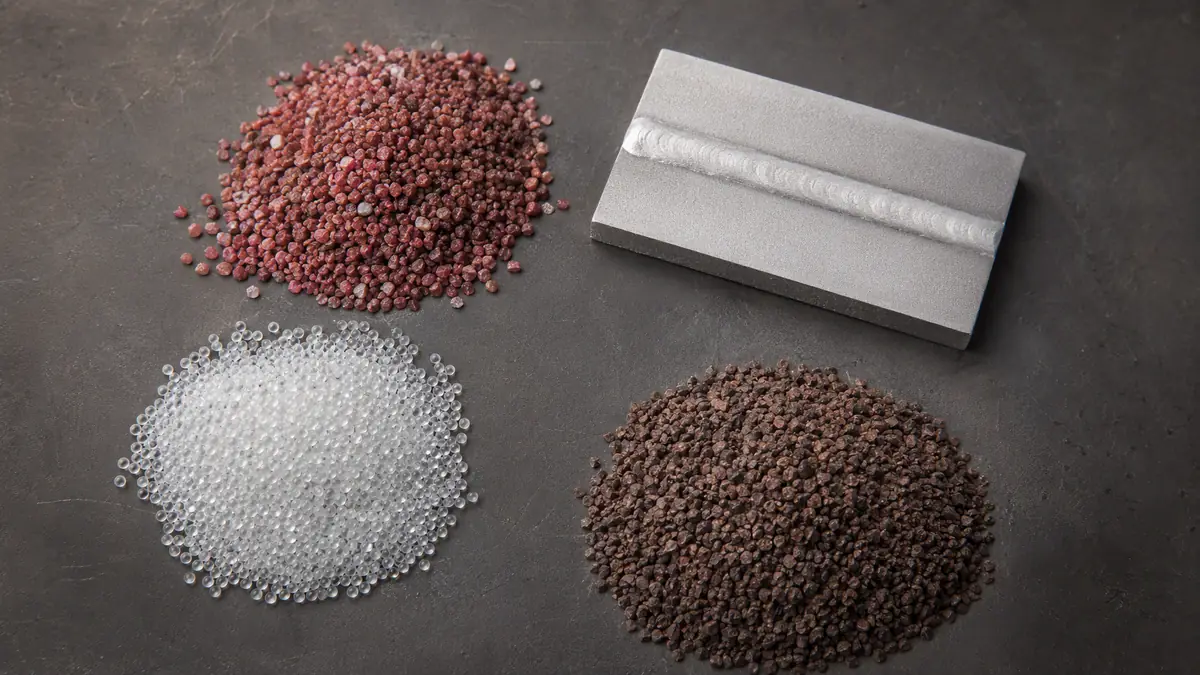
Top-down view of garnet, glass bead, and aluminum oxide abrasive media samples for weld cleaning.
Samples of non-magnetic abrasive media—garnet, glass bead, and aluminum oxide—used for cleaning welds before non-destructive testing.

A flat lay photograph displaying different types of abrasive media suitable for pre-NDT weld cleaning. The image shows piles of garnet, glass beads, and aluminum oxide on a steel surface, with a clean blasted weld coupon placed next to the garnet, emphasizing the preferred media for MPI preparation.

Top-down view of garnet, glass bead, and aluminum oxide abrasive media samples for weld cleaning.

The following media types are commonly used or considered for weld cleaning before NDT. Each has specific characteristics that make it suitable or unsuitable depending on the inspection method and the weld condition.

Garnet Abrasive

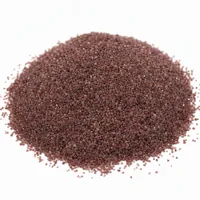
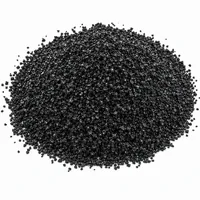
Garnet is one of the most widely used abrasives for pre-NDT cleaning. It is a naturally occurring mineral with moderate hardness and a sub-angular grain shape that cleans effectively without excessive metal removal.

Advantages for NDT prep:
- Non-magnetic and non-conductive — leaves no residue that interferes with MPI
- Produces a relatively low surface profile compared to harder abrasives
- Good for removing light to moderate mill scale, rust, and heat tint
- Available in fine grit sizes suitable for gentle cleaning

Limitations:
- Fractures on impact, generating dust that must be managed
- Less effective on heavy, adherent scale or thick spatter
- Single-use in most operations; not recycled

Aluminum Oxide

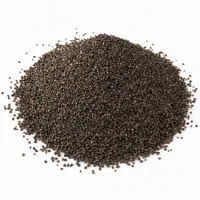
Aluminum oxide is a hard, angular synthetic abrasive that cuts aggressively. Its use in NDT prep requires careful control.

Advantages:
- Fast cleaning action on tough contaminants
- Available in a wide range of grit sizes, including fine grades
- Can be recycled multiple times in contained blasting systems

Limitations and cautions:
- High hardness can erode weld profiles and peen the surface if used at excessive pressure
- Can embed in softer base metals, potentially interfering with penetrant testing
- Electrically non-conductive but the sharp profile it creates can trap penetrant
- Best suited for hard metals and situations where a light touch is maintained

Glass Bead

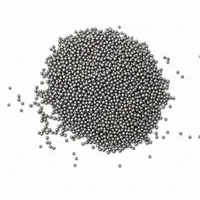
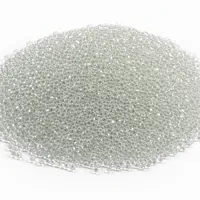
Glass bead blasting is a low-aggression method that cleans by peening rather than cutting. It is often used for delicate cleaning tasks.

Advantages:
- Produces minimal surface profile change
- Does not embed readily in the surface
- Non-magnetic and chemically inert
- Leaves a smooth, bright finish that aids visual inspection

Limitations:
- Ineffective on heavy scale, thick spatter, or tenacious oxides
- Can peen over fine crack openings if used at high pressure or with large bead sizes
- Relatively slow compared to angular abrasives
- Not suitable for heavy-duty pre-cleaning before blasting with another medium

Walnut Shell / Organic Media

Crushed walnut shell and similar organic media are used when the priority is removing surface deposits without any metallic alteration.

Advantages:
- Extremely gentle — will not change the surface profile
- Non-magnetic and non-conductive
- Effective for removing light carbon deposits, smoke residue, and loose contamination

Limitations:
- Cannot remove scale, rust, or spatter
- Very slow cleaning rate
- Primarily useful as a final cleaning step, not for initial weld preparation

Steel Grit and Steel Shot (Generally Not Recommended for MPI Prep)

Steel abrasives are the workhorses of surface preparation for coatings, but they are problematic before NDT — especially MPI.

Why they are usually unsuitable:
- Ferromagnetic particles embed in the surface and create false MPI indications
- Aggressive cutting action can peen over crack openings
- Residual dust is conductive and magnetic

If steel abrasives are used for initial heavy cleaning, a secondary blast with a non-metallic medium is essential before any MPI inspection. For DPI, the risk is lower but the surface profile created may still trap penetrant and complicate interpretation.
Selection Factors: How to Choose the Right Abrasive

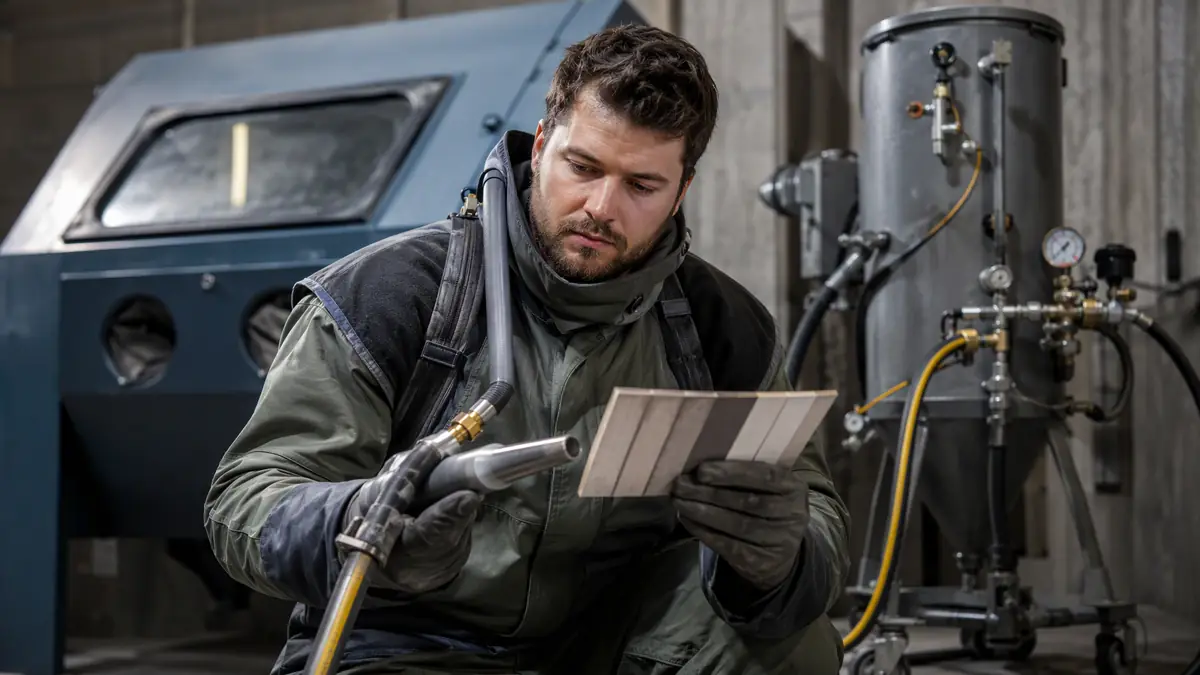
Blasting technician pausing to evaluate abrasive selection criteria for weld cleaning before NDT.
A technician considers the correct abrasive media and parameters for cleaning a weld joint prior to non-destructive testing.

An industrial photograph of a blasting technician in protective gear, holding a blast nozzle and pausing to consider the selection factors for pre-NDT weld cleaning. The scene includes a blast pot and a clean work area, emphasizing the careful decision-making required to choose the right non-magneti

Blasting technician pausing to evaluate abrasive selection criteria for weld cleaning before NDT.

Choosing an abrasive for pre-NDT weld cleaning involves balancing several practical factors. The following decision criteria apply to most fabrication environments.

1. Inspection Method

This is the first and most important filter.

  • For MPI: Use only non-magnetic, non-conductive abrasives. Garnet, aluminum oxide (with caution), glass bead, or organic media. Never use steel grit or shot as a final step.
  • For DPI: The magnetic constraint does not apply, but surface profile and residue still matter. A fine garnet or glass bead finish works well. Avoid coarse profiles that trap penetrant and produce background staining.
  • For visual inspection (VT): Any abrasive that produces a clean, uniform surface is acceptable, provided it does not mask defects.

2. Base Metal Hardness

Softer metals such as aluminum and austenitic stainless steel are more susceptible to abrasive embedding and surface peening. Finer grit sizes and lower blast pressures are essential. Glass bead or fine garnet are often preferred for these materials.

Harder alloy steels and carbon steels can tolerate more aggressive media, but the risk of peening over fine cracks remains if pressure and grit size are not controlled.

3. Type and Condition of Contamination

  • Light heat tint and surface oxidation: Fine garnet or glass bead at moderate pressure
  • Weld spatter and light mill scale: Medium-fine garnet or fine aluminum oxide
  • Heavy scale and rust: May require a two-step process — initial cleaning with a more aggressive abrasive, followed by a gentle final blast with NDT-compatible media
  • Oil and grease: Must be removed by solvent cleaning before blasting; abrasive blasting alone will spread the contamination

4. Blast Pressure and Stand-off Distance

Even a suitable abrasive can cause problems if applied incorrectly. As a general guideline for NDT prep:

  • Use the lowest pressure that achieves effective cleaning — typically in the range of 40–60 psi (confirm against your equipment specifications)
  • Maintain a longer stand-off distance than used for coating prep to reduce impact energy
  • Use a fan pattern rather than concentrating on one spot

5. Grit Size Selection

Finer grit sizes produce less surface disturbance. For pre-NDT cleaning, mesh sizes in the range of 80–120 are common starting points, with finer grades used for softer metals or more sensitive inspections. Coarser grits (below 60 mesh) are generally too aggressive unless the weld has heavy scale that cannot be removed otherwise.

Common Mistakes and How to Avoid Them

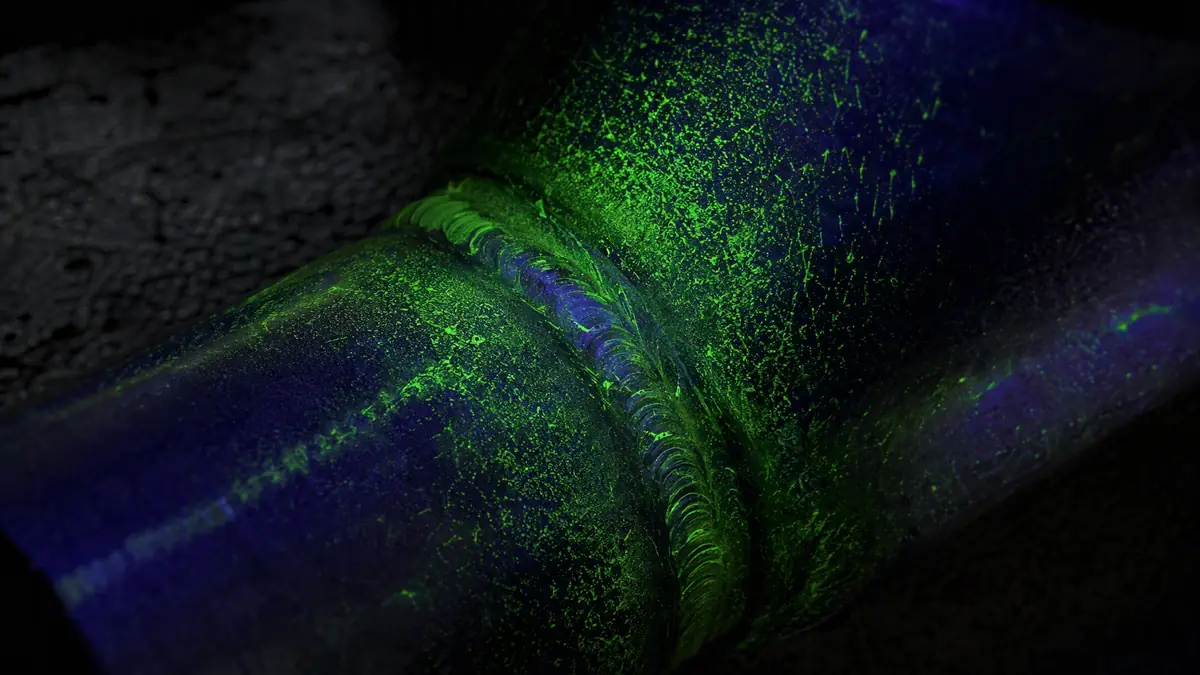
Close-up of a weld showing false magnetic particle indications caused by embedded iron from steel grit blasting.
A common mistake: using steel grit before MPI leaves embedded iron particles that create false defect indications under UV light.

A close-up industrial image showing a weld joint under UV light during magnetic particle inspection. The surface displays a bright, scattered fluorescent pattern caused by embedded iron contamination from prior steel grit blasting, illustrating a critical error in pre-NDT surface preparation that le

Close-up of a weld showing false magnetic particle indications caused by embedded iron from steel grit blasting.

Using Steel Abrasives Before MPI

This is the most frequent and serious error. Even if the surface looks clean, embedded iron particles will light up under magnetic particle inspection. If steel abrasives must be used for initial cleaning, a thorough secondary blast with garnet or glass bead is non-negotiable. Always verify with a white cloth wipe test or a preliminary MPI check on a sample area.

Over-Blasting and Peening

The temptation to "make it really clean" by increasing pressure or dwell time can backfire. Excessive blasting can peen the surface, mechanically closing fine crack openings. The weld looks clean, but the inspection is compromised. Train operators to stop when the contamination is removed, not when the surface looks polished.

Skipping Solvent Pre-Cleaning

Abrasive blasting does not remove oil and grease effectively — it smears them across the surface and drives them into crevices. Any weld suspected of having oily contamination must be solvent-cleaned before blasting. This is a requirement in most NDT procedures and is easily overlooked in shops that rely solely on blasting for surface prep.

Using Contaminated or Worn Abrasive

Recycled abrasive that has broken down into fine dust or become contaminated with previous blasting residues (paint chips, rust, oil) will deposit those contaminants onto the weld surface. For critical NDT prep, use fresh abrasive or verify that recycled media is clean and properly graded.

Inadequate Post-Blast Cleaning

After blasting, loose abrasive particles and dust must be removed from the weld and heat-affected zone. Compressed air blow-off, vacuuming, or a clean lint-free cloth wipe are typical methods. Residual dust can interfere with both MPI and DPI.

Verifying the Result

Before proceeding with NDT, a simple verification step can prevent wasted inspection time:

  • Visual check: The surface should be uniformly clean, free of spatter, scale, and visible residue. Weld toes should be clearly defined.
  • White cloth wipe test: Wipe the blasted surface with a clean white cloth. Any dark residue indicates inadequate cleaning.
  • MPI pre-check (for critical work): Apply a magnetic particle examination to a small area of the cleaned weld. If background indications appear, re-clean before conducting the full inspection.

Conclusion

Blasting welds before NDT is a precision task that demands the right abrasive, applied with the right technique. The core principle is simple: remove only what interferes with the inspection, and leave nothing behind that creates false indications. For MPI, non-magnetic mineral abrasives such as garnet are the reliable default choice. For DPI, a fine, low-profile finish supports accurate penetrant performance. Glass bead offers a gentle alternative for delicate work, while aluminum oxide can be used with careful control on harder metals.

The cost of getting this wrong — missed defects, rejected inspections, unnecessary rework — far exceeds the cost of using the correct abrasive and procedure. Quality control teams that treat pre-NDT cleaning as a defined process step, with specified media and parameters, consistently achieve more reliable inspection outcomes.

Frequently Asked Questions

Why can't I use steel grit to blast a weld before magnetic particle inspection?

Steel grit is ferromagnetic, meaning tiny particles can embed in the weld surface. When the MPI yoke is applied, these residual particles react to the magnetic field and create a background of false indications that look like cracks. This makes it nearly impossible to distinguish real defects from the contamination left by the blasting process.

What is the safest abrasive choice for preparing aluminum welds for dye penetrant inspection?

Glass bead or fine garnet are the safest choices for aluminum. Because aluminum is a soft metal, aggressive abrasives like coarse aluminum oxide can easily embed in the surface or peen over fine crack openings. Glass bead provides a gentle cleaning action that removes surface contamination without altering the weld profile or trapping penetrant.

Can abrasive blasting hide cracks instead of revealing them?

Yes, this is a common problem known as 'peening over.' If the abrasive is too aggressive, the blast pressure is too high, or the nozzle is held too close, the impact can plastically deform the surface metal. This smears the metal over the crack opening, sealing it shut so that penetrant or magnetic particles cannot enter, leading to a false negative result.

What grit size should I start with for general pre-NDT weld cleaning?

A mesh size in the 80 to 120 range is a good starting point for most pre-NDT cleaning applications. Finer grits produce a lower surface profile and are less likely to cause peening. You should use the finest grit that effectively removes the specific contamination, and always use the lowest practical blast pressure.

Is garnet or aluminum oxide better for removing weld spatter before an inspection?

Garnet is generally the better first choice for NDT prep. While aluminum oxide cuts faster, its sharp, hard particles create a more aggressive profile that can trap penetrant and it poses a higher risk of embedding in the surface. Garnet cleans effectively but is more forgiving, leaving a finish that is less likely to interfere with MPI or DPI results.

Do I need to degrease the weld before blasting it?

Yes, always remove oil and grease with a solvent cleaning step before abrasive blasting. If you blast over an oily surface, the abrasive will drive the contamination deeper into the metal and spread it across a wider area. Abrasive blasting is for removing solid contaminants like scale and spatter, not for degreasing.

Solution

Selecting the right abrasive for your NDT preparation workflow depends on your base metal, inspection method, and existing blast equipment. Review the garnet, aluminum oxide, and glass bead options available in the abrasives range to match the recommendations in this guide to specific product specifications. For confirmation of compatibility with your application or to discuss grit size selection, contact the technical sales team for guidance tailored to your fabrication environment.

Get a quote

Get a quote

Tell us what you need. We reply within one business day.

Sending…
Need a price? Ask us here.