Sizing Bulk Bags and Inventory Turns for Abrasive Media
Keeping a blasting operation running requires a steady supply of abrasive media — but holding too much stock ties up cash and floor space, while holding too lit...
Published
20 Mar 2026
Category
Abrasives
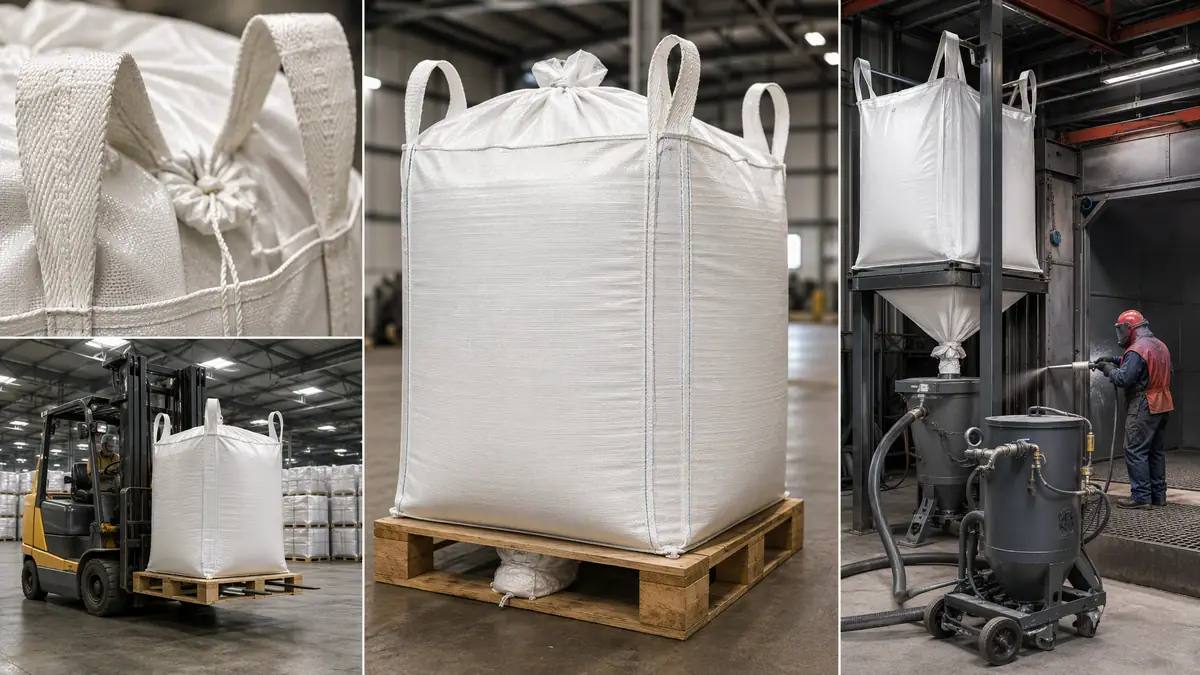
FIG. 01Balancing bulk bag sizing and inventory tu...
Professional multi-panel editorial collage illustrating abrasive bulk bag inventory management. Dominant panel shows a 1,000 kg steel grit FIBC. Supporting panels display bag construction details, forklift handling in a warehouse, and a blast room application consuming media. Represents the full pro
01 Introduction
Keeping a blasting operation running requires a steady supply of abrasive media — but holding too much stock ties up cash and floor space, while holding too little stops production. This article helps stores and procurement teams decide the right bu…
02 Introduction
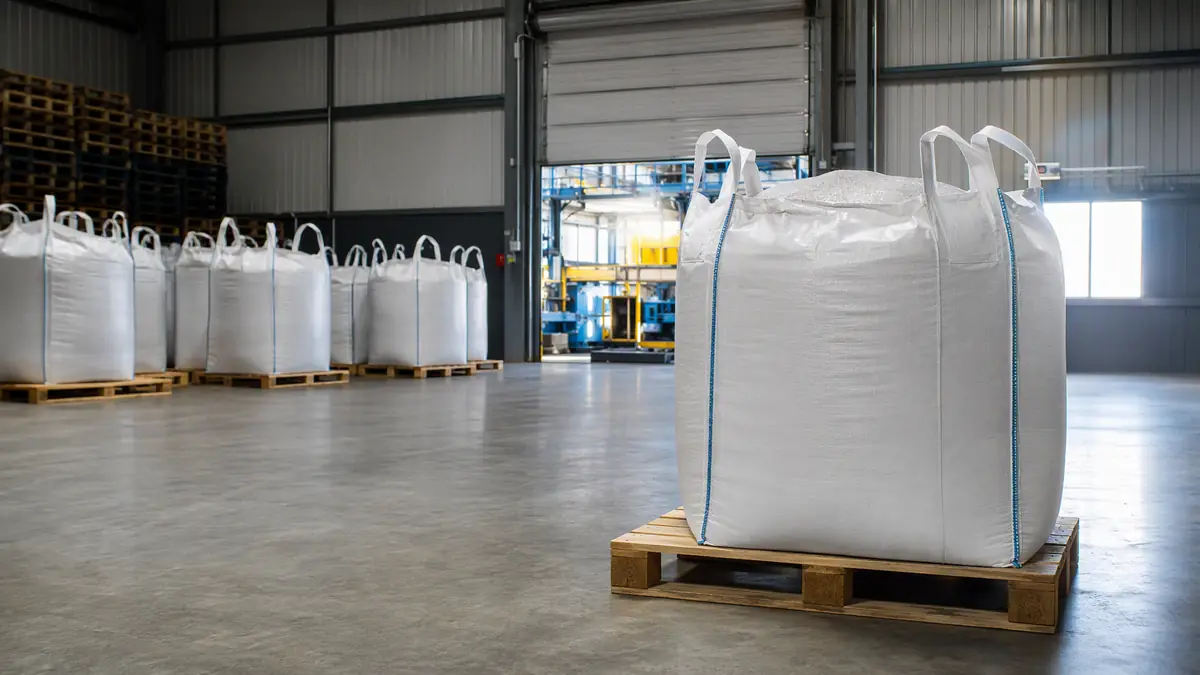
The core tension of abrasive inventory: keeping enough media on hand to avoid stoppages without tying up excessive cash and floor space.
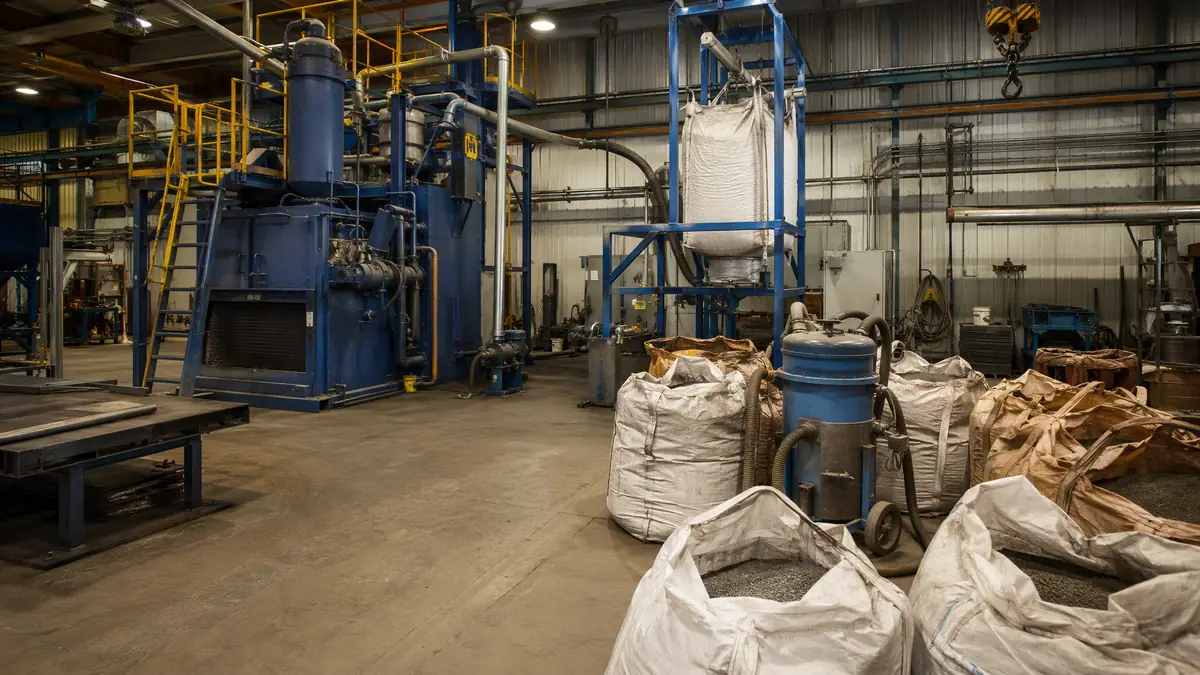
A photorealistic industrial warehouse scene showing a single 1,000 kg bulk bag of steel grit on a pallet in the foreground, with additional bags neatly stored in the background. The composition visually represents the procurement challenge of balancing stock availability against capital and storage
Every abrasive blasting operation faces the same tension: you need enough media on hand to avoid a line stoppage, but you cannot afford to warehouse mountains of steel grit or garnet that sit idle for months. The solution sits at the intersection of two numbers — the bulk bag size you order and the inventory turns you target.
For procurement managers and stores teams, this is not an academic exercise. A stockout of steel grit on a fabrication line or inside a shot blast machine can idle an entire shift. Conversely, ordering jumbo bags without a consumption forecast leads to cash locked in inventory, material degradation from moisture, and handling hazards from oversized loads.
This guide walks through how to size your abrasive bulk bag inventory, set reorder points, and align order quantities with real usage — so you can keep production running without overstocking.
03 What Is Abrasive Bulk Bag Inventory?
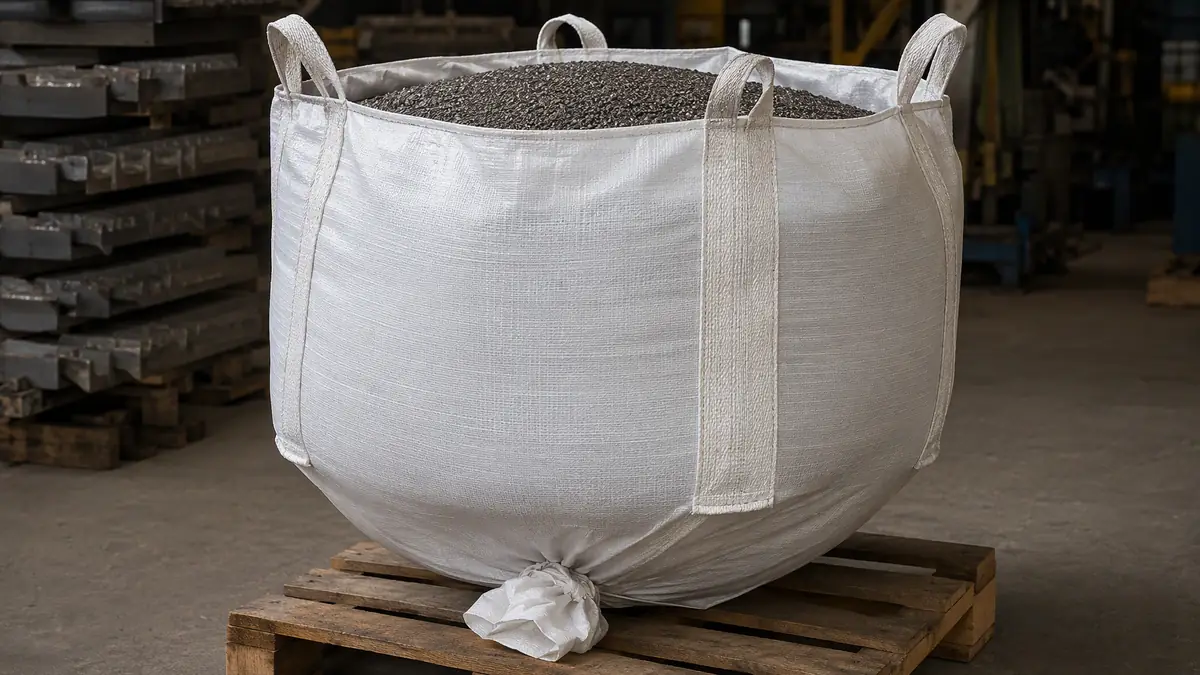
A 1,000 kg FIBC of steel grit: the standard unit for high-volume blast media inventory, defined by its capacity, lifting loops, and discharge spout.
Photorealistic close-up of a 1,000 kg white polypropylene bulk bag filled with steel grit on a pallet. The image highlights the reinforced lifting loops, woven fabric texture, and bottom discharge spout, illustrating the physical characteristics of abrasive bulk bag inventory.
An abrasive bulk bag — often called a jumbo bag, FIBC (Flexible Intermediate Bulk Container), or supersack — is a large woven polypropylene bag typically holding 500 kg to 2,000 kg of blast media. Common sizes for steel grit, garnet, aluminum oxide, and copper slag range from 1,000 kg to 1,500 kg per bag.
Bulk bag inventory refers to the number of these bags you keep on hand, either in raw storage or staged near blast pots and shot blast machines. It is distinct from smaller 25 kg bag stock, which is often used for low-volume or touch-up work.
Managing this inventory means answering three practical questions:
How many bags do you consume per week or month?
How many bags should you hold as safety stock?
What is the minimum order quantity (MOQ) your supplier requires — and does it match your consumption?
04 Why Inventory Turns Matter for Abrasive Media
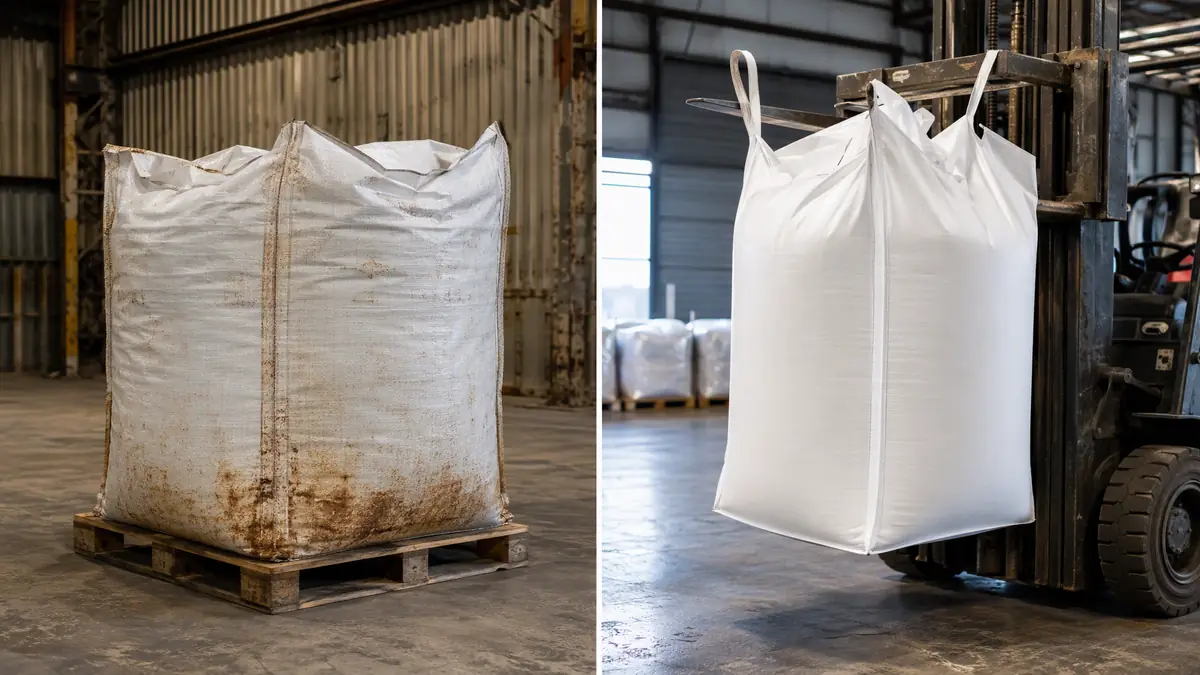
Faster inventory turns prevent media degradation like rust and clumping, protecting working capital and ensuring consistent blasting performance.
A photorealistic split-scene in a warehouse contrasting a degraded bulk bag showing signs of rust from long storage with a pristine bag being actively handled by a forklift. The image visually communicates the importance of inventory turns for maintaining abrasive media condition and optimizing work
Inventory turn is a simple ratio: annual consumption divided by average stock on hand. If your shop uses 24 bulk bags of steel grit per year and you keep 4 bags in stock on average, you are turning that inventory 6 times per year.
Why does this matter for abrasives specifically?
Working capital: A bulk bag of steel grit or aluminum oxide represents a significant outlay. Higher turns mean less cash tied up in consumables.
Media condition: Abrasives stored too long — especially in humid environments — can clump, rust (in the case of steel grit), or absorb moisture that disrupts metering and flow. Faster turns reduce degradation risk.
Floor space: Jumbo bags occupy roughly one pallet position each. Slow-moving stock consumes valuable warehouse or shop-floor real estate.
Supplier reliability: Understanding your turn rate helps you negotiate realistic delivery schedules and avoid emergency orders at premium freight costs.
A reasonable target for many medium-to-high-volume blasting operations is 6 to 12 inventory turns per year for standard media. Low-volume or specialty abrasives may turn more slowly, and that is acceptable — provided the storage conditions protect the material.
05 When Bulk Bag Ordering Works Well — and When It Does Not
Bulk bags excel with dedicated blast machines and consistent media, but create dead stock and clutter in job shops with frequent changeovers.
A photorealistic industrial fabrication shop scene contrasting two areas. One side shows a dedicated shot blast machine efficiently fed by a bulk bag system. The other side shows a cluttered area with multiple half-empty bulk bags of different media, illustrating the inefficiency of bulk ordering fo
Suitable applications for jumbo bag ordering
Dedicated blast rooms and shot blast machines running a consistent media type and grade (e.g., steel grit G40 in a Wheelabrator-style machine).
Contract blasters consuming several tonnes per month of a single specification.
Operations with forklift or overhead crane access to handle 1,000 kg+ loads safely.
Stable, repeatable production schedules where monthly consumption is predictable within a reasonable margin.
When bulk bag ordering is a poor fit
Job shops switching media frequently between profiles, substrates, or customer specifications — leftover half-bags become dead stock.
Facilities without mechanical handling equipment — a 1,500 kg bag cannot be moved manually.
Extremely low consumption (e.g., less than one bulk bag per quarter) — smaller 25 kg bags may reduce waste and storage headaches.
Trial or qualification runs on a new abrasive grade — commit to a bulk bag only after the media is proven in your process.
06 How to Size Your Bulk Bag Order Quantity
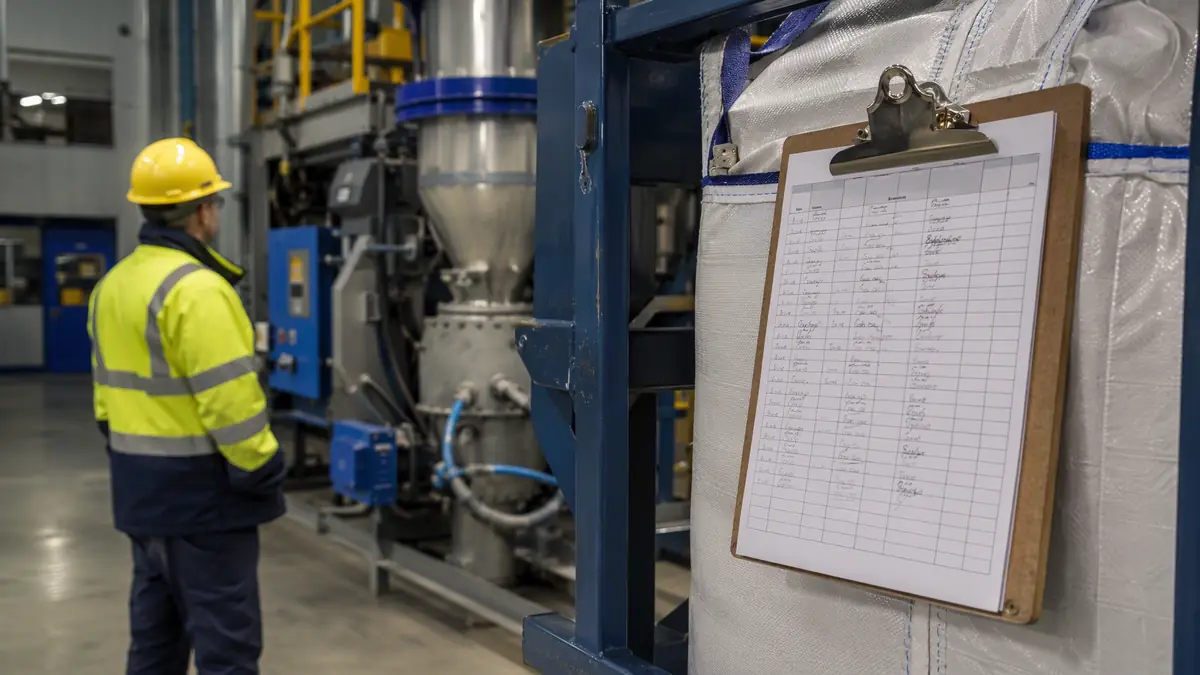
Accurate order sizing starts with shop-floor data: tracking blast machine run hours and media flow rates, not just purchase history.
A photorealistic close-up of a clipboard with a usage log attached to a bulk bag frame in an industrial setting. The background shows a worker observing a blast machine's metering valve. The image emphasizes the importance of tracking actual consumption data for sizing bulk bag orders.
The core calculation is straightforward, but the inputs require honest shop-floor data.
Step 1: Measure actual consumption
Do not rely on purchase history alone — it may reflect past stockouts or panic buying. Instead, track:
Blast machine run hours per week or month.
Media flow rate (kg per hour) for your metering valve or blast wheel setting.
Media reclaim and breakdown rate — steel grit fractures and turns to fines over multiple cycles, so net consumption is what you top up, not what you initially load.
A simple field method: record the date each bulk bag is opened and the date it empties. Average this over at least three bags to get a reliable consumption rate.
Step 2: Determine safety stock
Safety stock protects against two variables: consumption spikes and supplier delivery delays. For abrasives, consider:
Lead time variability: If your supplier quotes 7 days but occasionally takes 14, your safety stock should cover at least 14 days of consumption.
Demand variability: A large project or a rush order can double your weekly media use. Factor in the highest plausible weekly consumption, not just the average.
A conservative safety stock for abrasive media is 2 to 4 weeks of average consumption, adjusted upward if your supplier is distant or unreliable.
Step 3: Factor in the MOQ
Many abrasive suppliers set a minimum order quantity — often one full truckload, a specific number of bulk bags, or a minimum tonnage. If your calculated reorder quantity falls below the MOQ, you have a few options:
Negotiate: Some suppliers will split loads or offer mixed-product pallets if you have an ongoing relationship.
Combine orders: Order multiple media types or related consumables (nozzles, hoses) on the same shipment to meet the MOQ.
Accept slower turns: If the MOQ forces you to hold an extra bag or two, calculate whether the carrying cost is less than the premium for smaller-quantity sourcing.
Step 4: Set the reorder point
The reorder point is the inventory level that triggers a new purchase order. For abrasive bulk bags:
Reorder point = (average daily consumption × supplier lead time in days) + safety stock
When your on-hand stock hits this number, place the next order. This should arrive before you dip into safety stock under normal conditions.
07 Jumbo Bag Steel Grit Ordering: Practical Considerations
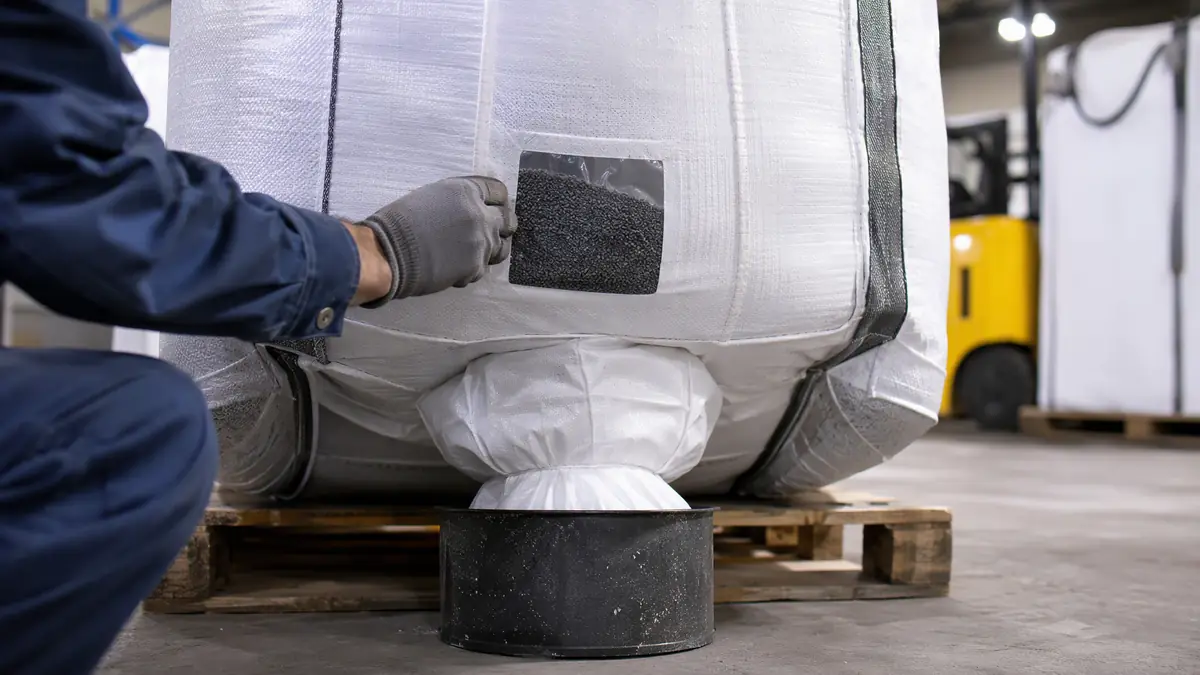
Steel grit ordering requires verifying grade, hardness, and bag integrity on every delivery to prevent costly application errors.
A photorealistic close-up in a warehouse receiving area showing a worker's gloved hand inspecting a newly delivered jumbo bag of steel grit. The focus is on verifying the bag's label, fabric integrity, and the dense metallic grit, emphasizing practical quality control steps for jumbo bag steel grit
Steel grit deserves special attention because it is one of the most common blast media ordered in bulk bags, and its characteristics affect inventory decisions.
Grade and hardness: Steel grit is specified by both size (e.g., G25, G40, G80) and hardness (e.g., GP, GL, GH). Ordering the wrong grade because a bag label was misread can scrap a batch of surface preparation. Verify the specification on every delivery against your purchase order and process requirement.
Bag integrity: Steel grit is dense and abrasive. Bulk bags must be rated for the weight and designed with a discharge spout that mates with your blast pot or transfer hopper. Inspect bags on receipt for tears, dampness, or UV degradation if stored outdoors.
Multi-machine operations: If you run multiple blast machines with different grit specifications, colour-code or label bulk bags clearly and store them in separated bays. Cross-contamination of grit sizes can alter surface profile and cause coating adhesion failures.
Supplier consistency: Grit from different manufacturers — even at the same nominal grade — can vary in particle size distribution, shape, and hardness. If you qualify a process with one source, switching suppliers may require re-validation. Factor this into your safety stock calculation; running out and buying from an alternate source on short notice introduces technical risk.
08 Common Mistakes That Disrupt Abrasive Inventory
Mistaking purchase history for consumption data
Orders reflect what you bought, not necessarily what you used. A bulk bag purchased six months ago might still be sitting half-full because a job was cancelled. Base reorder decisions on actual usage logs, not invoice dates.
Ignoring media breakdown in reclaim systems
In shot blast machines with magnetic separators and air wash systems, steel grit recycles many times before it breaks down to fines. Operators often underestimate how much usable media remains in the machine and over-order. Track top-up quantities, not just initial fills.
Treating all media as interchangeable for inventory planning
Steel grit, garnet, aluminum oxide, and copper slag have different densities, flow characteristics, and consumption rates. A 1,000 kg bag of garnet may last half as long as a 1,000 kg bag of steel grit in the same application. Size each media type separately.
Ordering to fill a container rather than to match consumption
The temptation to "top up the truck" to hit a freight break can result in a bulk bag sitting unopened for a year. If the carrying cost and degradation risk exceed the freight saving, it is a false economy.
Neglecting handling and storage constraints
A bulk bag requires a forklift or hoist. If your receiving area has limited overhead clearance or your racking cannot accommodate palletised tonne bags, you may need to decant into smaller containers — adding labour and contamination risk. Confirm handling capability before committing to jumbo bag ordering.
09 Evaluating Your Inventory Performance
Once you have set your bulk bag sizes and reorder points, track a few simple metrics to confirm the system is working:
Stockout incidents: Any occasion where production stopped waiting for media. Target: zero.
Actual vs. planned turns: If you targeted 8 turns but are achieving 4, investigate whether consumption is lower than expected or order quantities are too high.
Media condition at use: Check bulk bags opened after long storage for clumping, rust, or moisture. If found, reduce order quantity or improve storage.
Emergency order frequency: Count how many times per year you pay premium freight or buy from an alternate supplier. A rising trend signals that safety stock or lead time assumptions need adjustment.
Review these indicators quarterly and adjust reorder points when production volumes, product mix, or supplier lead times change.
10 Conclusion
Sizing abrasive bulk bag inventory is not about finding a universal formula — it is about aligning your order quantities and reorder triggers with the way your operation actually consumes media. Start with measured consumption data, build in realistic safety stock for your supplier's reliability, and respect the MOQ constraints without letting them dictate overstock.
A well-sized bulk bag programme keeps blast rooms and shot blast machines fed without interruption, frees up working capital, and reduces the risk of media degradation from prolonged storage. For procurement and stores teams, the payoff is straightforward: production continuity with the leanest inventory that the operation can safely sustain.
11 Frequently Asked Questions
How do I calculate the right reorder point for abrasive bulk bags?
The reorder point is calculated by multiplying your average daily media consumption by your supplier's lead time in days, then adding your safety stock. This number represents the inventory level at which you must place a new purchase order to avoid a stockout. It ensures the new shipment arrives before you begin consuming your reserve safety stock under normal conditions.
What is a good inventory turn rate for steel grit and garnet?
A reasonable target for standard media in medium-to-high-volume blasting operations is 6 to 12 inventory turns per year. This rate helps balance working capital, floor space, and media condition, as abrasives stored too long can clump or absorb moisture. Low-volume or specialty abrasives may turn more slowly, which is acceptable if storage conditions protect the material.
When should I avoid ordering abrasives in jumbo bags?
Jumbo bag ordering is a poor fit for job shops that switch media frequently, as leftover half-bags become dead stock. It is also unsuitable for facilities without forklifts or overhead cranes to handle 1,000 kg+ loads safely. Operations consuming less than one bulk bag per quarter are often better served by smaller 25 kg bags to reduce waste and storage issues.
How does the minimum order quantity (MOQ) affect my inventory sizing?
If your calculated reorder quantity falls below the supplier's MOQ, you may be forced to hold more stock than desired, slowing your inventory turns. You can address this by negotiating split loads with your supplier, combining orders for different media types on one shipment, or accepting slower turns if the carrying cost is lower than the premium for small-quantity sourcing.
What is the biggest mistake when tracking abrasive media consumption?
The most common mistake is using purchase history instead of actual consumption data to forecast needs. Orders reflect what you bought, not what you used, and a bag purchased months ago may still be sitting half-full. Accurate planning requires tracking when each bulk bag is opened and emptied to establish a reliable usage rate.
Why does steel grit require special attention in bulk bag inventory?
Steel grit is dense, abrasive, and specified by precise size and hardness grades; ordering the wrong specification can scrap surface preparation work. Its weight demands bags rated for the load with compatible discharge spouts. Additionally, grit from different manufacturers can vary in particle size distribution, so switching suppliers on short notice introduces technical risk to your process.
How can I verify my bulk bag inventory performance is on track?
You can evaluate performance by comparing your actual inventory turns against your target and monitoring how often you dip into safety stock. If you frequently consume safety stock, your reorder point or lead time assumptions may be too low. Regularly reviewing top-up quantities rather than initial machine fills also prevents over-ordering caused by ignoring media reclaim systems.
12 Solution
Review your last three months of abrasive consumption by grade and machine. Compare your current bulk bag order sizes and reorder frequency against the consumption data. If you are holding more than four to six weeks of stock without a clear reason — such as an unreliable supply chain or a seasonal production spike — there is likely an opportunity to tighten your inventory.
When you are ready to align your abrasive supply with your actual usage, compare the available media options and bulk packaging configurations on SPA2Z. Reach out to the team to discuss your consumption volumes, lead time requirements, and any MOQ constraints — they can help you structure an ordering plan that keeps production running without overstock.
13 Get a quote
Get a quote
Tell us what you need. We reply within one business day.
Recommended products
Catalogue products matched to this article. Ask for grade, quantity and destination.