Abrasive Suitability Matrix for Common Engineering Alloys
Choosing the wrong blast media for your alloy can embed contaminants, ruin corrosion resistance, or scrap expensive components. This matrix helps multi-metal fa...
Published
02 Apr 2025
Category
Abrasives
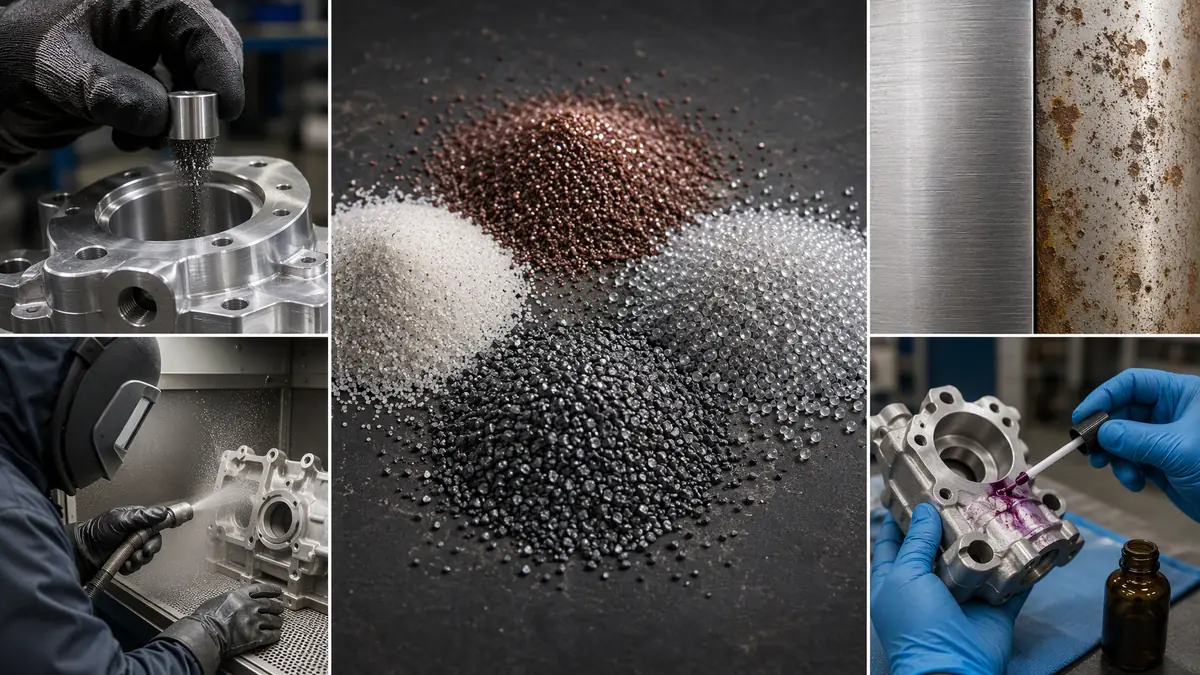
FIG. 01A visual guide to matching blast media wit...
Featured image for an article on abrasive suitability for engineering alloys. The multi-panel collage shows various blast media, a magnet test on a metal part, a comparison of clean versus pitted stainless steel, an operator blasting an aluminum component, and a ferroxyl test being performed for qua
01 Introduction
Choosing the wrong blast media for your alloy can embed contaminants, ruin corrosion resistance, or scrap expensive components. This matrix helps multi-metal fabricators match abrasive to aluminum, stainless, carbon steel, and titanium without guess…
02 Introduction
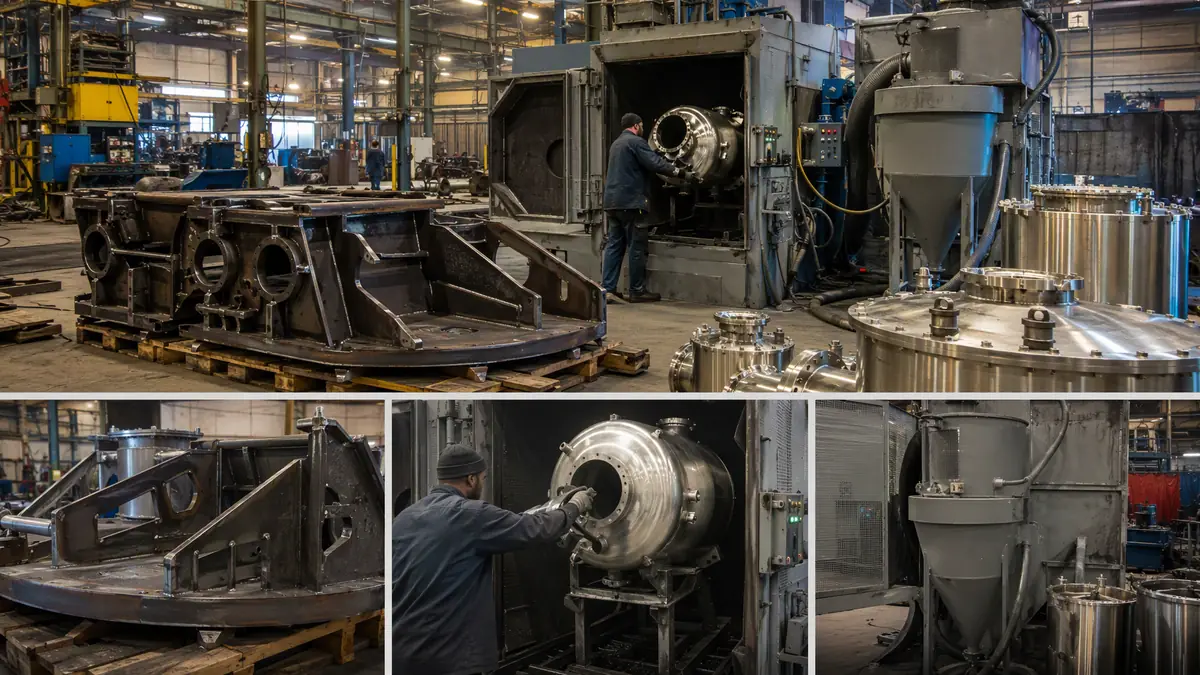
A typical multi-metal shop where carbon steel and stainless steel parts are processed using the same blast equipment, illustrating the core contamination challe
An industrial fabrication shop scene showing a carbon steel weldment and a stainless steel pressure vessel near a single blast cabinet, visually representing the problem of using one abrasive for multiple alloys.
A single fabrication shop often processes carbon steel weldments in the morning and stainless pressure vessels in the afternoon — using the same blast equipment. The abrasive that cuts fast on mild steel can leave ferrous particles embedded in stainless, triggering pitting corrosion weeks later. Or a media that gives perfect anchor profile on titanium may warp thin aluminum sheet beyond tolerance.
The core challenge is not finding an abrasive that “works” — it is finding one that works without compromising the alloy’s metallurgy, surface chemistry, or service life. This article gives you a practical decision framework: which blast media suit which engineering alloys, when to avoid certain combinations, and how to prevent cross-contamination in a shared facility.
03 Why Alloy Compatibility Matters
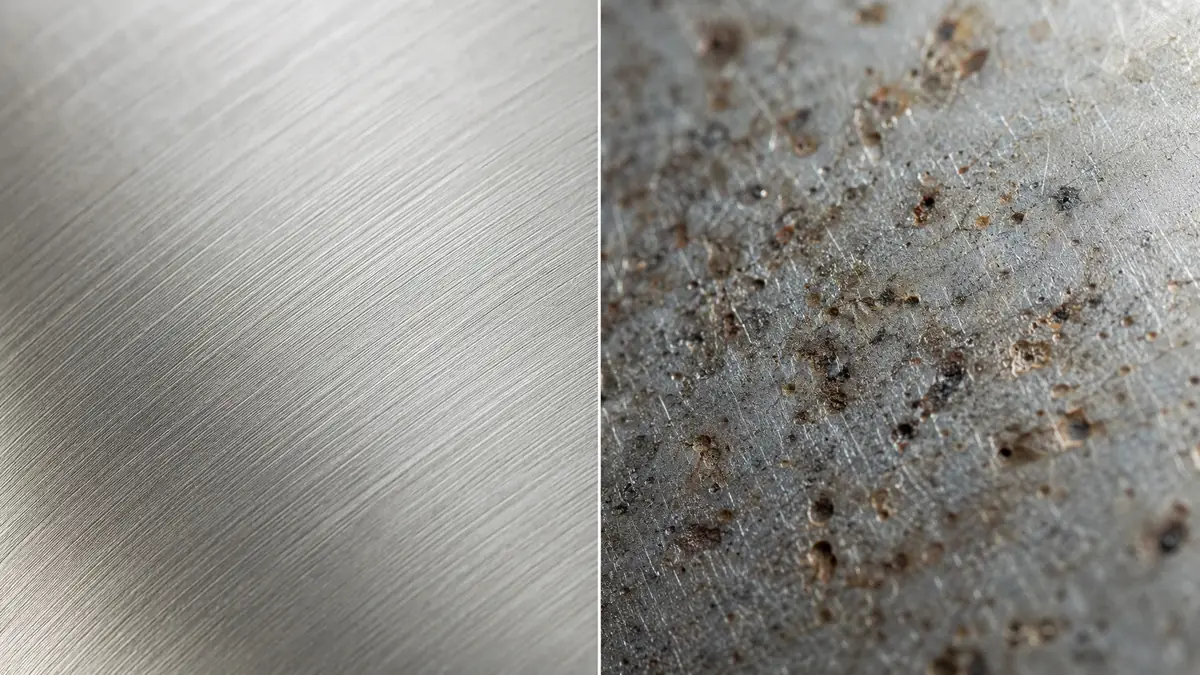
Embedded ferrous particles from incorrect blast media create initiation sites for pitting corrosion on stainless steel.
A detailed macro comparison showing a clean stainless steel surface next to a contaminated one with embedded dark particles and rust-stained pits, illustrating the risk of galvanic corrosion from media cross-contamination.
Blast cleaning does two things simultaneously: it removes surface material (mill scale, oxide, old coating) and it modifies the substrate surface (profile, hardness, residual stress). For carbon steel, a little embedded media may be cosmetic. For stainless or titanium, it can be catastrophic.
Three risks drive the compatibility question:
Embedded contamination: Media particles lodged in the surface become initiation sites for galvanic corrosion — especially when ferrous media hits stainless or aluminum.
Profile mismatch: Too aggressive a profile on a thin or soft alloy creates stress risers and reduces fatigue life. Too shallow a profile on hard alloys may fail coating adhesion tests.
Chemical reaction: Some media react with the substrate under heat or humidity, leaving residues that interfere with subsequent welding, passivation, or coating.
The right media selection prevents rework, warranty claims, and field failures — particularly in industries governed by SSPC, NACE, or ISO surface preparation standards.
04 The Alloy × Abrasive Suitability Matrix
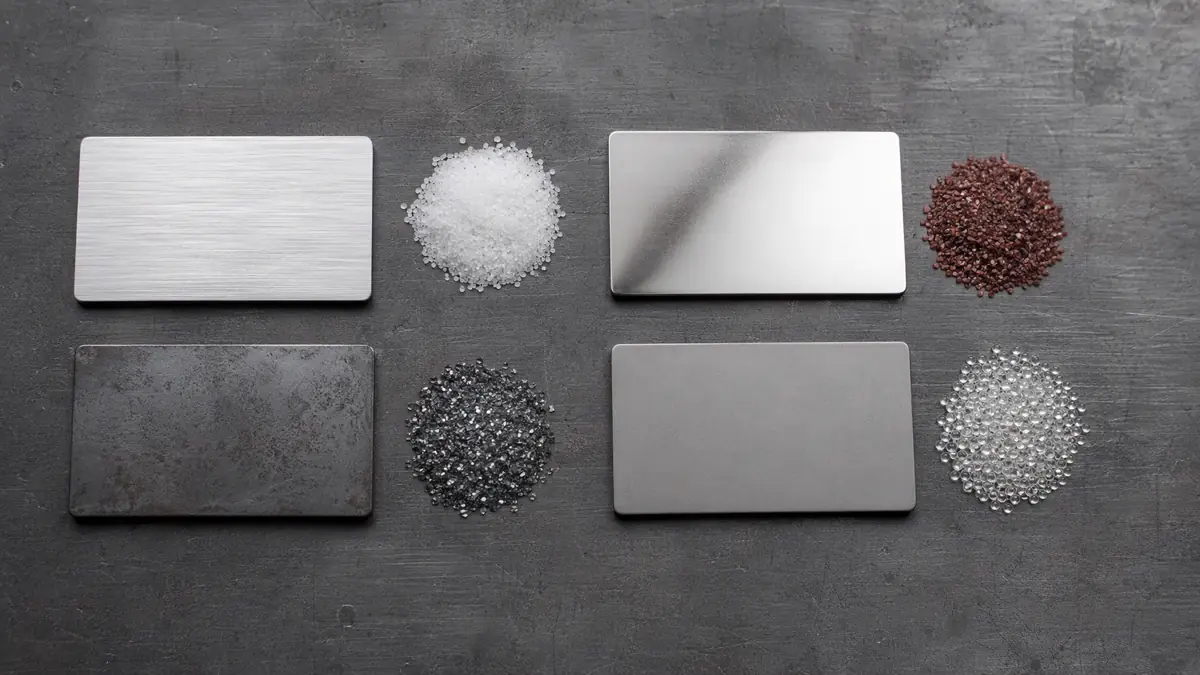
A visual representation of the alloy and abrasive compatibility matrix using metal coupons and media samples.
A top-down flat lay photograph showing four metal alloy coupons (aluminum, stainless steel, carbon steel, titanium) arranged with piles of compatible abrasive media (aluminum oxide, garnet, steel grit, glass bead) to represent a suitability matrix.
Below is a practical compatibility matrix for the four alloy families that cause the most confusion in multi-metal shops. Recommendations assume conventional dry blasting with properly maintained equipment.
Abrasive Media
Aluminum
Stainless Steel
Carbon Steel
Titanium
Aluminum Oxide
✅ Suitable
✅ Suitable
✅ Suitable
✅ Suitable
Garnet
⚠️ Conditional
⚠️ Conditional
✅ Suitable
✅ Suitable
Steel Grit
❌ Avoid
❌ Avoid
✅ Suitable
❌ Avoid
Steel Shot
❌ Avoid
❌ Avoid
✅ Suitable
❌ Avoid
Glass Bead
✅ Suitable
✅ Suitable
⚠️ Conditional
✅ Suitable
Silicon Carbide
✅ Suitable
✅ Suitable
✅ Suitable
✅ Suitable
Copper Slag
❌ Avoid
❌ Avoid
✅ Suitable
❌ Avoid
Walnut Shell / Plastic
✅ Suitable
✅ Suitable
❌ Ineffective
✅ Suitable
Key:
✅ Suitable: Acceptable for most applications within that alloy family, provided process parameters (pressure, angle, standoff) are controlled.
⚠️ Conditional: May be acceptable for specific applications but requires careful evaluation of profile, embedment risk, and post-blast treatment.
❌ Avoid: High risk of contamination, unacceptable profile damage, or metallurgical incompatibility. Do not use without explicit engineering approval.
Aluminum
Aluminum is soft, reactive, and unforgiving of ferrous contamination. Steel grit or shot will embed iron particles that form galvanic cells in the presence of moisture — visible as rust spots on a metal that does not rust. Copper slag leaves cuprous residues with the same effect.
Best choices: Aluminum oxide (chemically inert, sharp, leaves no ferrous residue), glass bead (for peening or cosmetic finish), silicon carbide (fast cutting), or non-metallic organic media for paint stripping.
Conditional: Garnet can be used on aluminum if the surface is subsequently coated and the garnet source is confirmed low in free iron. Verify by blasting a test coupon and performing a ferroxyl test for embedded iron before committing to production.
Profile note: Aluminum requires lower blast pressure and finer grit than steel to avoid warping thin sections. Start at 40–60 psi with 80–120 grit and adjust upward only as needed.
Stainless Steel
The primary rule with stainless is: no free iron. Any ferrous media — steel grit, steel shot, copper slag (which contains iron oxides) — will contaminate the surface. After passivation or in service, those embedded particles corrode, destroying the passive chromium oxide layer that defines stainless.
Best choices: Aluminum oxide is the industry workhorse for stainless: it cuts fast, leaves no iron, and produces a consistent angular profile. Glass bead is preferred for non-embedding cosmetic finishing. Silicon carbide works well for hard stainless grades or when maximum cutting speed is needed.
Conditional: Garnet is widely used on stainless for field blasting due to cost and availability. However, natural garnet contains variable free-iron content. For critical applications (pharmaceutical, food-grade, marine), specify low-iron garnet or switch to aluminum oxide. Always follow blasting with passivation if the stainless will see corrosive service.
Critical practice: Dedicate blast hoses, nozzles, and pots to stainless-only work, or clean thoroughly between materials. Even residual steel grit in a blast pot from a previous job can contaminate a stainless workpiece.
Carbon Steel
Carbon steel is the most forgiving alloy in the matrix. It is hard enough to tolerate aggressive media, and ferrous contamination is irrelevant because the substrate itself is iron-based.
Best choices: Steel grit provides the fastest profile generation and is recyclable — ideal for structural steel and heavy fabrications. Garnet offers a balance of speed and cost for one-pass field blasting. Aluminum oxide and silicon carbide are effective but usually over-specified for carbon steel unless a specific profile geometry is required.
Conditional: Glass bead is too mild to remove mill scale efficiently and is rarely cost-effective for carbon steel blast cleaning. It may be used for light deburring or cosmetic finishing of machined steel parts.
Profile note: Carbon steel can accept a wide range of profiles (typically 50–100 µm / 2–4 mils for coating adhesion). Match the profile to the coating specification rather than defaulting to maximum aggressiveness.
Titanium
Titanium shares stainless steel’s sensitivity to contamination but adds a risk few shops anticipate: hydrogen embrittlement. Certain media under aggressive blasting conditions can introduce hydrogen into the titanium surface, leading to delayed brittle fracture — especially in aerospace and medical components.
Best choices: Aluminum oxide is the standard for titanium surface preparation. It is chemically stable, non-ferrous, and available in tightly graded sizes for precise profile control. Silicon carbide is an alternative for harder titanium alloys.
Conditional: Glass bead peening is used for fatigue improvement on titanium but must be tightly controlled for intensity and coverage per AMS or OEM specifications.
Avoid: All ferrous media. Copper slag. Any media that cannot be certified free of halides, sulfur, or other contaminants that attack titanium at elevated temperatures.
Critical practice: For aerospace or medical titanium, use virgin media — not recycled — unless the recycling process is validated to remove all contaminants. Dedicated equipment is mandatory.
05 How to Select Blast Media by Metal Type
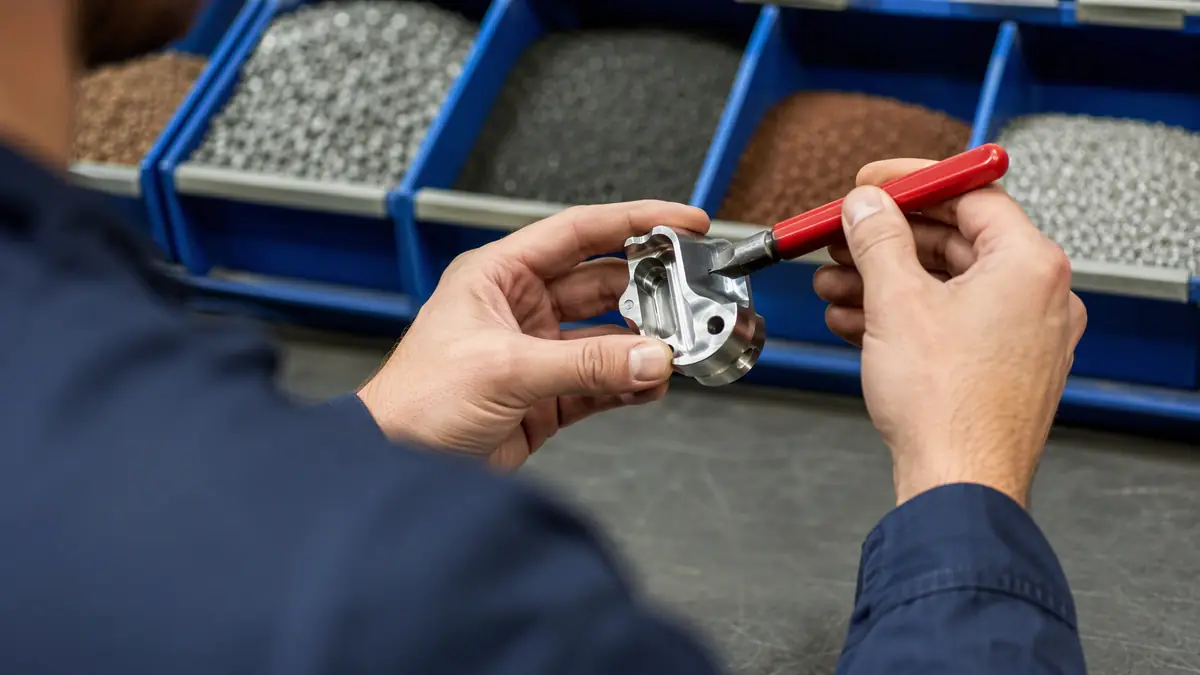
A simple magnet test helps identify the alloy family before selecting a blast media to prevent cross-contamination.
A close-up shot of a technician's hands using a magnet to test a shiny metal part for alloy identification, with various abrasive media bins visible in the background, illustrating the first step in the media selection process.
When your shop processes multiple alloys, a systematic selection process prevents costly mistakes. Work through these five decision points:
1. Identify the alloy family first
Do not assume. A shiny metal part could be aluminum, stainless, or chrome-plated steel. Verify with a magnet test (austenitic stainless is non-magnetic), spark test, or material certification before selecting media.
2. Define the surface preparation objective
Are you removing mill scale, old coating, or light oxidation? Is the goal an anchor profile for coating, a cosmetic finish, or peening for fatigue life? The objective determines the required aggressiveness, which narrows media choices.
3. Apply the contamination rule
If the substrate is non-ferrous (aluminum, titanium) or corrosion-resistant (stainless), eliminate all ferrous media immediately. This single rule prevents the most common and costly blasting mistake in multi-metal shops.
4. Match profile to coating specification
The coating manufacturer specifies a required surface profile range (e.g., 50–75 µm). Select a media grit size and hardness that produces that profile on your specific alloy. Harder alloys require harder, sharper media to achieve the same profile depth.
5. Evaluate total cost, not just media price
Cheaper media that contaminates a batch of stainless vessels costs far more than expensive media that works correctly the first time. Factor in rework risk, equipment cleaning time between alloy changes, and media consumption rate.
06 Common Mistakes in Multi-Metal Blasting
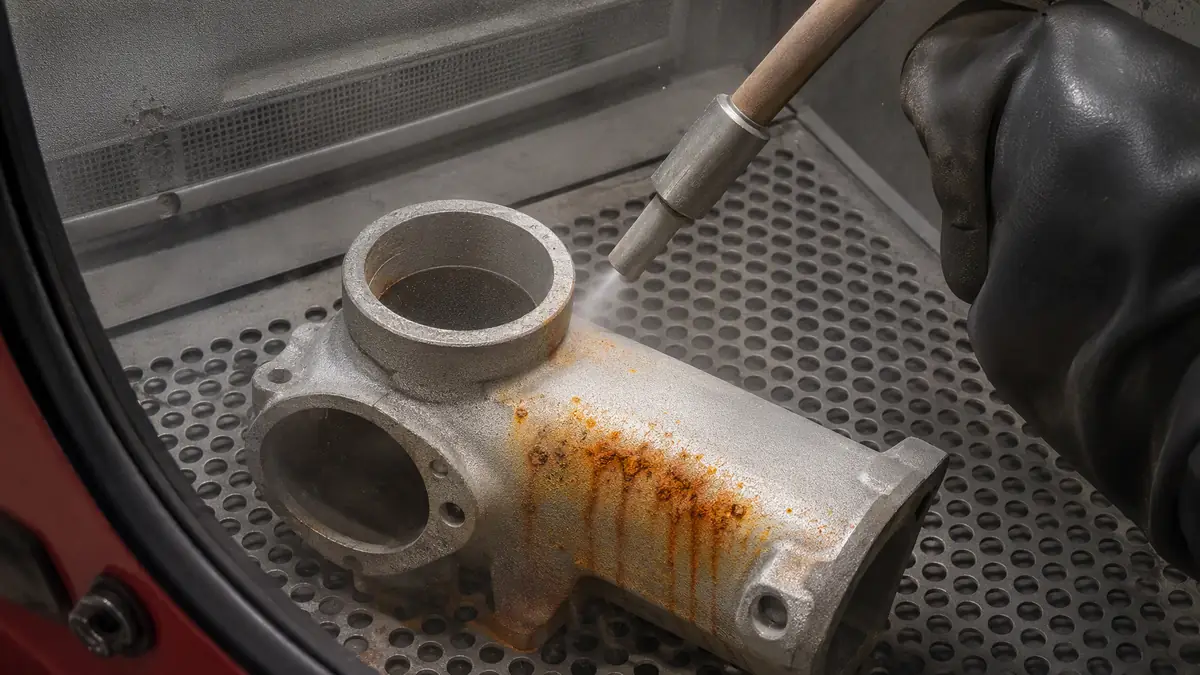
Using steel grit on stainless steel causes immediate rust staining, a common and avoidable mistake in multi-metal shops.
A view inside a blast cabinet showing a stainless steel component with fresh blast profile and distinct orange rust stains caused by ferrous contamination from using steel grit, highlighting a critical blasting error.
Using one abrasive for everything. The most frequent error is standardizing on steel grit because it works on carbon steel, then running stainless or aluminum through the same setup. The result: rust-stained stainless, pitted aluminum, and angry customers.
Skipping the ferroxyl test. A simple potassium ferricyanide test detects embedded iron on non-ferrous surfaces in minutes. Shops that skip this test ship contaminated parts. For stainless and aluminum, make the ferroxyl test a standard QC checkpoint after blasting.
Ignoring media breakdown. All abrasives fracture and generate fines with reuse. Those fines can embed differently than fresh media. Monitor particle size distribution and replace media before fines exceed the specification limit.
Cross-contaminating through shared equipment. Even if you change media between jobs, residual abrasive in hoses, blast pots, and dust collectors can contaminate the next batch. Dedicated equipment or rigorous cleaning protocols are essential for shops handling both ferrous and non-ferrous alloys.
Over-blasting thin sections. Aluminum and titanium sheet can warp under aggressive blasting. Reduce pressure, increase standoff distance, and use finer grit before assuming the alloy is unsuitable for blasting.
07 Implementation Best Practices
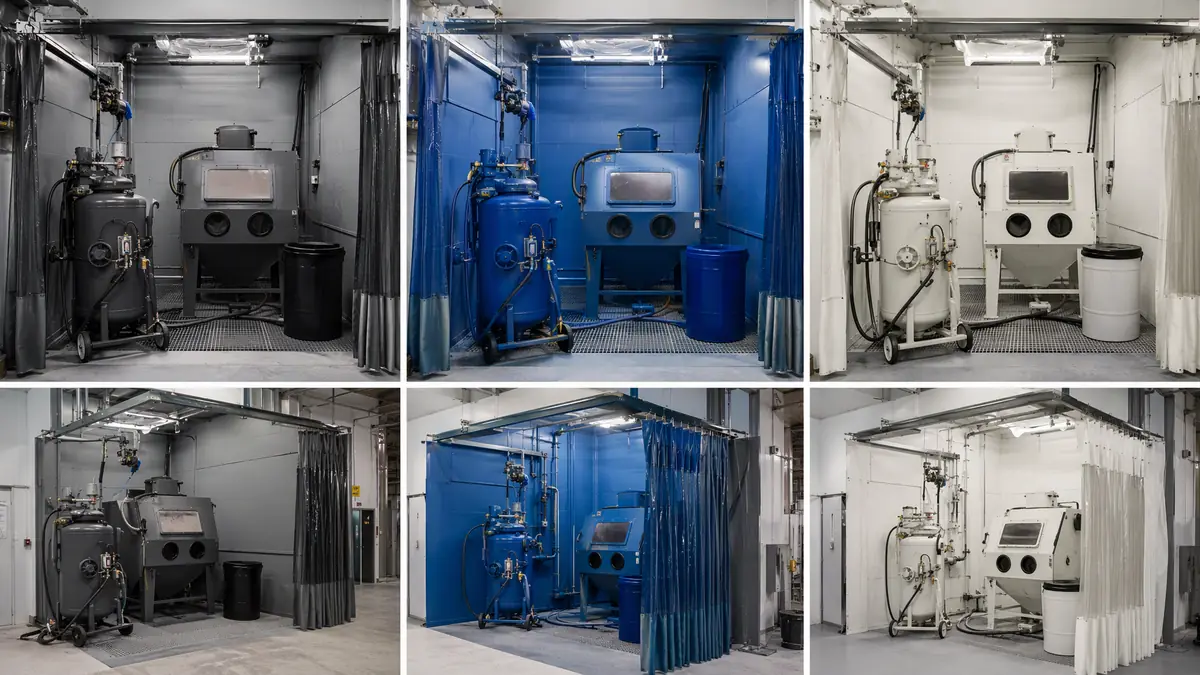
Best practice: physically segregating blast equipment and media by alloy risk category to eliminate cross-contamination.
A wide shot of an industrial blast room organized into three distinct, color-coded work zones for carbon steel, stainless steel, and aluminum/titanium, each with dedicated equipment to prevent cross-contamination.
Segregate by alloy risk category. At minimum, maintain separate media and equipment for ferrous work (carbon steel) and non-ferrous/corrosion-resistant work (aluminum, stainless, titanium). A three-way split — ferrous, stainless, and aluminum/titanium — provides the best contamination control.
Document media specifications per job. For each workpiece or project, record the alloy, media type, grit size, blast pressure, and acceptance criteria. This creates traceability and prevents operators from making assumptions.
Verify media certifications. When blasting stainless or titanium for critical applications, request a certificate of analysis from the media supplier confirming chemical composition and contaminant levels. Not all garnet or aluminum oxide is created equal.
Test before production. Run a test coupon of the actual alloy through the planned blast parameters, then perform adhesion testing (for coatings) and contamination testing (ferroxyl, salt contamination) before committing to the full batch.
08 Conclusion
The abrasive that performs brilliantly on carbon steel can destroy a stainless or aluminum workpiece. The matrix above gives you a starting point, but the final answer always depends on your specific alloy grade, coating specification, and quality requirements.
For multi-metal fabricators, the most profitable approach is usually media segregation: stock two or three abrasive types matched to your alloy families, and dedicate equipment accordingly. The upfront cost of separate media inventories is almost always less than the cost of one contamination-related rejection.
09 Frequently Asked Questions
What is the most common mistake when blasting multiple metal types in one shop?
The most frequent error is standardizing on a single abrasive, like steel grit, for all jobs. While effective on carbon steel, using it on stainless steel or aluminum embeds ferrous particles that cause galvanic corrosion, rust staining, and pitting. This cross-contamination often leads to scrapped parts and warranty claims.
Can I use garnet abrasive on stainless steel and aluminum?
Garnet is conditional for both metals. On stainless steel, it is widely used for field work, but natural garnet contains variable free iron that can contaminate the surface; for critical applications, specify low-iron garnet or use aluminum oxide. On aluminum, garnet may be acceptable if a ferroxyl test confirms low free iron and the surface is immediately coated, but aluminum oxide is the safer choice.
Why is steel grit or steel shot dangerous for stainless steel and aluminum?
Steel grit and shot are ferrous media that embed iron particles into the substrate. On stainless steel, this destroys the passive chromium oxide layer, causing pitting corrosion. On aluminum, the embedded iron forms a galvanic cell in moisture, creating rust spots on a metal that cannot rust. Both scenarios compromise structural integrity and appearance.
What blast media is safest for titanium components?
Aluminum oxide is the standard for titanium, as it is chemically stable and non-ferrous. For aerospace or medical parts, you must use virgin media to prevent contamination from halides or sulfur. Avoid all ferrous media and copper slag, and be aware that aggressive blasting can cause hydrogen embrittlement, leading to brittle fracture.
How do I prevent cross-contamination when switching from carbon steel to stainless steel blasting?
Dedicated equipment is the only certain method. If sharing equipment, you must thoroughly clean the blast pot, hoses, and nozzles to remove every trace of ferrous media. Even residual steel grit from a previous job can contaminate a stainless workpiece. Always follow stainless blasting with passivation if the part will see corrosive service.
What blasting pressure should I use for aluminum to prevent warping?
Aluminum requires lower pressure and finer grit than steel to avoid warping thin sections. Start with a range of 40–60 psi using 80–120 grit abrasive, and only increase pressure if necessary. The softer substrate is more prone to deformation from aggressive media and high pressures.
How do I verify that my abrasive has not contaminated a non-ferrous surface?
Perform a ferroxyl test using a potassium ferricyanide solution. This simple chemical test detects the presence of embedded free iron on stainless steel or aluminum surfaces. A positive result, indicated by a blue color change, means the part is contaminated and must be re-blasted with a suitable non-ferrous media before being put into service.
10 Solution
Choosing the right blast media by metal type starts with having access to a reliable range of abrasives. Compare aluminum oxide, garnet, glass bead, and other media options available on SPA2Z to find grades suited to your alloy mix. For technical guidance on media compatibility with your specific application, contact the SPA2Z sales team with your alloy and surface preparation requirements.
11 Get a quote
Get a quote
Tell us what you need. We reply within one business day.