ABRASIVES GUIDE

Abrasive Media for Wind Tower and Renewable Structures

Achieving a consistent surface profile across massive wind tower sections demands more than just any blasting abrasive — it requires media that performs reliabl...

Published
08 Feb 2025
Category
Abrasives
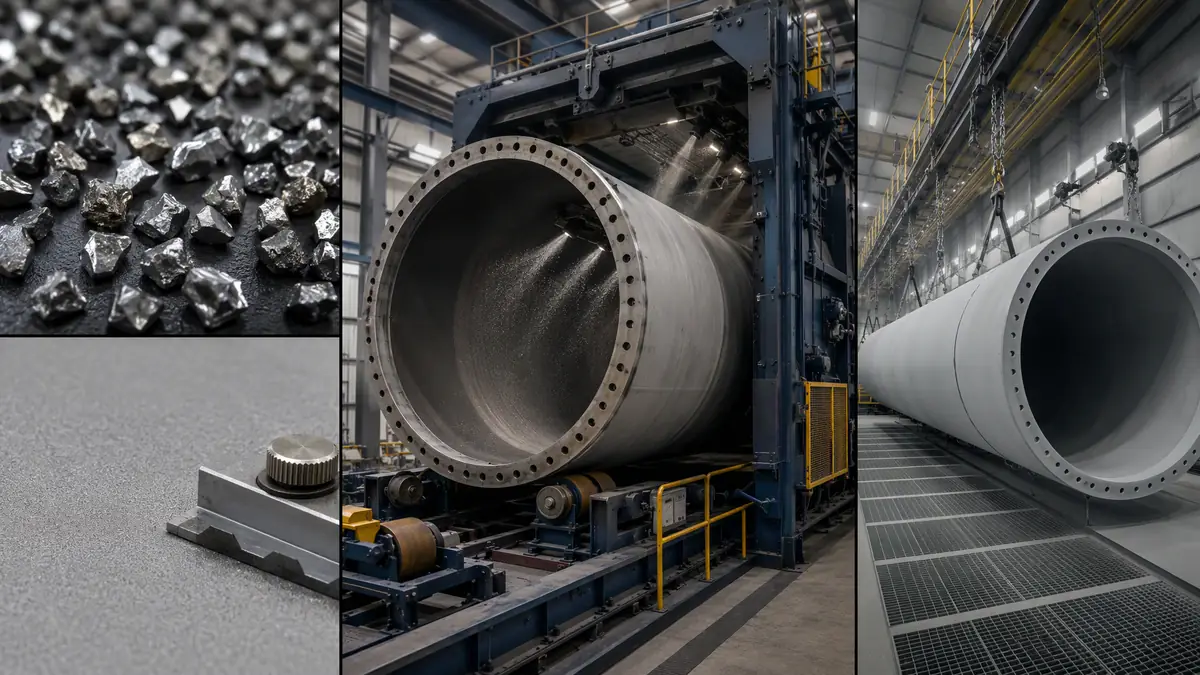
Multi-panel industrial collage showing steel grit abrasive blasting process on large wind tower steel sections inside automat
FIG. 01From steel grit media to finished surface...

Editorial multi-panel image illustrating abrasive media selection and blasting process for wind tower steel fabrication. Dominant panel shows automated wheel-blast machine processing a large tubular section. Supporting panels display steel grit close-up, post-blast surface profile with comparator ga

Introduction

Achieving a consistent surface profile across massive wind tower sections demands more than just any blasting abrasive — it requires media that performs reliably on large tubular steel, often in automated or semi-automated production environments. T…

Introduction

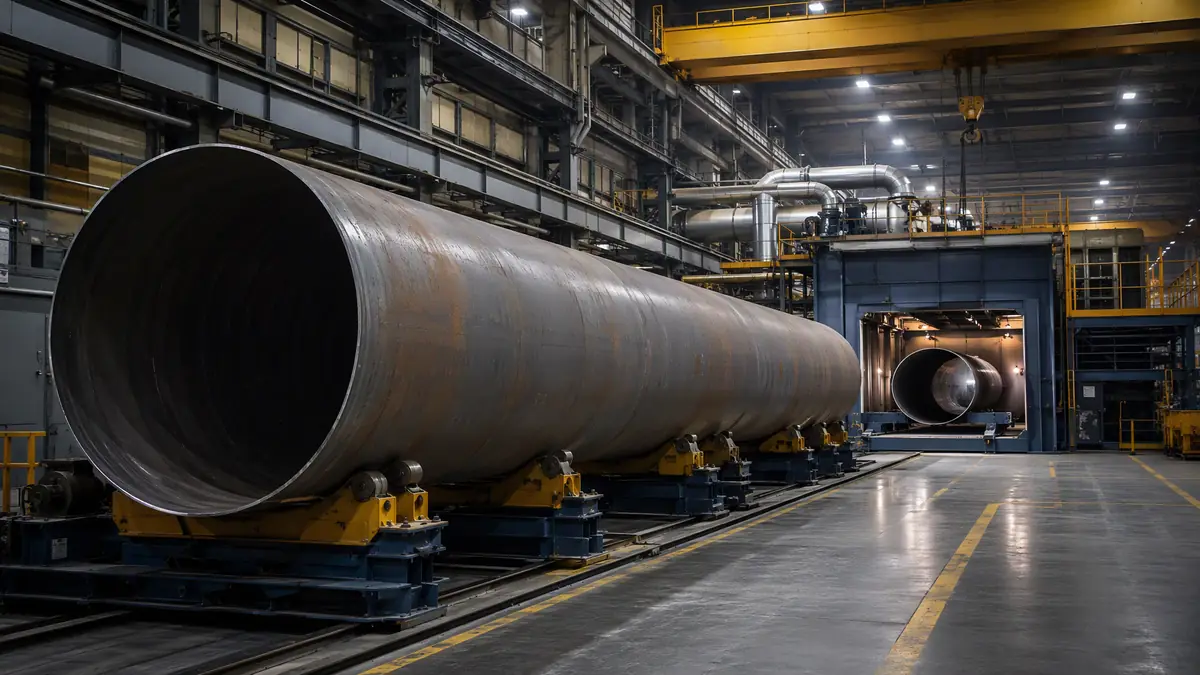
Massive wind tower steel section on factory rollers before abrasive blasting surface preparation process
Large-diameter wind tower sections require consistent abrasive blasting across extended production runs to achieve uniform surface profiles.

Industrial factory scene showing a massive wind tower tubular steel section on production rollers awaiting surface preparation. The section displays mill scale and light corrosion typical before blasting. An automated wheel-blast machine enclosure is visible in the background, illustrating the scale

Massive wind tower steel section on factory rollers before abrasive blasting surface preparation process

Wind tower fabricators and renewable energy manufacturers face a surface preparation challenge that differs significantly from general structural steel work. When blasting wind tower steel, the sheer scale of the components — tower sections often exceeding 4 metres in diameter and 20 metres in length — means that abrasive performance must remain stable over extended production runs. Inconsistent profile depth, excessive dust generation, or rapid media breakdown can create costly rework and compromise the protective coating systems that offshore and onshore wind assets depend on.

This article examines the abrasive media types best suited to renewable energy surface prep, the selection criteria that matter for large tubular sections, and the practical considerations that help fabricators maintain profile consistency without sacrificing productivity. Whether you are specifying media for a new tower line or troubleshooting an existing process, the goal is to give you a clear framework for evaluating your options.

Why Surface Preparation Is Different for Renewable Structures

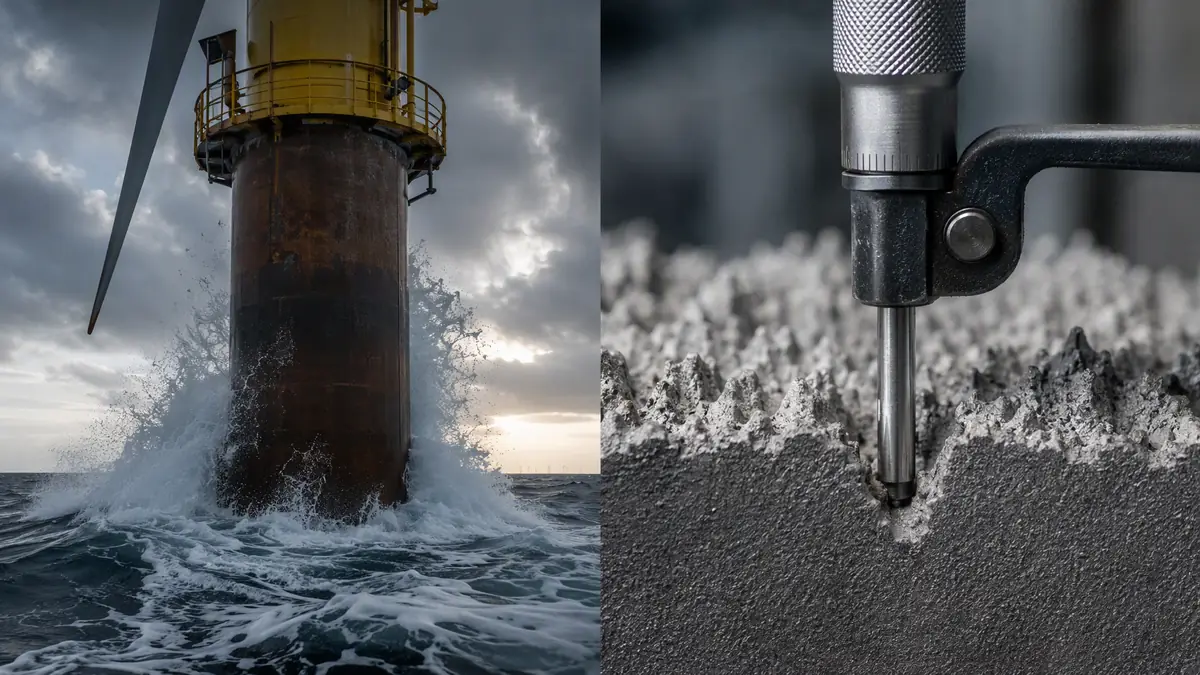
Offshore wind monopile in harsh ocean environment contrasted with close-up of blasted steel surface profile measurement
Offshore wind structures face salt spray, UV, and immersion conditions requiring Sa 2½ blast cleaning and a consistent angular anchor profile.

Split-composition industrial photograph showing an offshore wind turbine monopile foundation exposed to rough ocean conditions on the left, and a close-up of a properly blasted steel surface with profile measurement on the right. Illustrates why renewable energy structures demand rigorous surface pr

Offshore wind monopile in harsh ocean environment contrasted with close-up of blasted steel surface profile measurement

Wind towers, monopile foundations, and transition pieces share a common requirement: the coating system must withstand extreme environmental exposure for 20 to 25 years with minimal maintenance. Unlike factory-floor equipment or architectural steel, these structures face salt spray, UV radiation, temperature cycling, and in the case of offshore installations, constant immersion and splash-zone conditions.

The surface preparation standard most commonly specified for wind tower steel is Sa 2½ (near-white metal blast cleaning) under ISO 8501-1, or the equivalent SSPC-SP 10 / NACE No. 2. This requires removal of virtually all mill scale, rust, and foreign matter, leaving a surface profile typically in the range of 50 to 100 microns (Rz), depending on the coating manufacturer's specification.

What makes this particularly demanding for large tubular sections is the geometry. Blasting a curved surface inside a rotating work cell or automated chamber means the abrasive must maintain its cutting characteristics as it recirculates. Media that fractures too quickly produces dust rather than profile; media that rounds off too fast stops cutting altogether.

Abrasive Media Types for Wind Tower Blasting

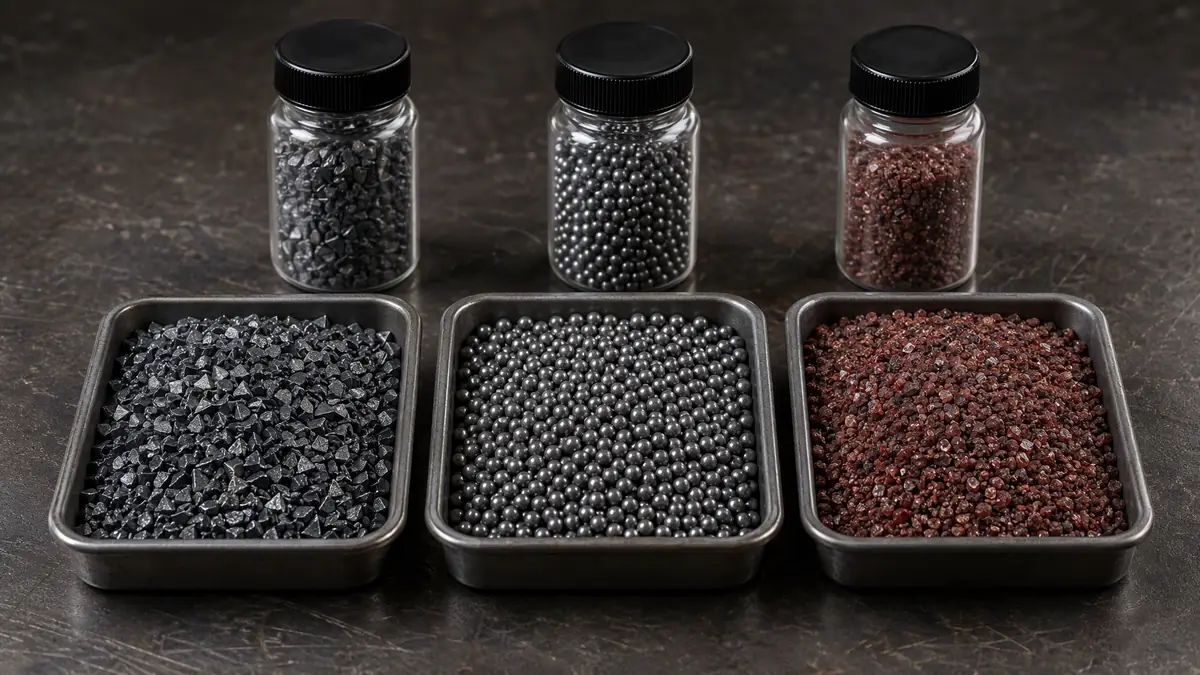
Three abrasive media types compared: angular steel grit, spherical steel shot, and garnet mineral abrasive in sample trays
Steel grit (left) provides aggressive cutting for wheel-blast systems; steel shot (center) peens and cleans; garnet (right) suits open blasting.

Product comparison photograph showing three common abrasive media types used in wind tower blasting. Steel grit with angular cutting particles, spherical steel shot for peening and cleaning, and garnet mineral abrasive for single-pass compressed air blasting. Each displayed in metal sample trays und

Three abrasive media types compared: angular steel grit, spherical steel shot, and garnet mineral abrasive in sample trays

Several abrasive types are used in wind tower production. Each brings different trade-offs between cut rate, profile consistency, dust generation, and operating cost. The choice often depends on whether the facility uses wheel-blast machines, compressed-air blasting, or a combination of both.

Steel Grit

Steel grit is the workhorse abrasive for blasting wind tower steel in wheel-blast systems. Its angular particles cut aggressively, removing mill scale and corrosion quickly while imparting a sharp, consistent anchor profile. Because steel grit is durable — often surviving hundreds of cycles in a recirculating system — it offers a low consumption rate per square metre blasted.

The profile produced depends on the grit size. Coarser grades (G16 to G25) generate deeper profiles suited to high-build epoxy and polyurethane coating systems. Finer grades (G40 to G80) produce a shallower, denser profile for thinner-film systems. Many tower fabricators run a blend of grit sizes to balance cut rate with profile specification.

Steel grit is less suitable for open-air compressed-air blasting unless the work area allows for effective recovery and recycling. Without recovery, the higher media cost is harder to justify compared to expendable minerals.

Steel Shot

Steel shot is spherical rather than angular, making it a peening and cleaning medium rather than a profile-creating abrasive. In wind tower applications, shot is rarely used alone. It is more commonly blended with steel grit — typically 20 to 30 percent shot — to help maintain the operational mix in wheel-blast machines. The shot component helps condition the working mix as grit particles gradually round off during recirculation.

Using shot alone for coating preparation is generally a poor fit. The rounded profile it produces may not provide sufficient mechanical key for high-performance coating systems. Confirm the required peak count and profile depth against the coating specification before considering any shot-heavy mix.

Garnet

Garnet is a natural mineral abrasive widely used in compressed-air blasting operations, particularly for touch-up work, weld-seam preparation, and smaller fabrications where wheel-blast is impractical. It produces a clean, angular profile with relatively low dust when used dry, and it is also effective in wet blasting setups.

For full-scale wind tower section blasting, garnet is less common as a primary production abrasive because it is expendable — each particle is used once and then becomes waste. The logistics and disposal costs of high-volume garnet blasting on large tubular sections can be significant. However, for fabricators without wheel-blast equipment, or for field repairs and coating remediation, garnet remains a practical choice.

Aluminum Oxide

Aluminum oxide is a hard, durable synthetic abrasive that cuts faster than garnet and produces less dust in some applications. It is available in a range of grit sizes and can be recycled multiple times in contained blasting environments. For wind tower work, aluminum oxide is sometimes specified when a particularly aggressive cut is needed on heavily scaled steel, or when the coating system demands a very sharp, high-peak-count profile.

The main limitation is cost. Aluminum oxide is more expensive per kilogram than steel grit or garnet, and without effective recovery systems, that cost multiplies quickly. It is most often found in specialised blasting cabinets or dedicated work cells rather than large-scale tower production lines.

Copper Slag and Coal Slag

These expendable mineral abrasives are used in some open-blast operations, primarily for cost-sensitive work. They cut reasonably well and are widely available. However, they tend to produce high dust levels, and the spent media requires disposal, which may be regulated depending on local environmental rules. For wind tower production, slag abrasives are generally a secondary choice — used where recovery is not feasible and where the coating specification permits the resulting surface profile and cleanliness level.
Selection Factors for Large Tubular Sections

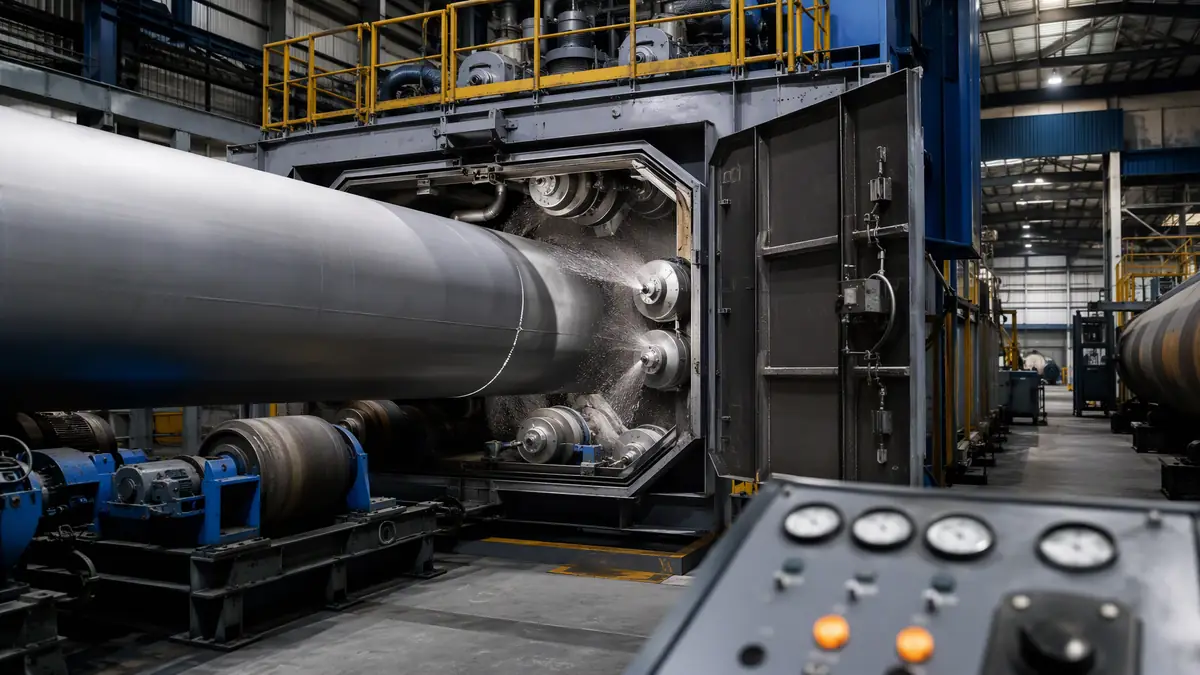
Automated wheel-blast machine processing rotating wind tower tubular steel section in high-volume fabrication facility
High-volume wind tower fabricators rely on automated wheel-blast machines with recyclable steel grit for consistent, economical surface preparation.

Elevated view inside a wind tower fabrication plant showing an automated wheel-blast machine processing a large rotating tubular steel section. The open inspection door reveals blast wheels directing steel grit at the surface. A control panel monitors operating parameters. Illustrates the automated

Automated wheel-blast machine processing rotating wind tower tubular steel section in high-volume fabrication facility

Choosing an abrasive for wind tower blasting involves more than matching a media type to a profile specification. The production environment, equipment type, and quality requirements all shape the decision.

Production Volume and Automation Level

High-volume tower fabricators running automated wheel-blast machines will almost certainly use steel grit, possibly with a shot blend, because the economics of media consumption and the consistency of automated systems favour durable, recyclable abrasives. The working mix in a wheel-blast machine can be monitored and adjusted to maintain profile within specification over thousands of operating hours.

For lower-volume shops or those relying on manual compressed-air blasting, expendable minerals like garnet or aluminum oxide may be more practical, especially if the capital investment in recovery and recycling equipment is not justified.

Profile Specification and Coating Compatibility

The coating manufacturer's product data sheet will specify the required surface profile range and cleanliness standard. This is the non-negotiable starting point. An abrasive that produces a profile outside the specified range — too shallow or too deep — can lead to premature coating failure regardless of how clean the surface looks.

Deep profiles (75–100 microns) generally require coarser steel grit or aluminum oxide. Shallower profiles (40–60 microns) call for finer grit sizes or garnet. Always verify the achieved profile using test coupons or replica tape on the actual production steel, not just on flat sample plates, because the blasting angle and dwell time on curved surfaces can affect the result.

Dust and Environmental Controls

Dust generation affects operator safety, visibility in automated cells, and compliance with workplace exposure limits. Steel grit produces less dust than mineral abrasives because it fractures less readily. Among expendable minerals, garnet tends to produce less respirable dust than copper slag, but this varies by grade and supplier. If your facility has dust extraction and filtration systems, confirm that the chosen abrasive is compatible with the equipment's capacity and filter media.

Surface Contamination Risks

Some abrasives can embed particles in the steel surface or leave residues that interfere with coating adhesion. This is a particular concern with slag abrasives, which may contain soluble salts. For offshore wind structures, where corrosion protection is critical, many coating specifications explicitly require abrasives that do not introduce contaminants. Steel grit and garnet are generally considered low-risk in this regard, but always confirm against the project's surface preparation and coating procedure.

Common Mistakes When Blasting Wind Tower Steel

Close-up of inconsistent surface profile on curved wind tower steel showing shallow areas and uneven blast coverage
Worn working mix or uneven blasting coverage on curved surfaces can produce visually clean but inadequately profiled steel that compromises coating adhesion.

Detailed inspection photograph showing a common blasting defect on wind tower steel: inconsistent surface profile on a curved tubular section. Some areas exhibit shallow, rounded profile from worn abrasive mix while adjacent areas retain proper angular anchor pattern. A profile measurement tool high

Close-up of inconsistent surface profile on curved wind tower steel showing shallow areas and uneven blast coverage

Even with the right abrasive selected, several pitfalls can undermine surface preparation quality on large tubular sections.

Running a worn working mix. In wheel-blast machines, the abrasive mix gradually degrades as particles round off and fines accumulate. If the mix is not regularly checked and replenished with fresh grit, the cut rate drops and the profile becomes shallower and less angular. The result may still look clean but will lack the mechanical key the coating needs.

Inconsistent blasting coverage on curved surfaces. Blasting a rotating tubular section requires careful control of nozzle or wheel position relative to the surface. Gaps in coverage — often near weld seams or at the edges of the blast pattern — leave mill scale or rust intact. These areas become initiation points for corrosion under the coating.

Ignoring ambient conditions. Blasting in high humidity or on cold steel can cause condensation to form on the surface almost immediately after blasting. If the steel is not held above the dew point, flash rust can appear before the first coat is applied. This is a common issue in unheated blasting sheds and can negate the benefit of even the best abrasive selection.

Failing to profile-test on production steel. Test coupons or sample plates blasted flat in ideal conditions do not always represent the profile achieved on a curved, rotating tower section. Regular profile measurement using replica tape or a surface profile gauge on the actual workpiece is essential for quality assurance.

Evaluating Results and Maintaining Consistency

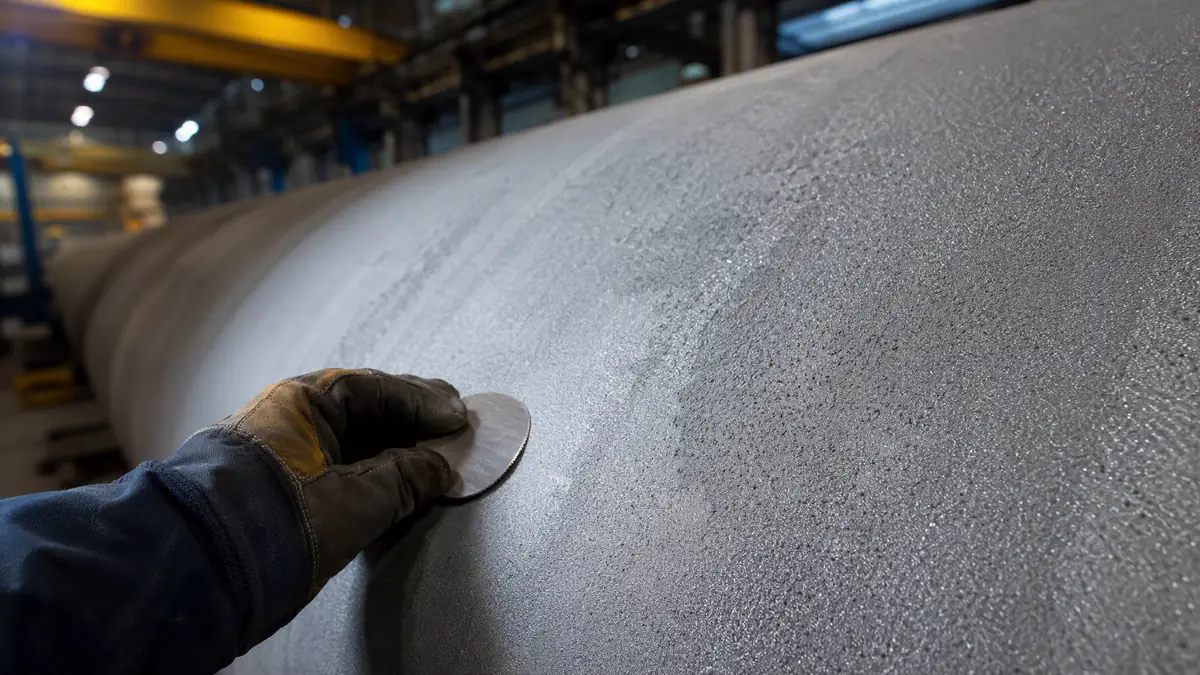
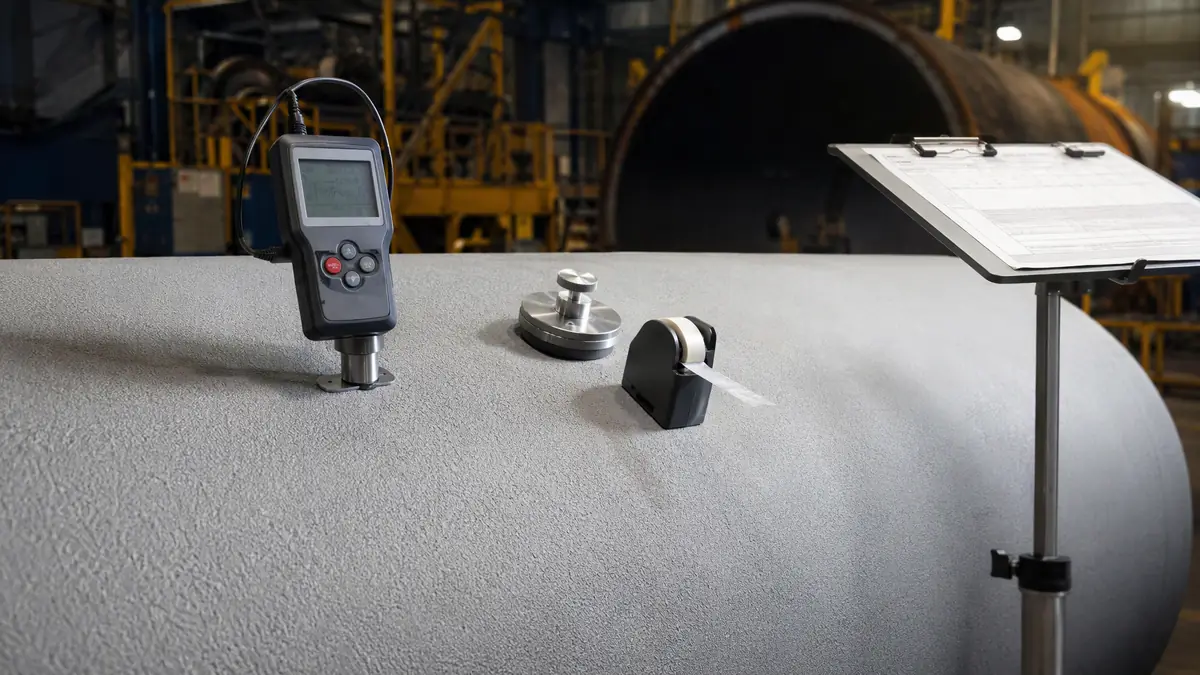
Quality control inspection of uniform blasted surface profile on wind tower steel with digital gauge and comparator tools
Regular profile verification using digital gauges and comparator discs ensures consistent anchor pattern for long-life protective coating performance.

Quality control inspection photograph showing a properly blasted wind tower steel surface with uniform angular anchor profile. Digital surface profile gauge, comparator disc, and replica tape on the surface represent standard verification tools. Bright inspection lighting reveals the consistent matt

Quality control inspection of uniform blasted surface profile on wind tower steel with digital gauge and comparator tools

A consistent blasting process on wind tower sections depends on three things: a stable abrasive working mix, controlled blasting parameters, and regular quality checks.

For wheel-blast systems, monitor the working mix at least once per shift. Check the particle size distribution and add fresh grit as needed to maintain the target profile. For compressed-air blasting, maintain consistent nozzle pressure, stand-off distance, and angle. Variations in any of these parameters will change the profile and cleanliness level.
Surface profile should be verified at the start of each shift and after any change in abrasive type, grit size, or blasting parameters. Cleanliness should be checked against the relevant ISO or SSPC visual standards. Documenting these checks provides traceability and helps identify process drift before it results in coating failures.

Frequently Asked Questions

What is the best abrasive for blasting wind tower steel in automated wheel-blast machines?

Steel grit is the primary abrasive for automated wheel-blast systems. Its angular particles cut aggressively to remove mill scale and create a consistent anchor profile, while its high durability allows it to survive hundreds of recirculation cycles. Many fabricators blend in 20–30% steel shot to help condition the working mix as grit particles gradually wear down.

Which abrasive should I use for manual touch-up or field repair on wind towers?

Garnet is a practical choice for compressed-air touch-up work, weld-seam preparation, and field repairs. It produces a clean, angular profile with relatively low dust. Aluminum oxide is an alternative when a more aggressive cut is needed, but it comes at a higher cost per kilogram.

How do I match the abrasive grit size to my coating specification?

Start with the coating manufacturer's required surface profile range. Coarser grades like steel grit G16–G25 typically produce deeper profiles of 75–100 microns for high-build epoxy systems. Finer grits like G40–G80 or garnet produce shallower profiles of 40–60 microns for thinner-film coatings. Always verify the achieved profile on actual production steel using replica tape or test coupons.

Can I use steel shot alone to prepare a wind tower surface for coating?

No, using steel shot alone is generally not recommended. Shot is spherical and produces a rounded, peened surface rather than the sharp angular profile needed for a strong mechanical bond with high-performance coating systems. It is best used as a minor blend component with steel grit to maintain the working mix.

Why is my wheel-blast machine producing a shallow profile even with the correct grit size?

The most common cause is a worn working mix. As abrasive recirculates, particles round off and break down into fines, reducing the cut rate and profile depth. Regularly check the mix and replenish it with fresh angular grit to restore cutting performance and maintain the specified anchor profile.

Are slag abrasives suitable for offshore wind tower fabrication?

Slag abrasives are generally a secondary choice and often avoided for offshore structures. They can produce high dust levels and may contain soluble salts that embed in the surface, creating a contamination risk that leads to premature coating failure. Many project specifications for offshore wind explicitly require low-risk abrasives like steel grit or garnet.

Solution

Selecting the right abrasive media for wind tower and renewable structure fabrication is a decision that affects coating performance, production efficiency, and long-term asset durability. The best choice balances profile requirements, production volume, equipment type, and total operating cost — and it is rarely the same for every facility.

If you are evaluating abrasive options for your blasting operation, compare the available media types against your specific coating specifications and production setup. For practical assistance with media selection, compatibility, and availability, explore the range of abrasives on SPA2Z and enquire with your requirements — a well-matched abrasive is an investment in every tower section that leaves your shop.

Get a quote

Get a quote

Tell us what you need. We reply within one business day.

Sending…
Need a price? Ask us here.