Moisture in Abrasive Media: How It Ruins Blast Quality
Moisture in blast media is one of the most common yet overlooked causes of poor surface preparation. Even a small amount of dampness can turn free-flowing abras...
Published
14 Nov 2024
Category
Abrasives
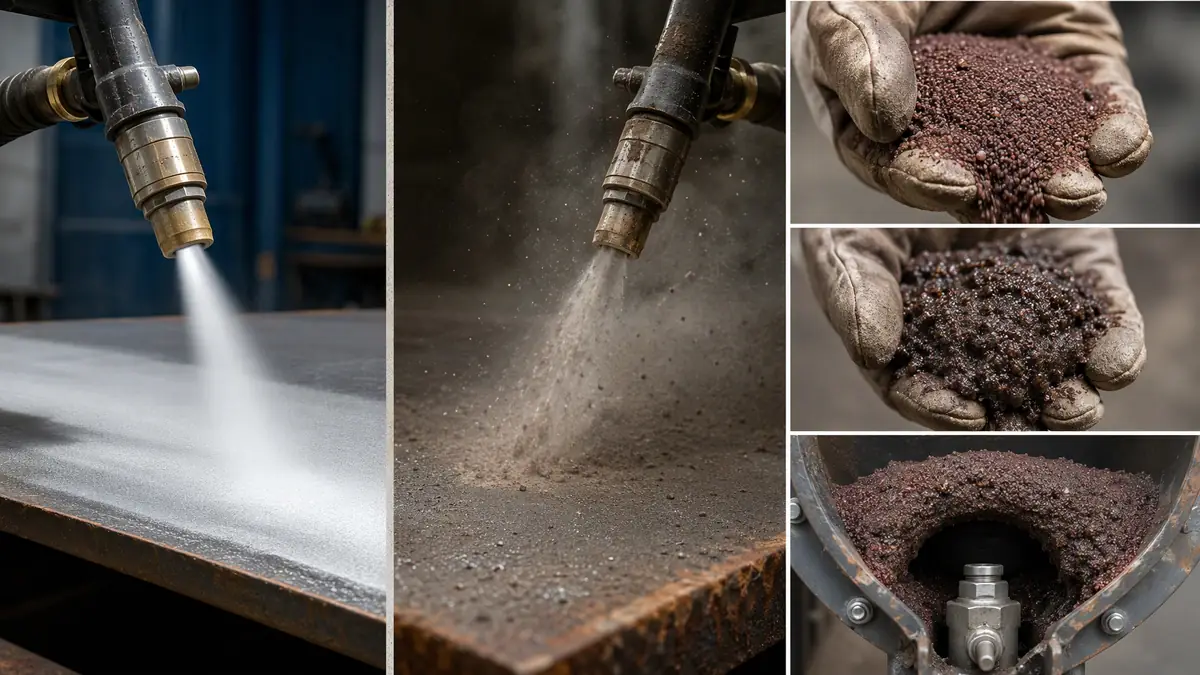
FIG. 01A visual diagnosis of moist abrasive blast...
A professional multi-panel industrial collage illustrating how moisture ruins blast quality. The main panel contrasts a perfect dry blast with a failing wet blast. Supporting panels show a visual inspection of dry versus damp garnet abrasive and a cross-section of a blast pot with a bridged media co
01 Introduction
Moisture in blast media is one of the most common yet overlooked causes of poor surface preparation. Even a small amount of dampness can turn free-flowing abrasive into a sluggish, clog-prone mass that disrupts production and compromises coating adh…
02 Introduction
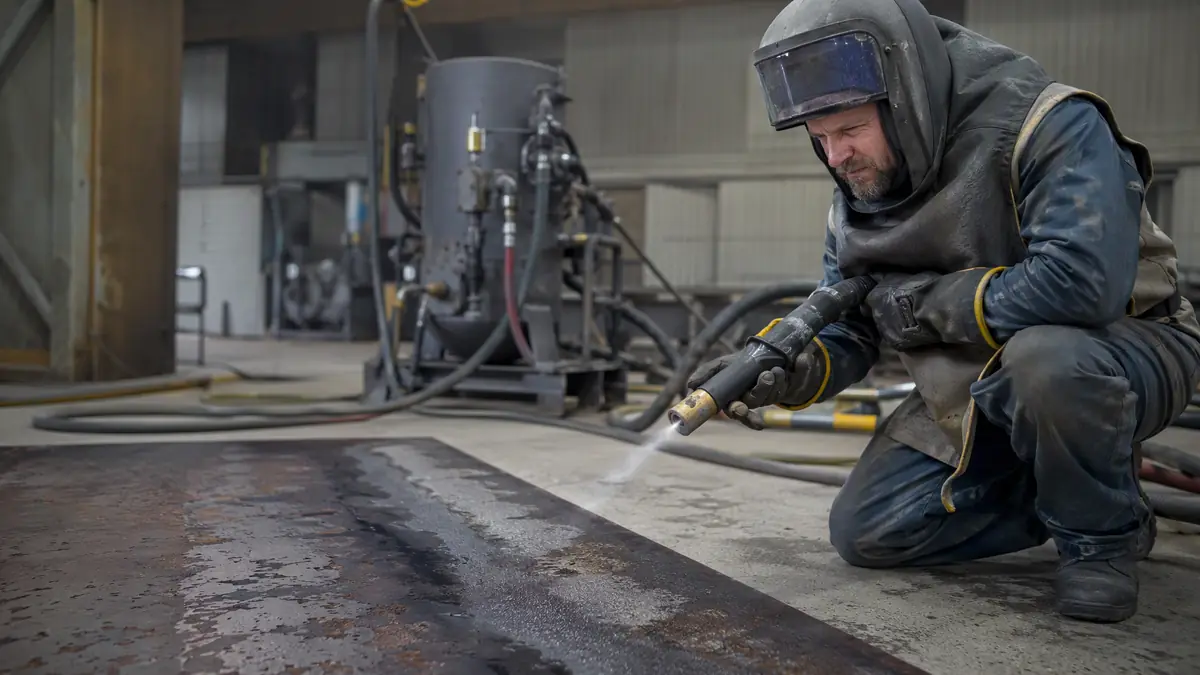
A blast operator identifies inconsistent cleaning and a weak abrasive stream, a classic symptom of moist abrasive blasting problems.
An industrial blast operator in a workshop examines a failing blast stream and a poorly cleaned steel surface. The scene captures the moment of diagnosing a moisture-related issue, highlighting the practical, hands-on approach needed to identify the root cause of pulsating abrasive flow and nozzle b
If your blast operation is suddenly plagued by inconsistent cleaning, pulsating abrasive flow, or frequent nozzle blockages, the root cause is often not the equipment—it is the media itself. Moist abrasive blasting problems are responsible for a significant share of unplanned downtime in surface preparation shops, yet they are routinely misdiagnosed as mechanical failures. This article explains how moisture enters your abrasive, what it does to the blasting process, and how to spot the warning signs before a clogged line halts your work. It is written for blast operators, maintenance teams, and stores personnel who need practical diagnostic steps, not generic theory.
03 What Moisture Does to Blast Media
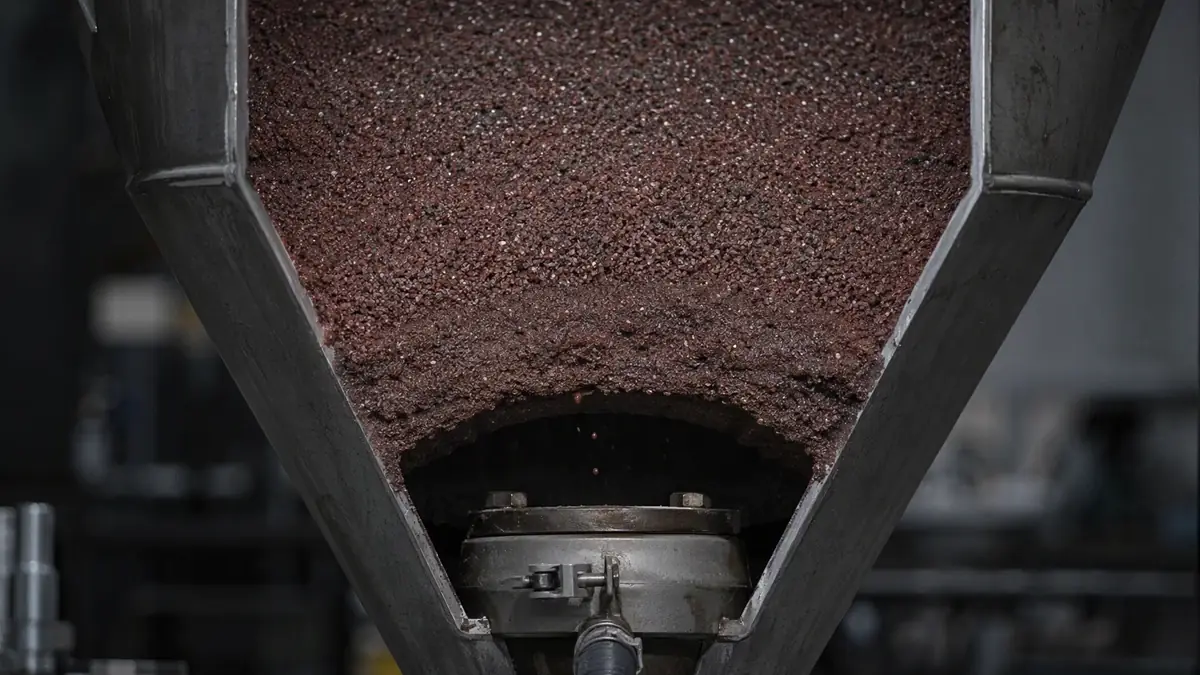
A cross-section view reveals 'bridging,' where damp abrasive forms a solid arch inside the blast pot cone, blocking flow to the metering valve.
A detailed cross-section of a blast pot cone illustrating the phenomenon of bridging. Damp, caked abrasive has formed a solid arch that suspends the media above the outlet, preventing it from reaching the valve. This visual explains a primary cause of sudden abrasive loss and pulsation at the nozzle
Abrasive media is designed to flow freely through metering valves, hoses, and nozzles. Moisture disrupts that flow at every stage.
Caking and Bridging in the Blast Pot
When abrasive absorbs moisture, individual particles begin to stick together. Inside the blast pot, this creates caking—the formation of clumps that resist gravity feed toward the metering valve. In severe cases, the media can form a bridge across the pot cone, where a solid arch of compacted abrasive suspends itself above the outlet while the operator assumes the pot is feeding normally. The result is a sudden loss of abrasive at the nozzle, often followed by a surge when the bridge collapses.
Wet Blast Media Clogging at the Metering Valve
The metering valve or abrasive regulator is the most restriction-sensitive point in the entire blasting circuit. Damp abrasive does not flow smoothly through the valve orifice; it packs, compresses, and eventually blocks it. Wet blast media clogging at this point produces a characteristic symptom: the operator opens the valve further to compensate for reduced flow, then experiences a sudden rush of abrasive when the compacted plug breaks free. This pulsating delivery creates an uneven blast pattern and makes it nearly impossible to achieve a consistent surface profile.
Nozzle Clog and Spitting
Moisture-laden abrasive traveling through the blast hose can accumulate in low spots or at the nozzle entry. When a damp slug reaches the nozzle, it may partially or fully obstruct the orifice. A nozzle clog often announces itself with a change in sound—the blast stream becomes muffled or intermittent—followed by spitting as the pressure behind the obstruction forces out compacted media in bursts. Each clog requires the operator to stop work, depressurize, and clear the nozzle, eroding productivity.
Flash Rust on Freshly Blasted Steel
Moisture introduced through the abrasive does not only affect the blasting process; it contaminates the substrate. When damp media strikes bare steel, it transfers moisture directly onto the surface. On carbon steel, flash rust can appear within minutes—a thin orange-brown oxidation layer that forms before the coating can be applied. This is a serious problem because most coating specifications (such as those referencing SSPC or NACE standards) require the surface to be free of visible rust before painting. Flash rust means rework: the surface must be re-blasted or mechanically cleaned, doubling the labour and media cost.
04 How Moisture Enters Abrasive Media
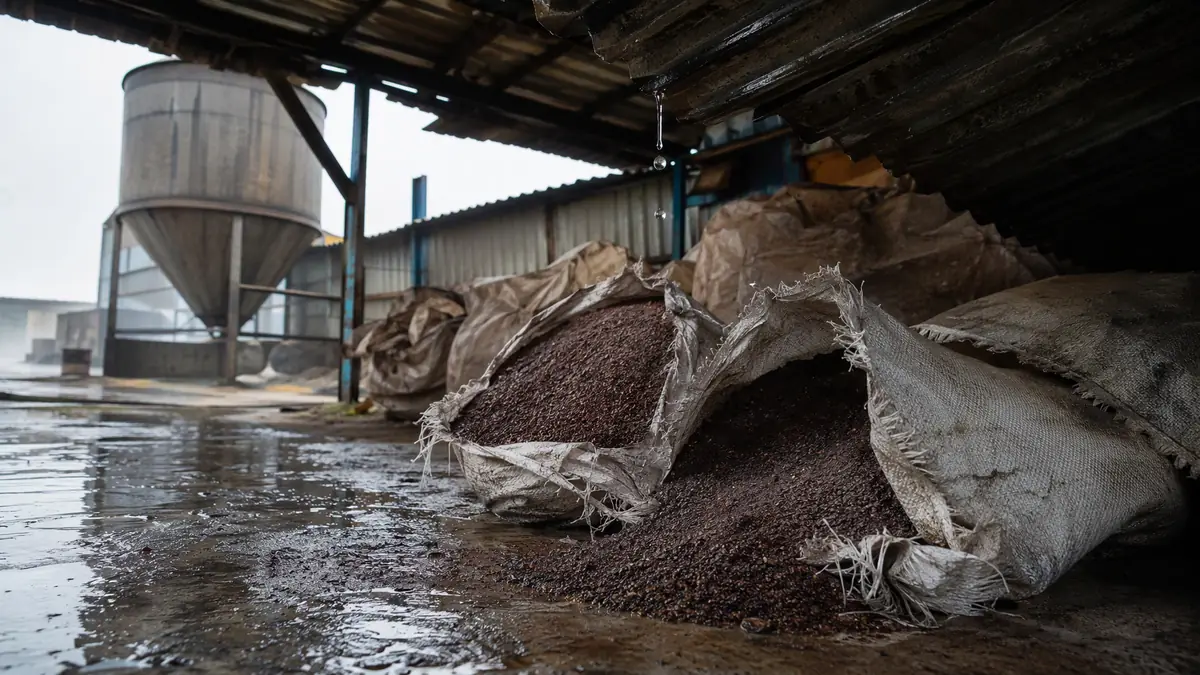
Moisture enters blast media through poor storage: open bags on damp floors and exposure to leaks or humid air.
An industrial storage area showing common entry points for moisture. Torn bags of abrasive sit on a wet concrete floor under a leaking roof, while an unsealed silo is exposed to humid ambient air. The image highlights how poor storage conditions directly lead to moist abrasive blasting problems.
Diagnosing moist abrasive blasting problems requires understanding how water gets into the media in the first place. The three most common entry points are:
Storage conditions. Abrasive stored outdoors, under leaking roofs, or on damp floors absorbs moisture from the environment. Bags left open or torn allow humid air to penetrate. Bulk abrasive in unsealed silos or hoppers is particularly vulnerable during monsoon seasons or in coastal locations.
Compressed air condensation. Even if the abrasive itself is dry, moisture can be introduced through the compressed air system. Air compressors generate significant condensate, especially in humid conditions. Without adequate moisture separation, filtration, and drying, water vapour travels with the compressed air into the blast pot and condenses on the abrasive. This is often misdiagnosed as a media storage problem when the real issue is downstream of the compressor.
Contaminated reclaim systems. In closed-loop or reclaim blasting operations, spent abrasive is collected, screened, and returned to the blast pot. If the reclaim system draws in damp air or if the abrasive picks up moisture from the blasted surface (e.g., when blasting outdoors on a humid day), that moisture is recirculated and concentrated with each cycle.
05 Signs Your Abrasive Has a Moisture Problem
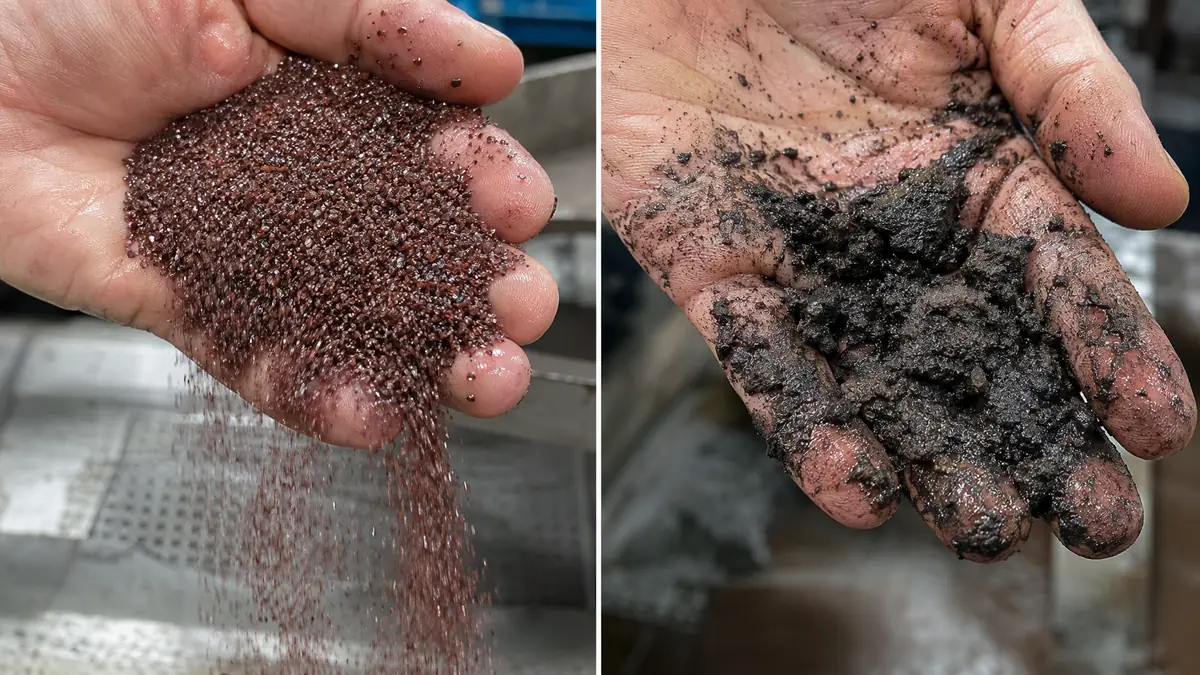
A simple visual test: dry abrasive flows freely, while damp abrasive clumps, darkens, and leaves residue on the hand.
A detailed close-up comparing two samples of garnet abrasive. The dry sample on the left is reddish, sharp, and flows freely between the fingers. The damp sample on the right is dark, muddy, and clumped together, sticking to the operator's palm. This visual inspection is a key early indicator of a m
Before a complete clog shuts down production, there are early indicators that moisture is present. Train operators and stores personnel to watch for these symptoms:
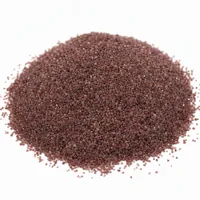
Visual inspection of media. Dry abrasive pours freely and appears as individual particles. Damp abrasive looks clumpy, may stick to the sides of a sample container, and feels heavier than expected. For mineral abrasives like garnet, a colour change—from its natural reddish or brown tone to a darker, muddier appearance—can indicate moisture uptake.
Inconsistent pot pressure. A blast pot that holds steady pressure but delivers erratic abrasive flow often has a moisture-related bridging problem inside the pot, not a regulator fault.
Hose surging. If the blast hose visibly pulses or kicks during operation, damp abrasive is likely packing and releasing in slugs.
Excessive dust at the nozzle. Paradoxically, damp abrasive can generate more visible dust at the point of blasting because wet fines become airborne differently than dry ones. Do not assume that visible dust means the media is dry.
Flash rust appearing within the shift. If freshly blasted steel shows rust before the end of a working day—especially under cover—suspect moisture in the media or air supply.
06 Diagnosing the Source: A Practical Approach
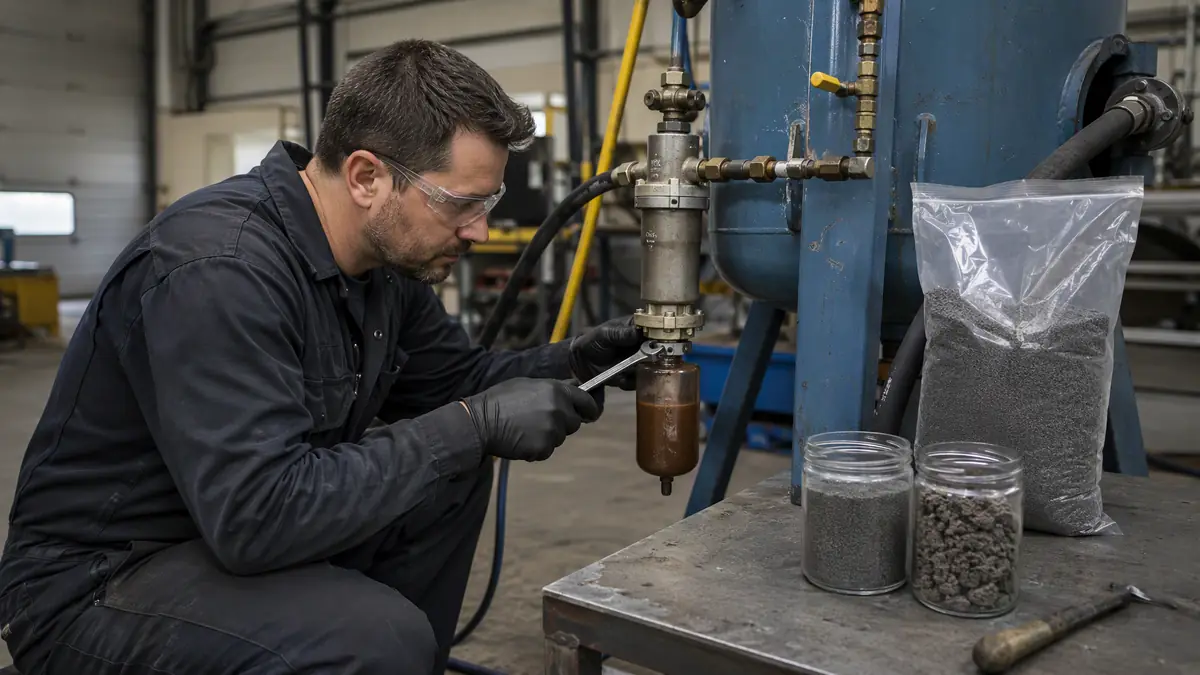
A structured diagnostic approach: checking the compressed air system's moisture trap and comparing media samples to isolate the problem.
A maintenance technician systematically diagnoses a moisture problem. He is draining a water-filled moisture separator from the compressed air line while comparing a sample of dry abrasive from storage with a damp sample from the blast pot. This methodical process helps pinpoint whether the moisture
When you encounter moist abrasive blasting problems, isolate the cause systematically rather than guessing. A structured approach saves time and avoids unnecessary media disposal.
Step 1: Check the Abrasive Before It Enters the Pot
Take a sample from the storage container—bag, bulk bag, or silo—and examine it in a dry environment. Squeeze a handful; dry abrasive runs through your fingers, while damp abrasive clumps and leaves residue on your palm. If the media is already damp in storage, the problem is upstream of the blasting equipment. The solution is improved storage: sealed containers, raised pallets, covered silos, and first-in-first-out stock rotation.
Step 2: Isolate the Compressed Air Supply
If the abrasive is dry in storage but damp when it reaches the nozzle, moisture is entering through the air system. Check the following in order:
Moisture separator / water trap. Drain it manually and observe how much water collects during a typical blasting session. If the trap is full or filling rapidly, the primary separation is inadequate for the compressor output and ambient humidity.
Air dryer. If your system includes a refrigerated or desiccant dryer, verify it is functioning correctly. A failed dryer can introduce significant moisture without any obvious alarm.
Aftercooler. On larger compressor installations, confirm the aftercooler is reducing air temperature sufficiently to condense moisture before it reaches the separator.
Pipework configuration. Air lines that slope toward the compressor, lack drain legs, or have dead legs can trap condensate that is periodically picked up and carried to the blast pot.
Step 3: Evaluate the Reclaim System
For operations using recycled abrasive, inspect the reclaim path. Look for moisture ingress points: open hoppers exposed to weather, damaged seals on dust collectors, or abrasive sitting in the reclaim system between shifts where it can absorb ambient humidity overnight.
07 Preventing Moisture-Related Blasting Problems
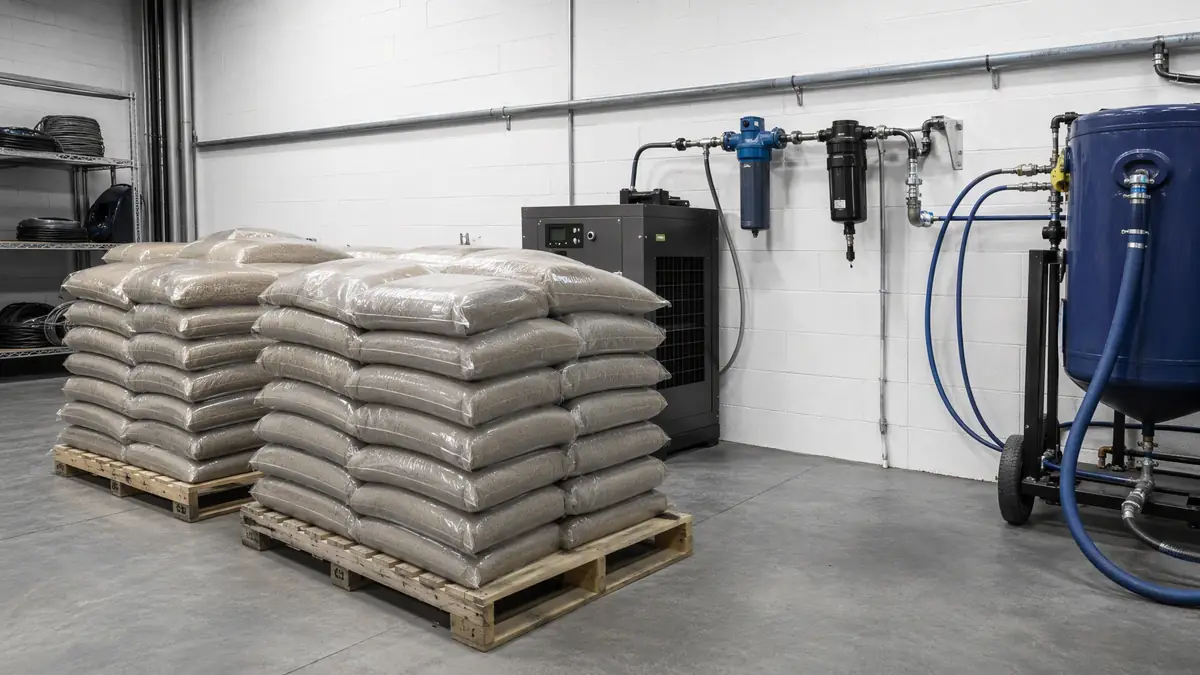
Prevention relies on sealed storage on raised pallets and proper compressed air treatment with dryers and filters.
A view of an ideal industrial setup for preventing moist abrasive blasting problems. Sealed abrasive bags are stored correctly on pallets off the floor. The compressed air line is equipped with a refrigerated air dryer and a high-efficiency coalescing filter, ensuring only dry air reaches the blast
Prevention is less expensive than downtime and rework. The following practices apply to most industrial blasting operations; adapt them to your specific equipment and site conditions.
Storage Best Practices
Store bagged abrasive indoors on pallets, off concrete floors.
Keep bags sealed until use; reseal partially used bags.
For bulk silos, ensure the fill cap and inspection hatches are gasketed and weather-tight.
In high-humidity environments, consider using a desiccant breather on bulk storage vessels to prevent moist air from being drawn in as the silo empties.
Compressed Air Treatment
Install a properly sized moisture separator as close to the blast pot as practical—not just at the compressor.
Drain water traps at least daily; automatic drain valves are recommended for continuous operations.
For critical applications (e.g., blasting for high-performance coatings), a refrigerated or desiccant air dryer is strongly recommended. The cost of the dryer is quickly offset by reduced rework and media waste.
Regularly inspect and replace filter elements according to the manufacturer's schedule.
Operational Discipline
Do not leave abrasive sitting in the blast pot overnight, especially in humid conditions. Empty the pot or seal it if the machine will be idle.
During extended breaks in humid weather, consider running the blast nozzle briefly to clear any damp media from the hose before it can compact.
For outdoor blasting, be aware that dew can form on exposed steel and inside reclaim systems overnight. Start the day by checking media condition before committing to production.
08 When Moisture-Damaged Media Can Be Salvaged
Not all damp abrasive must be discarded. The decision depends on the media type and the severity of moisture exposure:
Garnet and mineral abrasives. If only slightly damp and free of clay or silt contamination, these can sometimes be dried by spreading in a thin layer in a dry, ventilated area. However, once mineral abrasives have been saturated, their friability may be permanently altered—they break down faster during blasting, reducing their effective working life. Confirm performance against your coating specification before reusing salvaged media on critical work.
Steel grit and shot. Metallic abrasives are more tolerant of moisture exposure, but they are also prone to rusting. If steel grit or shot has developed surface rust, it should not be used for blasting surfaces that will receive high-performance coatings, as rust particles can become embedded in the substrate. Lightly rusted metallic media may still be acceptable for non-critical cleaning or for use in shot peening operations where surface contamination limits are less stringent—verify against your process specification.
Aluminum oxide and silicon carbide. These synthetic abrasives are relatively unaffected by moisture in terms of particle integrity, but they can still cake and clog. Once dried, they generally perform as expected. Ensure thorough drying before returning them to the blast pot.
Copper slag and coal slag. These byproduct abrasives are typically single-use and inexpensive. The cost of labour to dry and screen damp slag often exceeds the cost of replacement media. In most cases, disposal and fresh media are the practical choice.
09 Conclusion
Moisture in abrasive media is a production killer that disguises itself as equipment trouble. It causes caking in the pot, wet blast media clogging at the valve, nozzle blockages, and flash rust on freshly prepared surfaces—each of which erodes productivity and drives up coating failure risk. The key to solving moist abrasive blasting problems is systematic diagnosis: check the media in storage, verify the compressed air quality, and inspect the reclaim path. Once the source is identified, the fix is usually straightforward—better storage, proper air treatment, and operational discipline. For shops that depend on consistent surface preparation, controlling moisture is not a housekeeping detail; it is a core process requirement.
10 Frequently Asked Questions
How can I tell if my abrasive media is damp before I load it into the blast pot?
Take a dry sample from the bag or silo and squeeze a handful. Dry abrasive will pour freely through your fingers, while damp media will clump together and may leave a dusty residue on your palm. Also, look for a darker, muddier color change in mineral abrasives like garnet, which is a strong visual indicator of moisture uptake.
Why does my blast hose pulse or kick during operation?
A pulsing or surging blast hose is a classic sign of wet blast media clogging. Damp abrasive packs together inside the hose and forms a plug. Pressure builds behind this plug until it breaks free as a high-speed slug, causing the hose to kick and delivering an inconsistent, pulsating spray pattern at the nozzle.
What causes flash rust to appear on steel immediately after blasting?
Flash rust is primarily caused by moisture being introduced to the bare steel surface during blasting. This moisture is transferred directly from damp abrasive media or from condensation in the compressed air supply. It creates an instant oxidation layer that violates coating specifications and requires costly rework.
How do I know if the moisture problem is from my abrasive or my air compressor?
Check the abrasive in its storage container first. If it's dry there but damp when it exits the nozzle, the moisture is entering through the compressed air system. Inspect the moisture separator drain; if it fills rapidly, or if the air dryer has failed, condensation is traveling through the air lines and wetting the media inside the blast pot.
Can I still use abrasive that has gotten damp?
It depends on the severity. Slightly damp media can sometimes be dried by spreading it out in a thin layer in a dry, covered area. However, heavily saturated or caked abrasive is often permanently damaged and should be disposed of, as it will continue to cause clogging and inconsistent blasting even after drying attempts.
What is the most common mistake that leads to moisture in the blast pot?
The most common mistake is storing abrasive improperly, such as leaving bags open on a damp floor or outdoors. A close second is neglecting the compressed air system by failing to drain the moisture separator daily or not having an adequately sized air dryer for the ambient humidity, which introduces condensate directly into the pot.
What is the best way to prevent wet blast media clogging overnight?
The single most effective practice is to empty the blast pot at the end of each shift, especially in humid conditions. Never leave abrasive sitting in the machine overnight. If emptying is not practical, ensure the pot is completely sealed to prevent moist ambient air from being drawn in as temperatures change.
11 Solution
If you are experiencing persistent clogging or inconsistent blast quality, start by inspecting your abrasive media and air supply using the diagnostic steps outlined above. When you need fresh, specification-grade abrasives—or if you want to discuss media compatibility with your blasting setup—explore the abrasive product range at SPA2Z. For technical confirmation on media suitability or to request a quotation, contact the SPA2Z sales team with your application details.
12 Get a quote
Get a quote
Tell us what you need. We reply within one business day.
Recommended products
Catalogue products matched to this article. Ask for grade, quantity and destination.