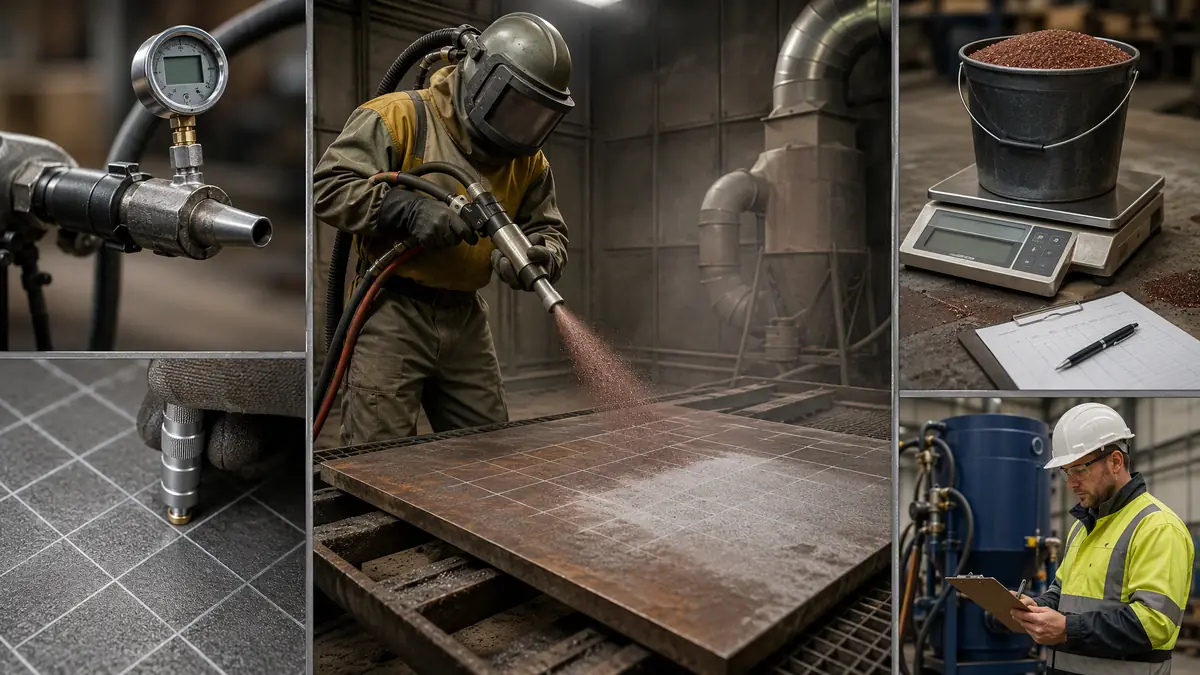
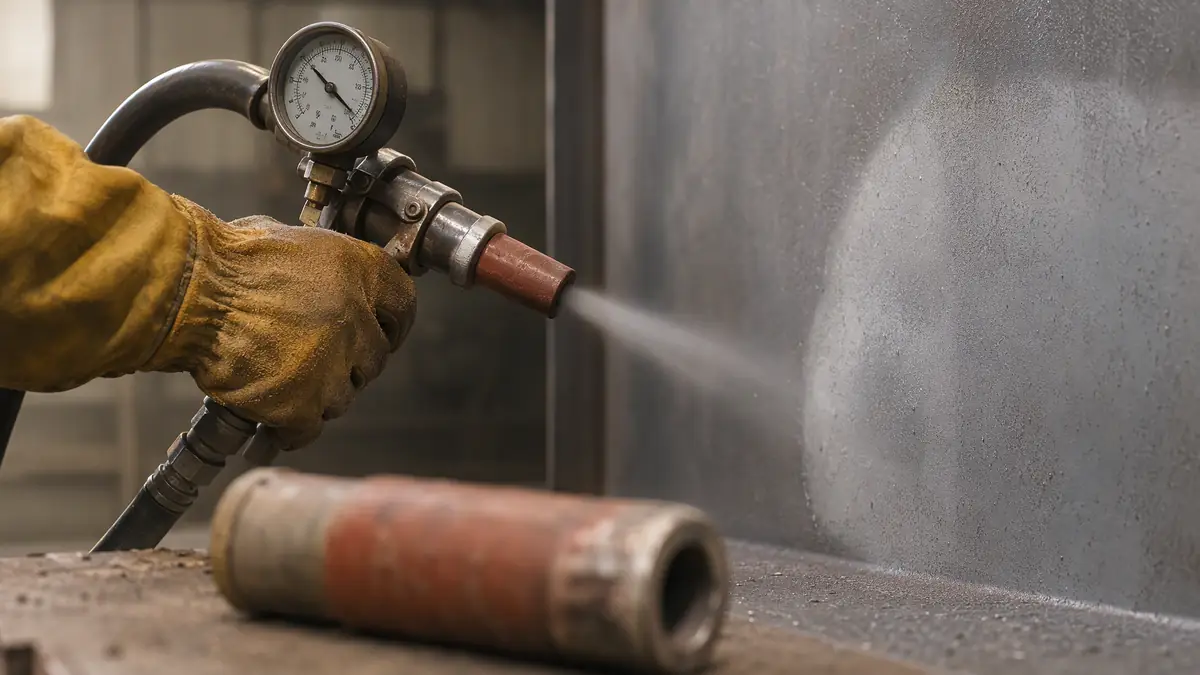
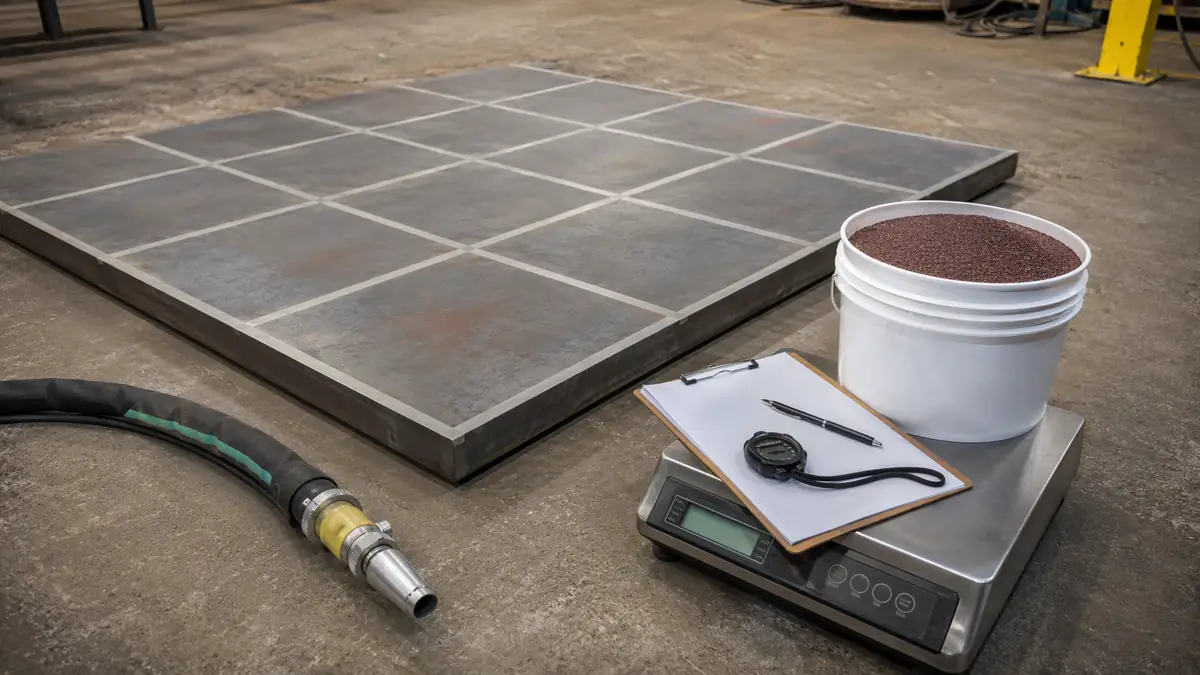
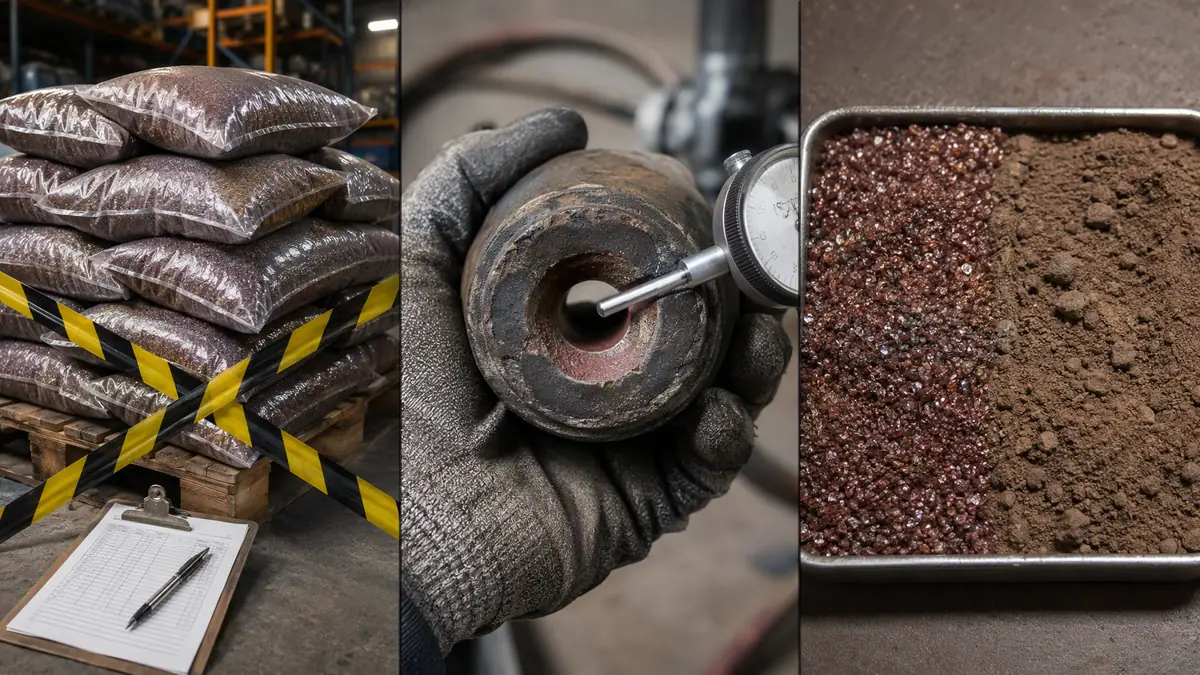
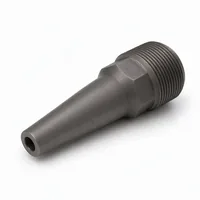
Detailed close-up of an active blast nozzle with an attached pressure gauge reading in the optimal range, an operator's gloved hand maintaining standoff, and a worn nozzle tip in the foreground. The image highlights the key variables—pressure, standoff, and nozzle condition—that influence blast medi

Abrasive consumption is not a fixed property of the media alone. It emerges from the interaction of equipment, settings, operator technique, and the substrate. Understanding these variables is essential before attempting to set a benchmark.
Nozzle Pressure
Blast pressure at the nozzle is arguably the single largest lever on consumption. Higher pressure increases particle velocity, which can improve cleaning speed — but it also increases media breakdown and embedment. If pressure drops below the effective range for a given abrasive, the operator compensates by dwelling longer, which drives up total media used per square metre.
Typical operating pressures for common abrasives fall in the 6–8 bar (90–120 psi) range, but the optimum depends on the abrasive type and the specification. A pressure gauge at the nozzle (not just at the compressor or pot) is essential for consistent benchmarking, because pressure drop across hoses and fittings can be significant.
Standoff Distance and Blast Angle
Standoff — the distance from the nozzle tip to the workpiece — affects both the blast pattern footprint and the impact energy. Too close, and the pattern shrinks while media rebounds violently; too far, and velocity decays, reducing cleaning efficiency. Either extreme increases consumption per square metre.
Similarly, blasting at an angle far from perpendicular (typically 60–90° to the surface is recommended for most applications) changes how energy is transferred. Operators chasing a difficult profile by altering angle and distance without adjusting other parameters will see consumption numbers drift.
Abrasive Type, Size, and Condition
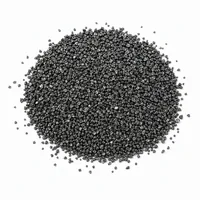
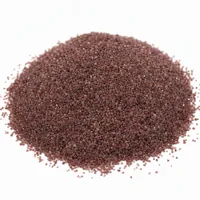
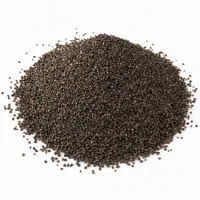
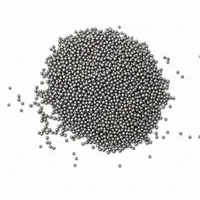
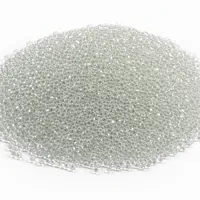
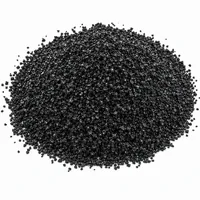
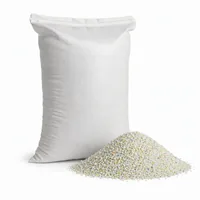
Hardness, particle shape, and size distribution all matter. A sharp, angular abrasive like garnet cuts faster on thick coatings but may fracture more quickly than a tougher media like steel grit. Finer mesh sizes can produce a smoother profile but may require more passes on heavy rust, increasing total kg/m².
For recyclable media, the working mix — the blend of fresh make-up abrasive and partially worn particles already in the system — determines the effective consumption rate. A poorly maintained working mix with excessive fines will consume more fresh abrasive to achieve the same result.
Surface Condition and Specification
The starting condition of the substrate (mill scale, heavy rust, multiple coating layers) and the required finish standard (SA 2, SA 2.5, SA 3, or SSPC equivalents) set the baseline difficulty. A job requiring white metal blast (SA 3) on heavily pitted steel will consume several times more abrasive per square metre than a sweep blast on intact mill scale.
Operator Technique
Even with identical equipment and abrasive, two operators can produce different consumption rates. Consistent nozzle travel speed, overlap, and dwell time are skills that develop with training and measurement. This is why benchmarking works best when it is tied to a specific crew and equipment setup, or when it is used to standardise technique across shifts.