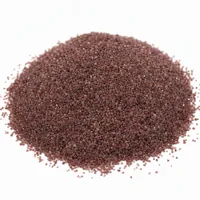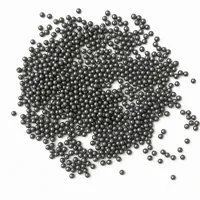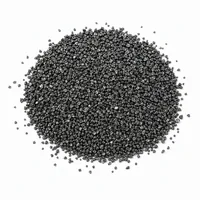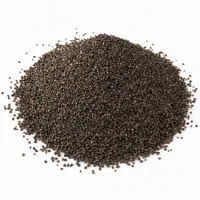
ABRASIVES GUIDE

Baking Soda Blasting vs Traditional Abrasives

Soda blasting strips coatings without warping metal or etching glass—but it won't profile steel. For restoration contractors weighing sodium bicarbonate against...

Published
11 Nov 2017
Category
Abrasives
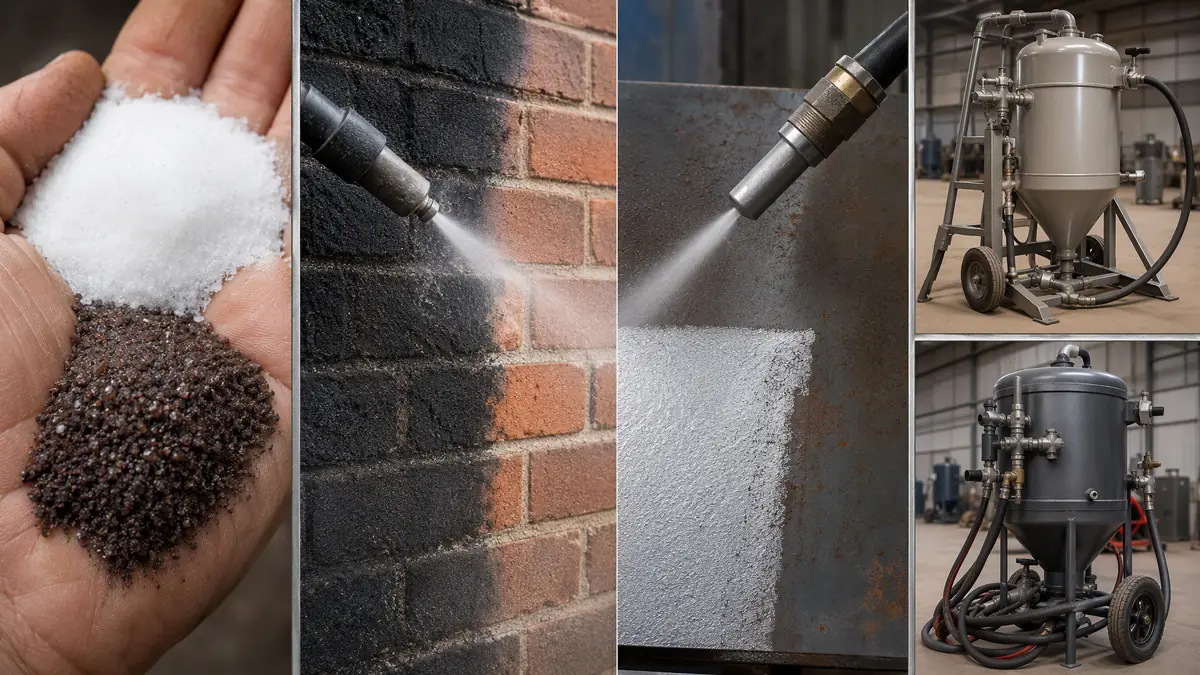
Multi-panel collage comparing soda blasting on brick and sandblasting on steel with media and equipment close-ups
FIG. 01A visual comparison of soda blasting's gen...

A professional multi-panel editorial collage for a blog comparing soda blasting and traditional abrasives. The central panel shows a split-action scene of a soda blasting nozzle cleaning a brick surface without damage next to a sandblasting nozzle creating a profile on steel. Supporting panels show

Introduction

Soda blasting strips coatings without warping metal or etching glass—but it won't profile steel. For restoration contractors weighing sodium bicarbonate against mineral and metallic media, the choice turns on substrate sensitivity, cleanup tolerance…

Introduction

Fire-damaged brick, painted timber, and alloy part on a workbench next to piles of soda and garnet media
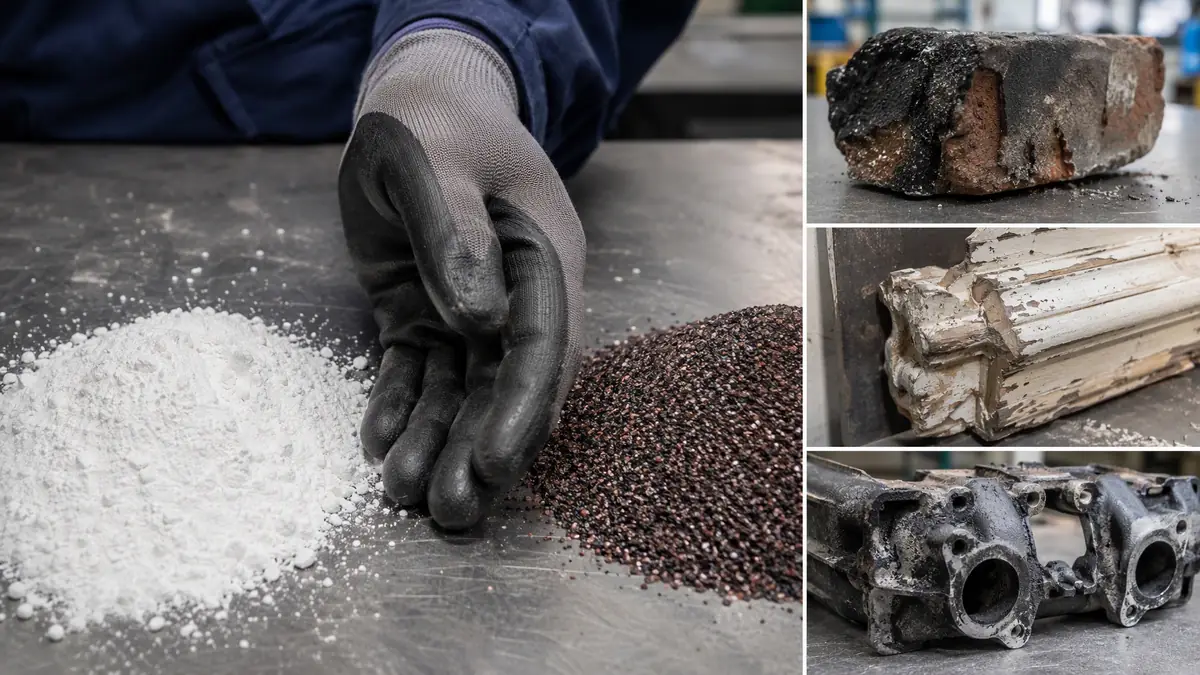
A contractor weighs the choice between gentle sodium bicarbonate and aggressive garnet grit for cleaning delicate, fire-damaged, and painted substrates.

A scene on a restoration contractor's workbench showing three items requiring cleaning: a fire-damaged brick, a piece of historic timber with peeling paint, and a carbon-caked alloy engine part. A gloved hand is poised between two piles of blasting media, fine white sodium bicarbonate and sharp dark

Fire-damaged brick, painted timber, and alloy part on a workbench next to piles of soda and garnet media

Every restoration contractor has faced the same dilemma: a client's fire-damaged brickwork, a historic timber door layered in lead paint, or a set of alloy engine parts caked in carbon. The coating must come off, but the substrate underneath cannot be sacrificed. Reach for garnet or steel grit, and you risk pitting, warping, or dimensional change. That is precisely where sodium bicarbonate blasting enters the conversation—and where the comparison between soda blasting and traditional sandblasting becomes a daily business decision.

This article examines how soda blasting works, where it outperforms conventional abrasives, and—critically—where it falls short. Restoration contractors evaluating their next media purchase will find practical selection criteria, substrate-specific guidance, and the trade-offs that determine job profitability.
What Is Soda Blasting?

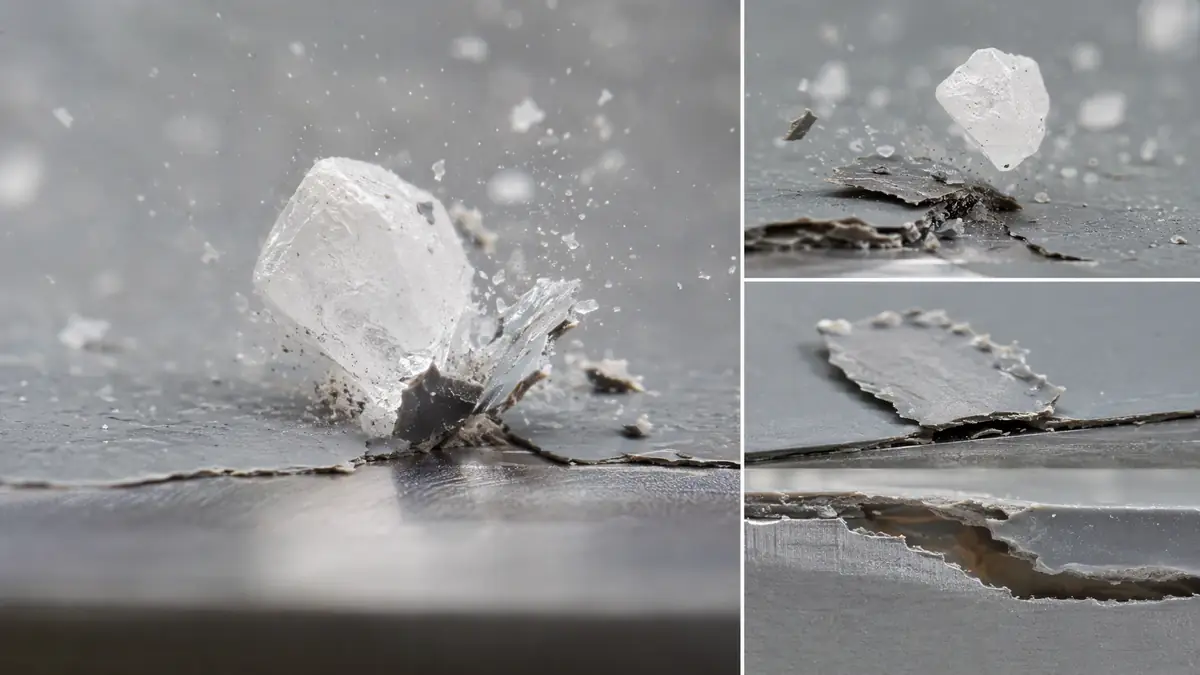
Macro shot of a sodium bicarbonate crystal fracturing on impact to lift paint from undamaged metal
A macro view capturing the micro-fracturing action of a soda crystal, which explodes on impact to lift a coating without gouging the metal substrate.

An extreme macro, photorealistic image showing the micro-fracture mechanism of soda blasting. A single sodium bicarbonate crystal is captured mid-impact against a painted metal surface, shattering and lifting a paint chip cleanly away while leaving the shiny metal substrate completely unmarred. Othe

Macro shot of a sodium bicarbonate crystal fracturing on impact to lift paint from undamaged metal

Soda blasting is a dry, compressed-air process that propels sodium bicarbonate (baking soda) particles against a surface to remove coatings, contaminants, and light oxidation. The media is a soft, water-soluble crystal—typically 70–270 µm in particle size—that fractures on impact, delivering a scrubbing action without cutting into the substrate.

Unlike angular mineral abrasives that abrade by gouging, soda crystals explode outward upon contact. This micro-fracturing mechanism lifts coatings from the substrate rather than eroding the substrate itself. The process operates at lower pressures than conventional sandblasting—commonly 80–120 psi—and generates minimal heat, which is why it earned the reputation as a "gentle strip" method.

Key terminology: soda blast refers to the process; bicarbonate describes the media chemistry. The terms are used interchangeably in the field, though technically sodium bicarbonate is the compound and soda blasting is the application.

Why Soda Blasting Matters in Restoration Work

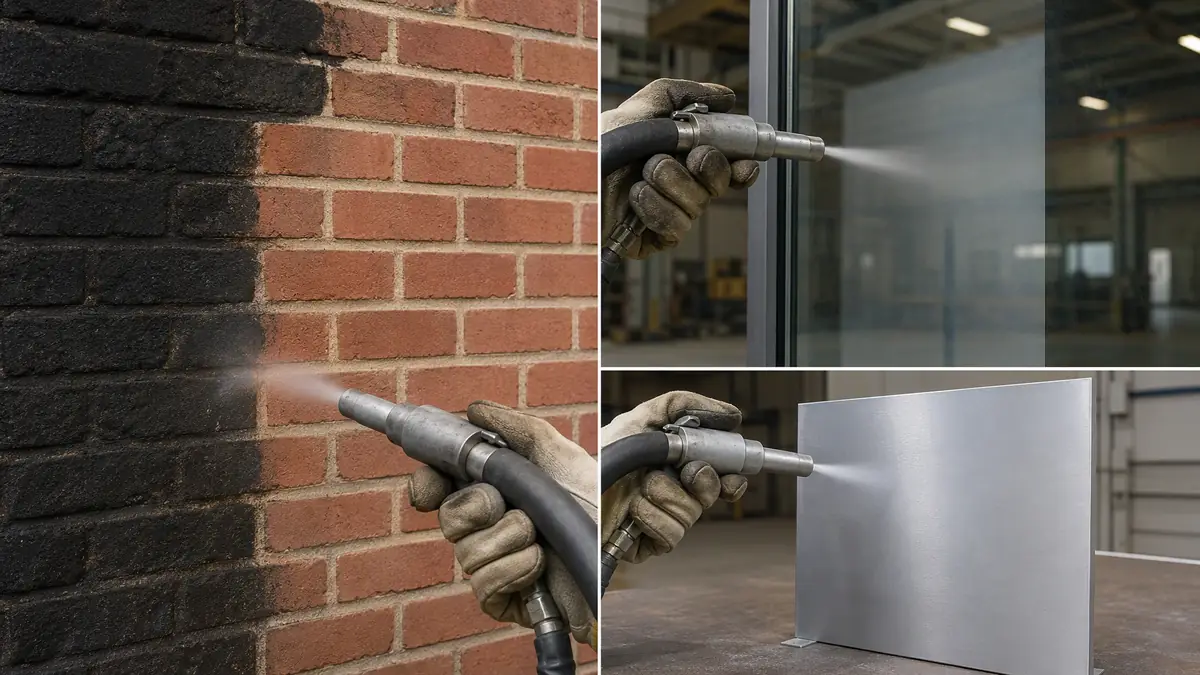
Soda blasting cleaning a fire-damaged brick wall and preserving a glass and aluminum surface
Soda blasting removes fire damage from brick without erosion and cleans delicate glass and aluminum without etching or warping.

A photorealistic split-scene demonstrating the value of soda blasting in restoration. The left side shows a nozzle cleaning soot from a fire-damaged brick wall, revealing a perfectly intact surface. The right side shows a pristine glass pane and a thin aluminum sheet that have been cleaned without a

Soda blasting cleaning a fire-damaged brick wall and preserving a glass and aluminum surface

The value proposition for restoration contractors is straightforward: soda blasting de-coats without deforming. Three specific advantages drive its adoption:

Substrate preservation. Soda will not etch glass, pit aluminium, or warp thin-gauge steel. For fire restoration on brick and masonry—where smoke damage penetrates porous surfaces—soda cleans without eroding the fire-weakened substrate.

One-step cleaning and deodorising. Sodium bicarbonate neutralises acidic combustion residues chemically, not just mechanically. On fire-damaged timber and drywall, this means odour reduction happens during blasting, reducing post-treatment chemical washing.

Water-soluble residue. Spent soda media dissolves in water. On machinery and engine components, this eliminates the risk of abrasive embedment that could cause bearing or seal failure later. A simple rinse clears the residue.

No surface profile. This is both the primary advantage and the primary limitation. Soda blasting does not create an anchor profile, which means it is unsuitable as a standalone surface preparation step where coating adhesion depends on mechanical keying.

When Soda Blasting Is the Right Choice

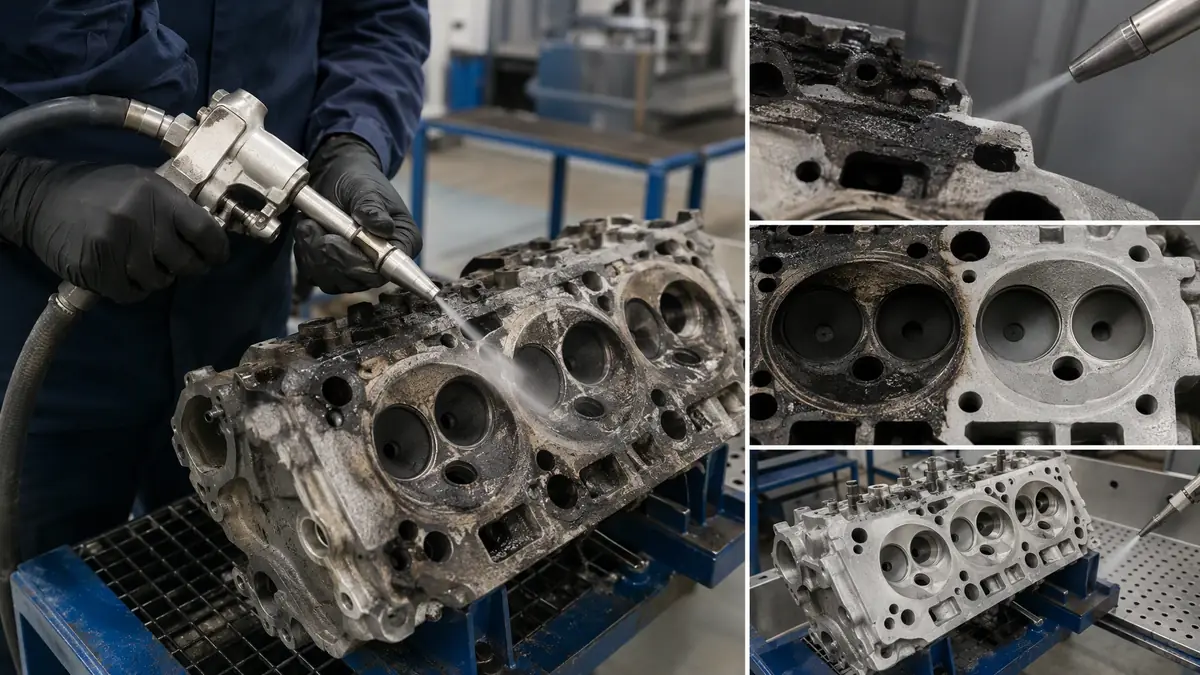
Soda blasting cleaning carbon deposits from an alloy engine cylinder head in a workshop
A mechanic uses soda blasting to safely remove carbon buildup from a delicate alloy engine part without affecting its dimensional integrity.

A photorealistic scene in an automotive restoration workshop. A mechanic in safety gear directs a soda blasting nozzle at a complex alloy engine cylinder head, stripping away dark carbon deposits. The cleaned area reveals a pristine, shiny alloy surface with no dimensional change or pitting, illustr

Soda blasting cleaning carbon deposits from an alloy engine cylinder head in a workshop

Soda blasting excels in specific restoration scenarios:

  • Fire and smoke restoration: Brick, stone, concrete, timber framing, and structural steel where the goal is contaminant removal without substrate loss.
  • Historic preservation: Delicate masonry, ornate plaster, and heritage timber where any surface alteration is unacceptable.
  • Automotive and aerospace restoration: Alloy engine cases, cylinder heads, carburettor bodies, and aircraft components where dimensional integrity is critical.
  • Graffiti removal from masonry: Soda lifts paint from porous stone without the shadow effect that aggressive blasting leaves behind.
  • Mould remediation on timber: The mild alkalinity of bicarbonate inhibits fungal regrowth while the blasting action removes surface colonisation.
  • Food processing equipment: Water-soluble, non-toxic media eliminates contamination risk in facilities where abrasive embedment is a food safety hazard.

When Soda Blasting Is a Poor Fit

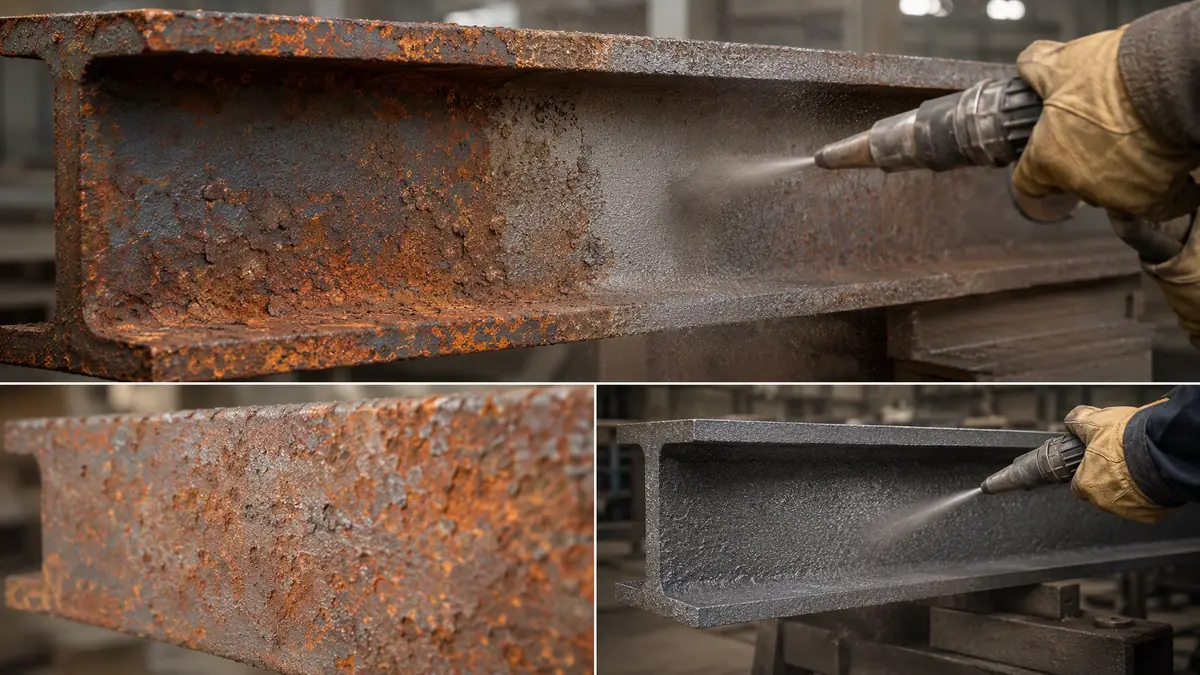
Comparison of ineffective soda blasting vs effective steel grit blasting on a heavily rusted steel beam
Soda blasting fails to remove heavy rust from a steel beam, while steel grit effectively cuts through to create a clean, profiled surface.

A photorealistic close-up of a heavily corroded steel I-beam demonstrating a poor application for soda blasting. The left side shows the ineffective result of soda blasting, with rust remaining in deep pits. The right side shows a stream of dark steel grit media aggressively removing the corrosion t

Comparison of ineffective soda blasting vs effective steel grit blasting on a heavily rusted steel beam

Understanding the limitations prevents costly misapplication:

  • Heavy rust and mill scale removal. Soda lacks the hardness to cut through thick oxidation. Steel grit or garnet is the correct choice.
  • Surface profiling for coating adhesion. Any coating system requiring an anchor profile—typically 50–100 µm for industrial paints—cannot be applied directly over a soda-blasted surface. The substrate will need secondary abrasive blasting or mechanical profiling.
  • High-production industrial stripping. Soda consumption rates and lower strip speeds make it uneconomical for large-scale structural steel preparation compared to wheel blasting or high-pressure garnet blasting.
  • Wet or oily surfaces. Moisture causes soda to clump and clog feed lines. The substrate must be dry, or media flow becomes unreliable.
  • Outdoor blasting without containment. Spent soda is water-soluble but still alkaline. Uncontained discharge can alter soil pH and requires environmental assessment on sensitive sites.

Soda Blasting vs Sandblasting: Head-to-Head Comparison

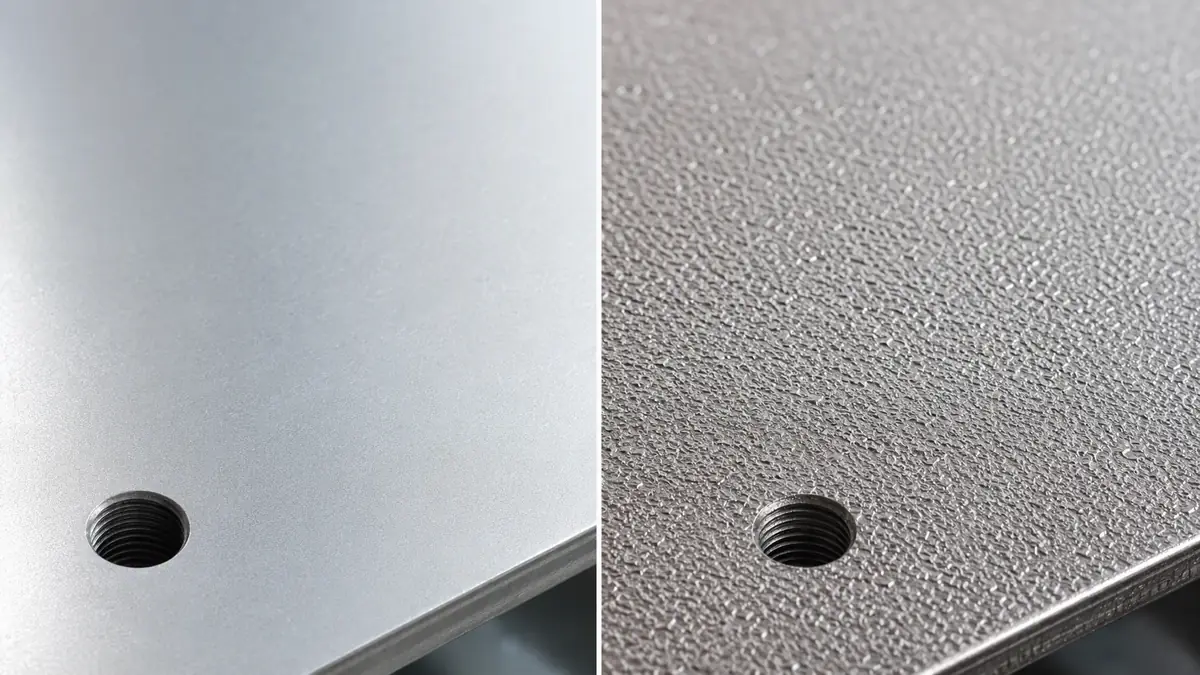
Macro comparison of a smooth soda-blasted surface and a rough sandblasted anchor profile
A direct visual comparison showing the lack of surface profile from soda blasting versus the distinct anchor profile created by traditional sandblasting.

A photorealistic macro comparison image for a head-to-head analysis. The left side shows a perfectly smooth, reflective aluminum surface after soda blasting, with no visible profile under raking light. The right side shows a dull, rough steel surface after traditional sandblasting, with a clearly vi

Macro comparison of a smooth soda-blasted surface and a rough sandblasted anchor profile

The term "sandblasting" is used broadly in the field to describe blasting with any hard, angular mineral or metallic abrasive—garnet, aluminium oxide, coal slag, copper slag, steel grit, or actual silica sand (now largely restricted). The comparison below treats sandblasting as the category of traditional hard-media blasting.

FactorSoda BlastingTraditional Sandblasting
Media hardness~2.5 Mohs (soft, friable)6–9 Mohs (hard, angular)
Material removal mechanismMicro-fracture, coating lift-offCutting, gouging, erosion
Substrate impactNegligible; no dimensional changeRemoves substrate material; creates profile
Surface profile createdNoneYes—profile depth depends on media and pressure
Heat generationMinimalCan cause warping on thin substrates
Typical operating pressure80–120 psi90–140 psi (varies by media and nozzle)
Dust characteristicsFine, water-soluble, alkalineHeavy, inert or hazardous depending on media
CleanupDissolves with water rinseRequires mechanical collection; may need hazardous disposal
Coating adhesion readinessRequires secondary profiling for most coatingsReady for coating after dust removal
Consumption rateHigher (media fractures once and is spent)Lower (some media can be recycled multiple times)
Cost per square metreHigher media cost; lower substrate repair costLower media cost; higher risk of substrate damage cost
Fire restoration suitabilityExcellent—cleans and deodorisesRisky—can erode fire-damaged surfaces
Soft substrate suitabilityExcellent—safe on glass, aluminium, timber, fibreglassPoor—will etch, pit, or erode

Media Selection: Decision Criteria for Restoration Contractors

Choosing between soda and traditional abrasives is not a matter of one being universally better. The decision flows from the substrate, the coating, and the end specification.

Step 1: Identify the substrate material and condition.
- Is it heat-sensitive (thin metal, alloy, plastic composite)? → Soda.
- Is it soft or porous (timber, brick, sandstone)? → Soda.
- Is it hard steel with heavy corrosion? → Traditional abrasive.
- Is it already compromised (fire-weakened, aged, fragile)? → Soda.

Step 2: Determine the coating type and thickness.
- Light paint, soot, carbon deposits, graffiti → Soda handles these efficiently.
- Multiple layers of epoxy, powder coating, heavy rust → Traditional abrasive or a two-step process (soda to strip, abrasive to profile).

Step 3: Check the end specification.
- Does the job require a surface profile for coating adhesion? If yes, soda alone is insufficient. The substrate will need a secondary blast with garnet or aluminium oxide, or mechanical abrasion, to create the specified anchor pattern.
- Is the goal simply clean and deodorised (fire restoration, mould remediation)? Soda is the superior choice.

Step 4: Evaluate site conditions and containment.
- Indoor, occupied, or sensitive environment → Soda's water-soluble, low-dust characteristics reduce containment burden.
- Outdoor, remote, high-production → Traditional abrasives with recycling capability may reduce media logistics cost.

Common Mistakes and How to Avoid Them

Mistake 1: Using soda blasting where a coating profile is required.
The coating fails because there is no mechanical key. Prevention: Confirm the coating specification before selecting media. If the specification calls for a surface profile, plan for a secondary profiling step or switch to an appropriate abrasive.

Mistake 2: Assuming soda blasting is always "gentle."
At high pressures or with prolonged dwell time on a single spot, soda can still erode soft substrates like timber grain or aged mortar. Prevention: Train operators to keep the nozzle moving and start at the lowest effective pressure—typically 80 psi for delicate work.

Mistake 3: Neglecting post-blast surface preparation.
Sodium bicarbonate leaves a fine, alkaline film that can interfere with coating adhesion, particularly with moisture-cured urethanes and some epoxies. Prevention: Always rinse, dry, and—where the coating specification requires—neutralise with a mild acid wash (e.g., diluted vinegar solution) before coating. Confirm the coating manufacturer's surface preparation requirements.

Mistake 4: Using standard blasting equipment without modification.
Soda is hygroscopic and prone to clumping in humid conditions. Standard abrasive pots without fluidisation or moisture separation will bridge and cause erratic flow. Prevention: Use equipment designed or adapted for soda—with agitators, moisture traps, and larger metering orifices.

Mistake 5: Overlooking environmental and disposal requirements.
While soda is benign compared to heavy-metal slags, the stripped coating may contain lead, asbestos, or other hazardous materials. The water-soluble soda carries these contaminants into rinse water. Prevention: Test coatings before blasting. Contain and collect rinse water where hazardous coatings are present; do not assume soda blasting eliminates disposal obligations.

Implementation Notes for Restoration Contractors

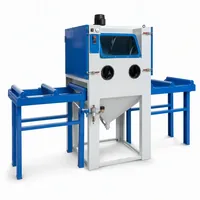
  • Equipment compatibility: Not every sandblast pot handles soda well. Soda-specific pots include agitators or fluidising membranes to prevent bridging. If using a standard pot, expect to derate capacity and monitor media flow continuously.
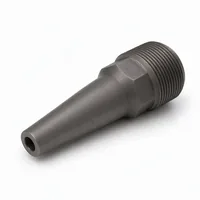
  • Nozzle selection: Venturi nozzles provide the velocity needed for coating removal at lower pressures. Straight-bore nozzles are less efficient for soda. Tungsten carbide nozzles offer adequate life with soda; boron carbide is over-spec for this soft media.
  • Moisture management: Soda clumps above approximately 60% relative humidity. Install a refrigerated air dryer or desiccant dryer in the compressed air line. Drain moisture traps hourly in humid conditions.
  • Operator protection: Although soda is non-toxic, the dust is alkaline and irritating to eyes and respiratory passages. Full-face supplied-air respirators are standard practice, not optional comfort items.
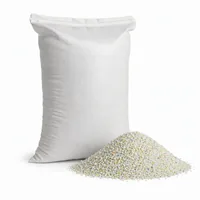
  • Media storage: Store sodium bicarbonate blast media in sealed, moisture-proof containers. Opened bags absorb ambient humidity and degrade flow characteristics within days in coastal or monsoon climates.

Conclusion

Soda blasting and traditional sandblasting are complementary tools, not competitors. The restoration contractor who masters both—and knows precisely when to reach for bicarbonate versus garnet—avoids rework, protects substrates, and delivers the surface that the coating specification demands.

For fire restoration, historic preservation, and any job where the substrate is worth more than the coating, soda blasting is the method of choice. For heavy corrosion, mill scale, and surface profiling, traditional mineral and metallic abrasives remain irreplaceable. The smart decision is not choosing one over the other; it is recognising which job sits in front of you and matching the media accordingly.

Frequently Asked Questions

What is the main difference between soda blasting and sandblasting?

The core difference lies in the mechanism and hardness. Soda blasting uses soft sodium bicarbonate crystals that micro-fracture on impact to lift coatings without eroding the substrate, leaving no surface profile. Traditional sandblasting uses hard, angular media that cut and gouge the surface, which removes substrate material and creates an anchor profile for coatings.

When should I choose soda blasting over traditional abrasives?

Choose soda blasting when substrate preservation is critical. It is ideal for fire and smoke restoration, historic preservation, automotive alloys, and any soft or heat-sensitive substrate like timber, fibreglass, or thin-gauge metal where traditional blasting would cause warping, pitting, or etching.

Can I paint directly after soda blasting?

Not usually. Soda blasting does not create a surface profile, which is essential for mechanical coating adhesion. You will need a secondary profiling step, such as blasting with garnet or mechanical abrasion. Additionally, the alkaline film left by soda must be rinsed and sometimes neutralized to prevent coating failure, especially with moisture-sensitive paints.

Is soda blasting safe for all substrates?

While much gentler than traditional abrasives, soda blasting is not universally safe. At high pressures or with prolonged dwell time, it can still erode very soft substrates like aged mortar or soft timber grain. It is also unsuitable for removing heavy rust or mill scale, and the alkaline residue can affect pH-sensitive materials if not properly rinsed.

Why is soda blasting preferred for fire restoration?

Soda blasting offers two key benefits for fire jobs. First, it cleans smoke and soot from weakened, porous surfaces like brick and timber without eroding the fire-damaged substrate. Second, sodium bicarbonate chemically neutralizes acidic combustion residues, which deodorizes the material during blasting and reduces the need for post-treatment chemical washes.

What are the limitations of soda blasting I should know before bidding a job?

The primary limitations are its inability to remove heavy rust or create a coating profile. It is also uneconomical for high-production industrial stripping due to higher media consumption and slower speeds. Soda media clumps in wet conditions, and the alkaline spent media requires containment to prevent soil pH alteration on outdoor sites.

What equipment modifications are needed to switch from sand to soda?

Standard sandblasting equipment often requires modification for soda. Soda is softer and more friable, so it typically needs a specialized metering valve to prevent pulverization in the pot and a moisture separator to stop clumping. Nozzles designed for soda's lower pressure and flow characteristics are also recommended to maintain consistent media delivery.

How do I handle the residue after soda blasting?

Spent soda media is water-soluble, which simplifies cleanup on machinery and hard surfaces with a water rinse. However, the alkaline residue must be contained and collected during the job. On sensitive outdoor sites, prevent runoff into soil or waterways. For coating prep, the fine film left behind must be thoroughly rinsed and dried, and a mild acid wash may be required per the coating manufacturer's specification.

Solution

Selecting the right abrasive media is a specification-driven decision. Review the range of abrasives—including sodium bicarbonate blast media, garnet, and aluminium oxide—available at SPA2Z. For technical guidance on media compatibility with your specific restoration application or coating specification, contact the SPA2Z sales team to discuss your requirements and request a quotation.

Get a quote

Get a quote

Tell us what you need. We reply within one business day.

Sending…
Need a price? Ask us here.