ABRASIVES GUIDE

Crushed Glass Abrasive Pros and Cons for Field Blasting

Crushed glass abrasive offers field coating crews an expendable, low-silica blast media made from recycled glass, but its real-world performance depends heavily...

Published
12 Jun 2021
Category
Abrasives
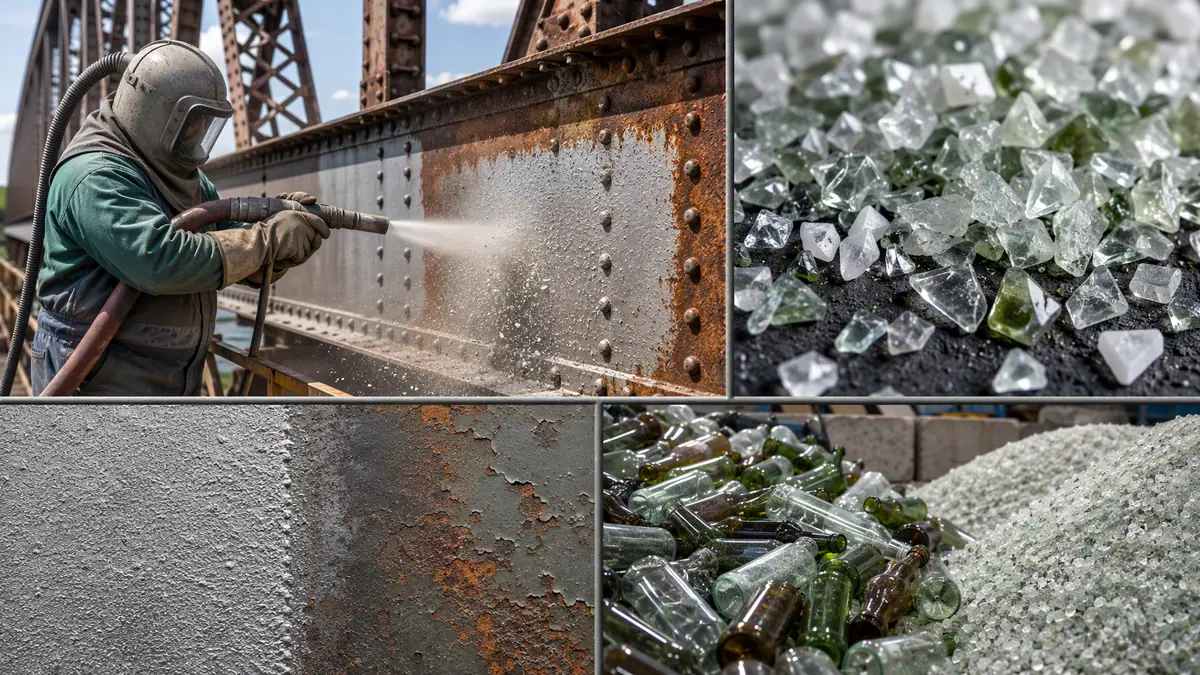
Multi-panel collage showing crushed glass abrasive blasting on a steel bridge girder, close-up of angular glass grit, surface
FIG. 01Crushed glass abrasive in action: from rec...

An editorial multi-panel industrial collage depicting the use of crushed glass abrasive in field blasting. The main panel shows a technician blasting a steel girder. Supporting panels show a macro view of sharp glass grit, a before-and-after surface profile comparison on steel, and the recycled glas

Introduction

Crushed glass abrasive offers field coating crews an expendable, low-silica blast media made from recycled glass, but its real-world performance depends heavily on the job. This article examines the practical trade-offs—cost, profile, embedment risk…

Introduction

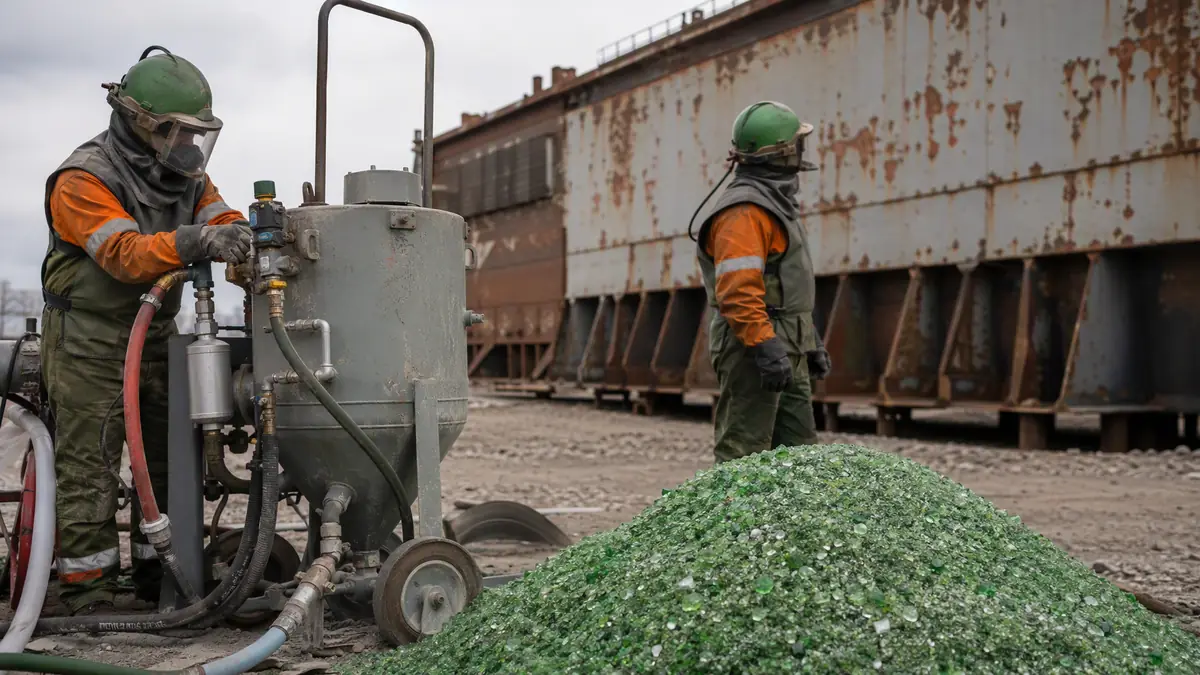
Field blasting crew evaluating crushed glass abrasive next to a blast pot and a corroded steel structure.
A field blasting crew assesses the job site, weighing the pros and cons of using crushed glass abrasive for surface preparation on a corroded structure.

An industrial photograph of a field coating crew in safety gear standing next to a blast pot and a pile of green crushed glass abrasive. They are evaluating a heavily corroded steel structure in the background, visually representing the introduction's theme of balancing surface preparation quality w

Field blasting crew evaluating crushed glass abrasive next to a blast pot and a corroded steel structure.

Field blasting crews face constant pressure to balance surface preparation quality with media cost, dust generation, and environmental compliance. Crushed glass abrasive has gained traction as a recyclable, low free silica alternative to mineral slags and sand, but it is not a universal solution. Understanding where glass grit excels—and where it creates problems—helps you avoid rework, rejected coatings, and unnecessary media expense. This article walks through the characteristics, advantages, limitations, and selection factors that matter when evaluating recycled glass blast media for open blasting work.

What Is Crushed Glass Abrasive?

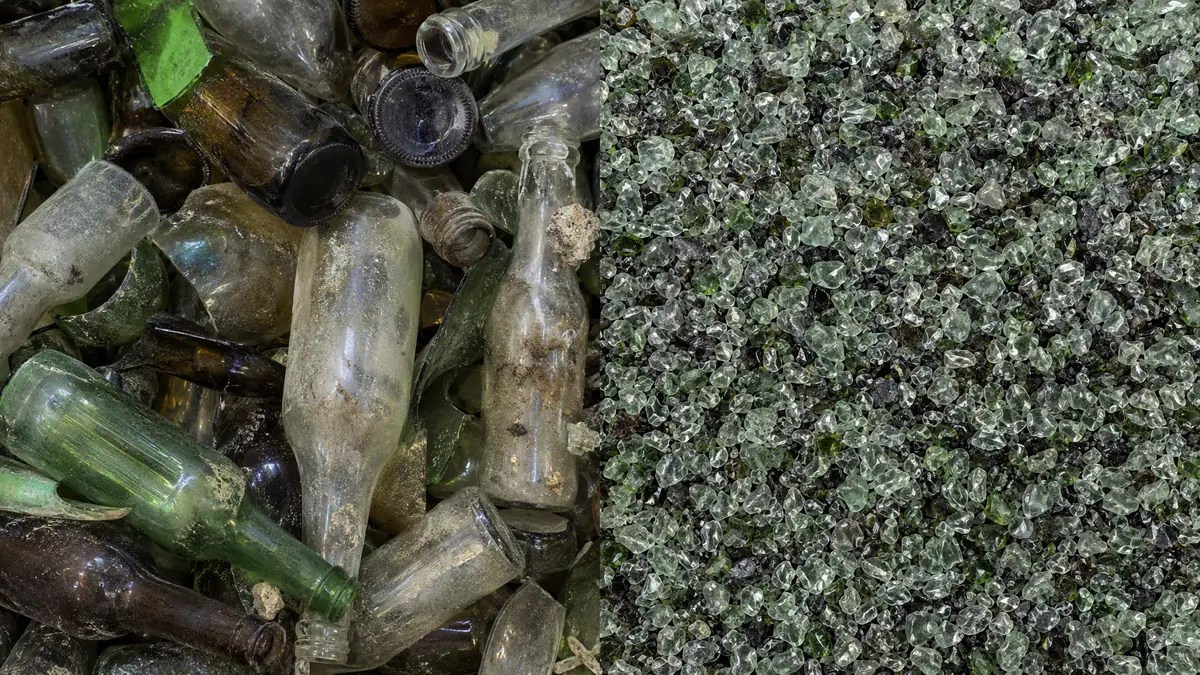
Split image comparing recycled glass bottles and processed angular crushed glass abrasive grit.
The transformation from post-consumer recycled glass bottles to washed, screened, angular crushed glass abrasive, designed for aggressive coating removal.

A detailed split-view photograph showing the source material and final product of crushed glass abrasive. The left side displays unsorted recycled glass bottles, while the right side shows a close-up of clean, sharp, angular glass grit particles, illustrating the manufacturing process from waste to

Split image comparing recycled glass bottles and processed angular crushed glass abrasive grit.

Crushed glass abrasive is an expendable blast media manufactured from post-consumer recycled glass, typically sourced from bottles and container glass. The glass is crushed, screened into specific mesh sizes, and washed to remove contaminants. The resulting angular particles deliver a sharp cutting action that strips coatings and creates surface profile.

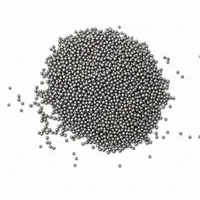
Unlike glass bead, which is spherical and used primarily for peening or cosmetic finishing in a closed cabinet, glass grit is angular and aggressive. It is designed for open blasting where the goal is coating removal, rust removal, or surface profiling prior to recoating. The distinction matters: glass bead produces a smooth, satin finish with minimal profile change, while crushed glass abrasive cuts into the substrate and leaves a sharp anchor pattern.

The media is amorphous silica—meaning the silica is in a non-crystalline, glassy state—which is why it is classified as a low free silica abrasive. This is a critical health and regulatory distinction from silica sand, which contains respirable crystalline silica linked to silicosis.

Why Crushed Glass Abrasive Matters in Field Blasting

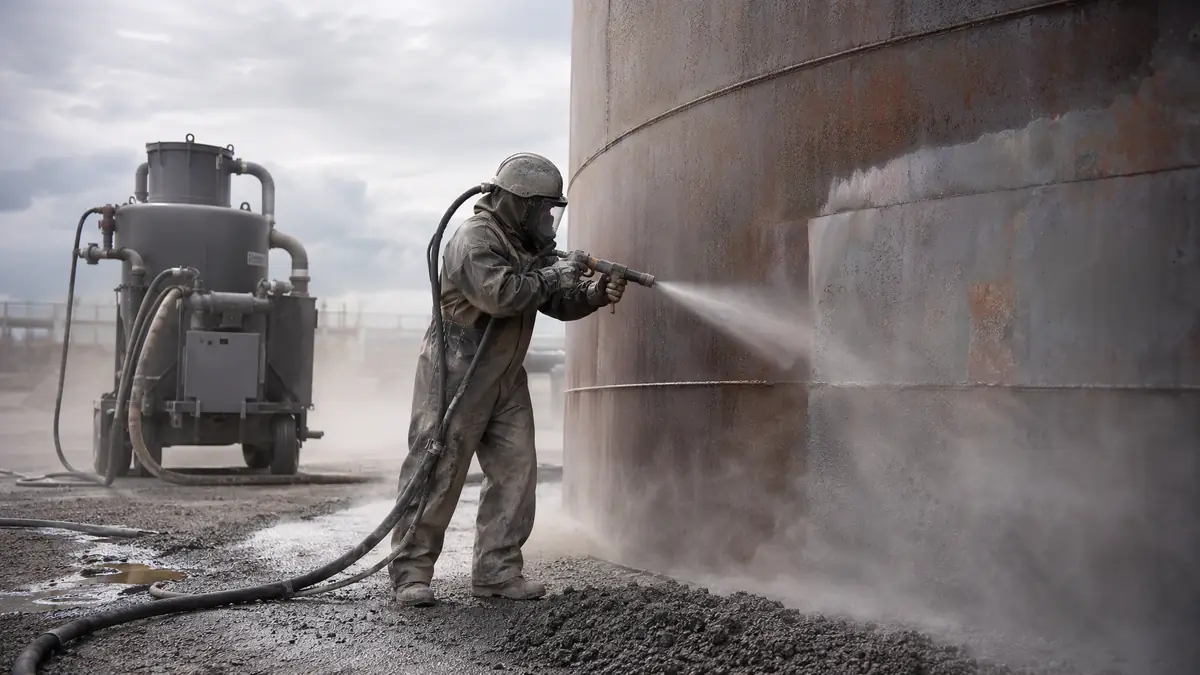
Technician in supplied-air respirator blasting a steel tank with crushed glass abrasive, showing dust generation.
A technician uses crushed glass abrasive for single-pass blasting on a steel tank, highlighting the expendable media's dust generation and the critical need for

An industrial photograph capturing the key factors driving crushed glass abrasive use. A technician in full protective gear, including a supplied-air respirator, blasts a steel storage tank. The image emphasizes the visible dust cloud, the single-pass nature of the media with spent grit on the groun

Technician in supplied-air respirator blasting a steel tank with crushed glass abrasive, showing dust generation.

Three factors drive interest in crushed glass abrasive among field coating crews:

Lower health risk compared to silica sand. Because crushed glass contains negligible free crystalline silica, it helps contractors comply with occupational exposure limits without the same level of respiratory controls required for sand. This does not eliminate the need for supplied-air respirators or dust monitoring—all abrasive blasting generates hazardous dust—but it reduces the specific silica risk.

Expendable and single-pass economics. Unlike steel grit or garnet, which may be reclaimed and reused multiple times in controlled environments, crushed glass is typically used once and discarded. For remote field jobs where recovery and recycling are impractical, an inexpensive expendable media can lower total project cost.

Environmental positioning. Using recycled glass diverts material from landfills and avoids the mining footprint associated with virgin mineral abrasives. For projects with sustainability requirements or LEED credits, this can be a specification advantage.

When Crushed Glass Abrasive Is a Good Fit

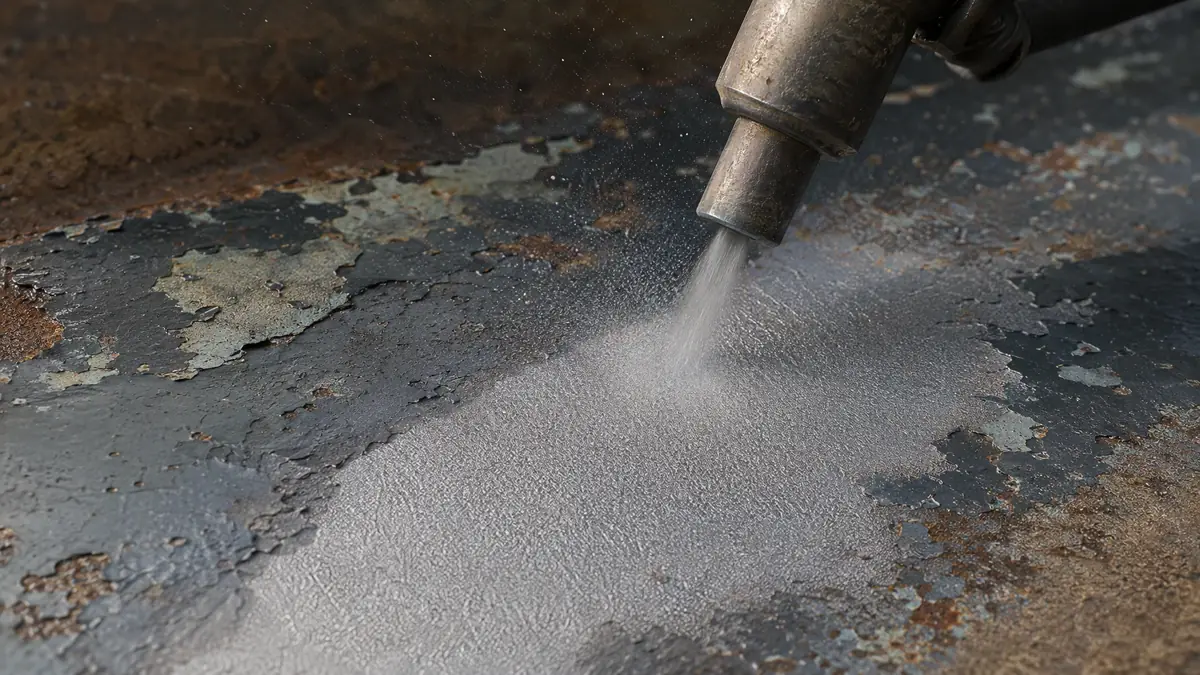
Close-up of crushed glass abrasive creating a clean anchor profile on carbon steel by removing paint and rust.
Crushed glass abrasive efficiently strips epoxy paint and light rust from carbon steel, leaving a clean, moderate anchor profile ideal for industrial coating sy

A detailed close-up photograph showing a blast nozzle directing a stream of crushed glass abrasive onto a carbon steel surface. The image captures the exact moment of coating removal, with the left side showing clean, bright metal with a visible anchor profile, and the right side showing the remaini

Close-up of crushed glass abrasive creating a clean anchor profile on carbon steel by removing paint and rust.

Glass grit performs well in specific field blasting scenarios:

  • Coating removal from steel. The angular fracture pattern cuts through paint, epoxy, and light rust effectively. It is commonly used for maintenance repainting on bridges, tanks, and structural steel.
  • Achieving moderate surface profiles. Crushed glass can produce anchor profiles in the 50–100 micron (2–4 mil) range, depending on mesh size and blasting pressure. This suits most industrial coating systems.
  • Open blasting where media recovery is not feasible. Remote locations, elevated structures, and large surface areas often make media reclamation impractical. An expendable media that costs less than garnet or aluminum oxide makes economic sense here.
  • Projects with silica restrictions. When contract specifications prohibit silica sand, crushed glass offers a compliant alternative without the premium cost of garnet.

When Crushed Glass Abrasive Is a Poor Fit

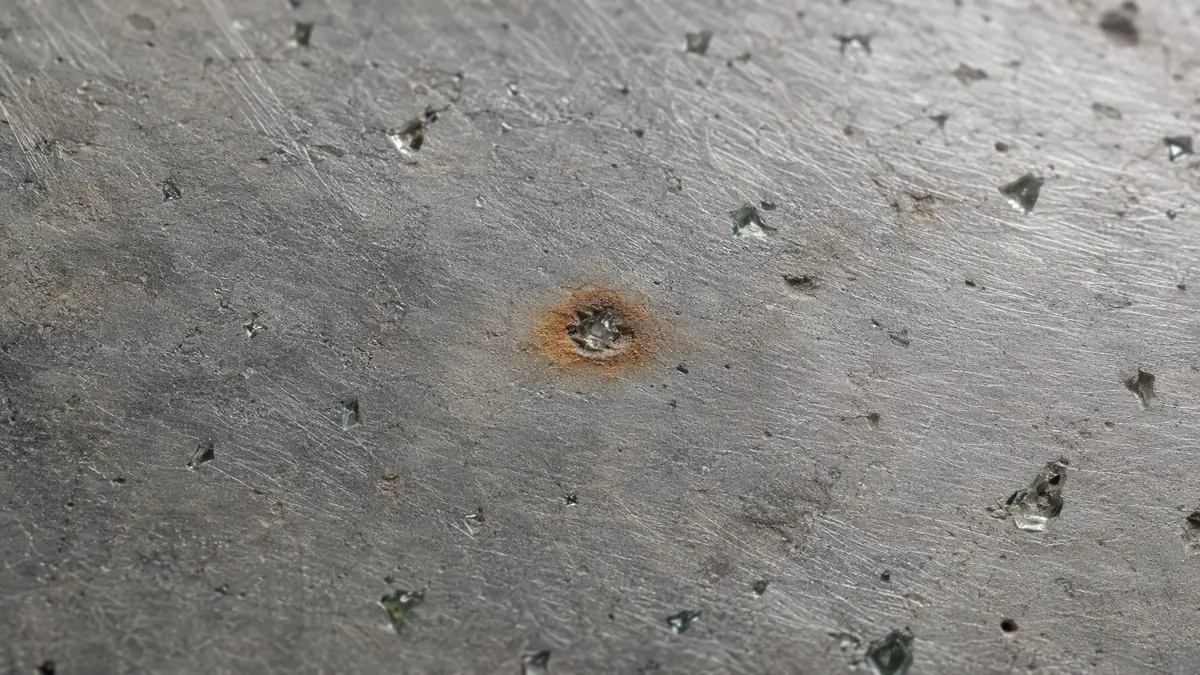
Macro shot of embedded crushed glass particles causing pitting corrosion on a stainless steel surface.
A critical mistake: crushed glass abrasive particles embedded in a stainless steel surface, creating crevices that initiate pitting corrosion and lead to coatin

A high-magnification macro photograph showing the negative consequences of using crushed glass abrasive on a stainless steel substrate. The image focuses on several angular glass fragments lodged in the metal surface, with a distinct spot of rust forming around one particle, visually explaining the

Macro shot of embedded crushed glass particles causing pitting corrosion on a stainless steel surface.

Field experience reveals several situations where glass grit creates more problems than it solves:

  • Stainless steel or non-ferrous substrates. Crushed glass can leave embedded particles that promote corrosion. For stainless steel, aluminum, or galvanized surfaces, non-metallic media with lower embedment risk—such as garnet or aluminum oxide—are generally preferred.
  • Achieving deep profiles above 100 microns (4 mils). Glass grit fractures on impact and becomes finer with each strike. It struggles to consistently produce deep anchor profiles required by some high-build coating systems. Steel grit or coarse garnet are better choices here.
  • High-humidity environments. Crushed glass can absorb moisture, leading to clumping and inconsistent flow through the metering valve. In wet or coastal conditions, media storage and handling become critical.
  • Applications requiring media recycling. Glass grit breaks down rapidly. Attempting to reclaim and reuse it typically yields diminishing productivity and inconsistent finish. If multi-pass economics are needed, look to garnet or steel grit.
  • Blasting near sensitive equipment. The sharp, angular particles generate fine dust that can infiltrate bearings, seals, and electrical enclosures. Containment and shielding requirements may offset any media cost savings.

Types and Grades of Crushed Glass Abrasive

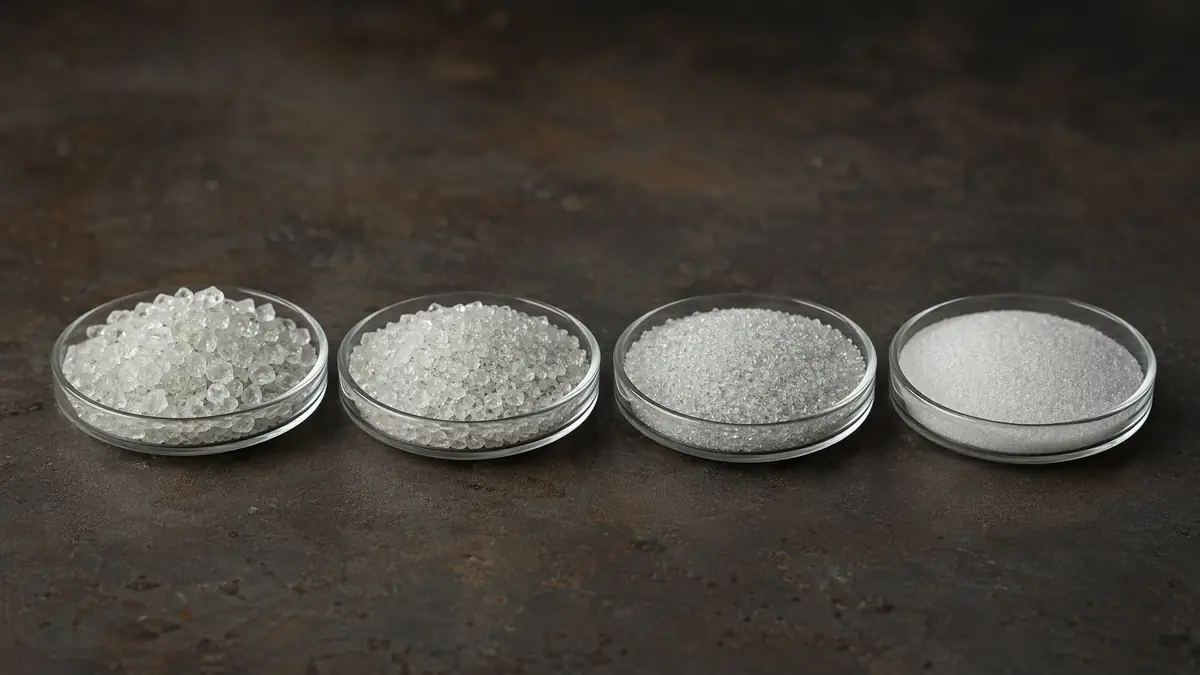
Four grades of crushed glass abrasive from coarse to extra fine displayed in glass dishes.
A visual comparison of crushed glass abrasive grades, from coarse 12-30 mesh to extra fine 70-100 mesh, showing the particle size distribution for different bla

A studio product photograph displaying the four typical grades of crushed glass abrasive: coarse, medium, fine, and extra fine. Each grade is presented in a separate glass dish, allowing a clear visual comparison of particle size and angular shape, which directly relates to the profile range and app

Four grades of crushed glass abrasive from coarse to extra fine displayed in glass dishes.

Crushed glass abrasive is available in a range of mesh sizes, each suited to different surface preparation tasks. Typical grades include:

Mesh SizeApproximate Profile RangeTypical Application
Coarse (12–30 mesh)75–100 microns (3–4 mil)Heavy coating removal, deep profiling on carbon steel
Medium (20–40 mesh)50–75 microns (2–3 mil)General-purpose coating removal and profiling
Fine (40–70 mesh)25–50 microns (1–2 mil)Light rust removal, thin coating stripping, finer finish
Extra Fine (70–100 mesh)Below 25 microns (<1 mil)Light cleaning, minimal profile requirements

Actual profile achieved depends on blasting pressure, standoff distance, nozzle type, and angle of attack. These ranges are approximate and should be verified with test panels and replica tape on each job.

Glass grit is also available in different hardness ranges depending on the source glass and manufacturing process. Most crushed glass abrasive falls between 5.5 and 6.5 on the Mohs scale, making it harder than copper slag but softer than garnet or aluminum oxide. This moderate hardness contributes to its fracturing behavior—it cuts aggressively on first impact but breaks down quickly.

Selection Factors for Field Blasting

When evaluating crushed glass abrasive for a specific project, field crews should assess these practical factors:

Substrate material and condition. Carbon steel with existing mill scale, rust, or aged coatings is the primary candidate. Confirm the substrate is not stainless, aluminum, or galvanized unless embedment risk has been specifically evaluated and accepted.

Specified surface cleanliness and profile. Check the coating specification for required cleanliness standard (e.g., SSPC-SP 10, SA 2.5) and anchor profile range. Crushed glass can achieve near-white metal blast when used with proper technique, but profile depth must be confirmed against the coating manufacturer's requirement.

Media cost delivered to site. Compare the per-ton or per-bag cost of crushed glass against alternatives like copper slag, coal slag, or garnet. Factor in freight costs, which can be significant for dense blast media. Glass is lighter than mineral abrasives, which may reduce shipping cost per volume but also means more volume is consumed per square meter blasted.

Consumption rate. Glass grit fractures and becomes dust faster than garnet or steel grit. Expect higher consumption per square meter. Field data should be collected on your specific equipment setup to compare actual consumption against alternatives.

Dust generation and containment. The fracturing that makes glass grit effective also creates fine dust. Assess whether your containment, dust collection, and respiratory protection are adequate. In populated areas or near water bodies, dust migration may be a compliance concern.

Moisture sensitivity. Evaluate storage conditions on site. Crushed glass must be kept dry. If the job site lacks covered storage or operates in wet weather, factor in the cost of moisture protection or the risk of downtime from clogged metering valves.

Waste disposal. Spent glass abrasive mixed with removed coatings may require testing for hazardous constituents (lead, chromium, etc.) before disposal. The glass itself is inert, but the coating debris it carries determines disposal classification.
Embedment: A Critical Concern with Glass Grit

Embedment occurs when abrasive particles become lodged in the substrate surface rather than rebounding cleanly. Crushed glass abrasive carries a higher embedment risk than some alternatives because its angular, brittle particles fracture on impact and can wedge into the surface.

Embedment is particularly problematic on:

  • Stainless steel. Embedded glass particles create crevices where chlorides can concentrate, initiating pitting corrosion. For stainless steel in corrosive service, non-metallic abrasives with lower embedment rates—or metallic abrasives—are standard practice.
  • Aluminum and soft alloys. The substrate deforms around the glass particle, trapping it. This interferes with coating adhesion and can cause galvanic corrosion cells.
  • Thin-gauge materials. Excessive blasting pressure with glass grit can warp thin plate while also embedding particles.

For carbon steel in non-immersion service, moderate embedment may be acceptable if the coating specification allows it and the coating system is designed to wet out and cover embedded particles. Always verify against the project specification and confirm with a test patch.

Comparison: Crushed Glass vs. Common Field Blasting Alternatives

FactorCrushed GlassCopper/Coal SlagGarnetSteel Grit
Free silica contentVery lowLow to moderateVery lowNone
Hardness (Mohs)5.5–6.56–77.5–88+
Particle shapeAngular, sharpAngular, blockySub-angularAngular
Fracture behaviorHigh; breaks down fastModerateLow; durableLow; very durable
ReusabilitySingle-passSingle-pass (mostly)Multiple passesMany cycles
Embedment riskModerate to highModerateLow to moderateVery low
Dust generationHighModerateLow to moderateLow
Profile range25–100 microns50–100 microns50–120 microns50–150+ microns
Relative cost per tonLow to moderateLowModerate to highHigh (but reusable)
Moisture sensitivityHighLowLowLow (rust risk)

This comparison highlights the core trade-off: crushed glass offers low initial cost and low silica risk but sacrifices reusability, profile depth capability, and carries higher embedment and dust concerns.

Common Mistakes When Using Crushed Glass Abrasive

Using glass grit on stainless steel without verification. This is the most frequent and costly error. The resulting embedment can cause premature coating failure and corrosion. Always confirm substrate compatibility before switching media.

Assuming all glass abrasives are identical. Source glass, washing processes, and screening consistency vary between suppliers. Media with high levels of fines or contaminants will produce inconsistent finish and excessive dust. Qualify a supplier's product with a sieve analysis and test blast before committing to bulk orders.

Neglecting moisture management. Storing glass abrasive in open containers or on damp ground leads to clumping. Even slight moisture can disrupt media flow through the metering valve, causing surging and uneven blasting. Use covered storage, palletize bags off the ground, and inspect media before loading the blast pot.

Over-blasting for the specified profile. Because glass grit fractures and becomes finer during blasting, extending dwell time on one area does not necessarily deepen the profile—it may just generate dust. Use test panels to establish the correct standoff distance, pressure, and traverse speed, then maintain those parameters.

Ignoring spent media disposal requirements. Spent glass abrasive mixed with lead-based paint or other hazardous coatings becomes hazardous waste. Test removed coatings before blasting and plan disposal accordingly. The media itself being "green" does not exempt the waste stream from regulation.

Implementation Notes and Safety

Surface preparation before blasting. Remove heavy grease, oil, and soluble salts before abrasive blasting. Solvent cleaning or detergent washing followed by fresh water rinsing prevents contaminants from being driven into the substrate during blasting. This is especially important when using crushed glass, as the angular particles can trap contaminants in the profile.

Soluble salt contamination. Salts on the substrate surface—from marine exposure, de-icing, or industrial environments—must be addressed before blasting. If salts are blasted into the surface, they cause osmotic blistering under the coating. Measure surface salt levels using the Bresle patch test method per ISO 8502-6, which extracts soluble salts from a known surface area for conductivity measurement. If salt levels exceed the coating manufacturer's limit (commonly below 50 mg/m² for many high-performance systems, though this varies), wash the substrate with fresh water—preferably high-pressure washing—and retest. In severe cases, repeated wash-and-test cycles or the addition of inhibited chemical cleaning agents may be required. Always allow the surface to dry thoroughly before blasting to avoid introducing moisture-related flash rusting.

Dust control. The high fracture rate of glass grit produces substantial airborne dust. Use appropriate containment (tenting, shrouds) and ensure operators wear NIOSH-approved Type CE supplied-air respirators. In open blasting without full containment, assess wind direction and neighboring activities. Wet blasting or dust suppression additives can reduce airborne dust but may alter the surface condition and introduce flash rust concerns.

Nozzle selection and wear. Glass grit is moderately abrasive to blast nozzles. Tungsten carbide nozzles provide acceptable life; boron carbide nozzles last longer but cost more. Monitor nozzle orifice wear—a worn nozzle increases media consumption and reduces blasting pressure at the surface.

Blasting pressure and standoff. Typical blasting pressure for crushed glass ranges from 90 to 110 psi at the nozzle. Higher pressure increases productivity but also increases media breakdown, dust, and embedment risk. Maintain a standoff distance of 18–24 inches and a blasting angle of 60–75 degrees to the surface for optimal cleaning with manageable embedment.

Test patch protocol. Before full production blasting, blast a test patch using the specified media, pressure, and technique. Measure the resulting profile with replica tape or a surface profile gauge. Check cleanliness against the specified standard. Have the coating inspector or project owner sign off on the test patch as the acceptable standard for the job.

Conclusion

Crushed glass abrasive occupies a specific and useful position in field blasting: it offers a low-cost, low-silica expendable option for carbon steel preparation where moderate profiles are acceptable and single-pass economics make sense. The trade-offs are real—higher dust generation, greater moisture sensitivity, and elevated embedment risk on non-ferrous substrates demand careful job planning. For crews blasting structural steel in open environments with proper containment and respiratory protection, glass grit can reduce media cost while meeting silica exposure requirements. For stainless steel, deep profile specifications, or high-humidity sites, garnet or steel grit remain the more reliable choices. The right decision always starts with the coating specification, the substrate, and a test patch.

Frequently Asked Questions

What is the difference between crushed glass abrasive and glass bead?

Crushed glass abrasive is angular and aggressive, designed for open blasting to strip coatings and create a surface profile. Glass bead is spherical and used primarily in closed cabinets for peening or cosmetic finishing, leaving a smooth satin finish with minimal profile change. They are not interchangeable.

Can I use crushed glass abrasive on stainless steel?

It is generally not recommended. Crushed glass has a high risk of particle embedment on stainless steel, which can create crevices that trap chlorides and initiate pitting corrosion. For stainless steel, garnet or aluminum oxide are safer non-metallic choices.

What surface profile can I achieve with glass grit?

Profile depends on the mesh size and blasting parameters. Coarse grades (12-30 mesh) can achieve 75-100 microns, while finer grades produce a lighter profile. Always verify the actual profile on a test panel with replica tape, as glass grit fractures and loses cutting power on impact.

Is crushed glass abrasive safe to use compared to silica sand?

Crushed glass is an amorphous silica material with negligible free crystalline silica, making it a lower-risk alternative to silica sand regarding silicosis. However, it still generates hazardous dust, so supplied-air respirators and proper dust monitoring remain essential.

Why does my glass grit media keep clogging in the blast pot?

Crushed glass is sensitive to moisture and can absorb humidity, causing it to clump and bridge in the metering valve. Ensure the media is stored dry, use moisture separators on your air supply, and avoid blasting in rain or extremely humid conditions without covered storage.

Can I reclaim and reuse crushed glass abrasive?

Recycling is not practical. Glass grit fractures rapidly on impact, turning to fine dust. Attempting to reuse it results in low productivity and an inconsistent finish. It is designed as a single-pass expendable media; for multi-pass recycling, consider garnet or steel grit.

How does the cost of crushed glass compare to coal slag?

The per-ton cost is often competitive, but the total project cost can vary. Glass is lighter, so you get more volume per ton, but it also has a higher consumption rate because it breaks down faster. You should compare the cost per square meter blasted, including freight and waste disposal.

Solution

Selecting the right abrasive media for your field blasting project requires matching the media to your substrate, profile specification, and site conditions. Explore the range of abrasives available on SPA2Z—including crushed glass, garnet, and other blast media—to compare specifications and packaging options. For technical guidance on media selection or to request a quotation for your project volume, contact the SPA2Z sales team with your requirements.

Get a quote

Get a quote

Tell us what you need. We reply within one business day.

Sending…
Need a price? Ask us here.