Plastic Media Blasting for Delicate Aerospace Components
Plastic media blasting (PMB) offers a controlled method for removing coatings from thin-skinned aerospace structures without the substrate damage, distortion, o...
Published
19 May 2022
Category
Abrasives
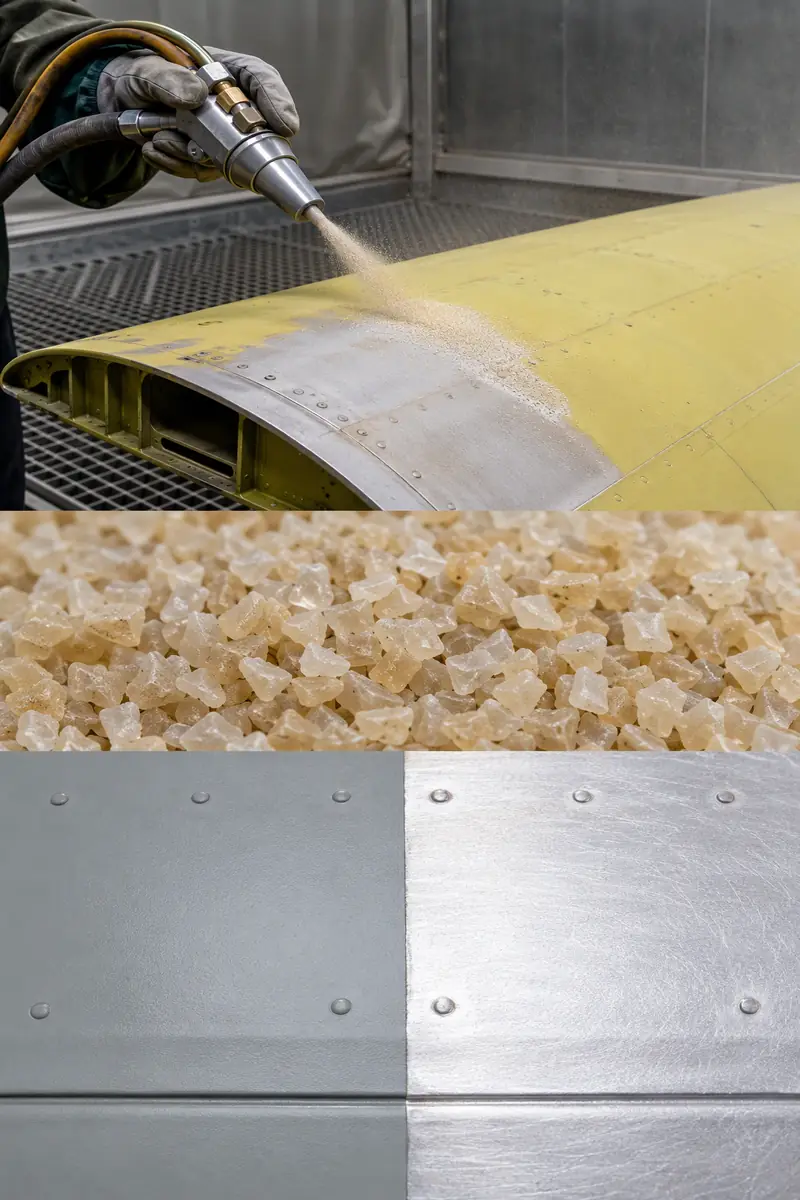
FIG. 01Plastic media blasting process overview: s...
A professional editorial collage illustrating the plastic media blasting process for aerospace MRO. Panels show the urea-formaldehyde media, a technician blasting an aircraft wing part, a before-and-after comparison of paint removal without substrate damage, and the industrial blasting equipment set
01 Introduction
Plastic media blasting (PMB) offers a controlled method for removing coatings from thin-skinned aerospace structures without the substrate damage, distortion, or metallurgical alteration that metallic grit can cause.
02 Introduction
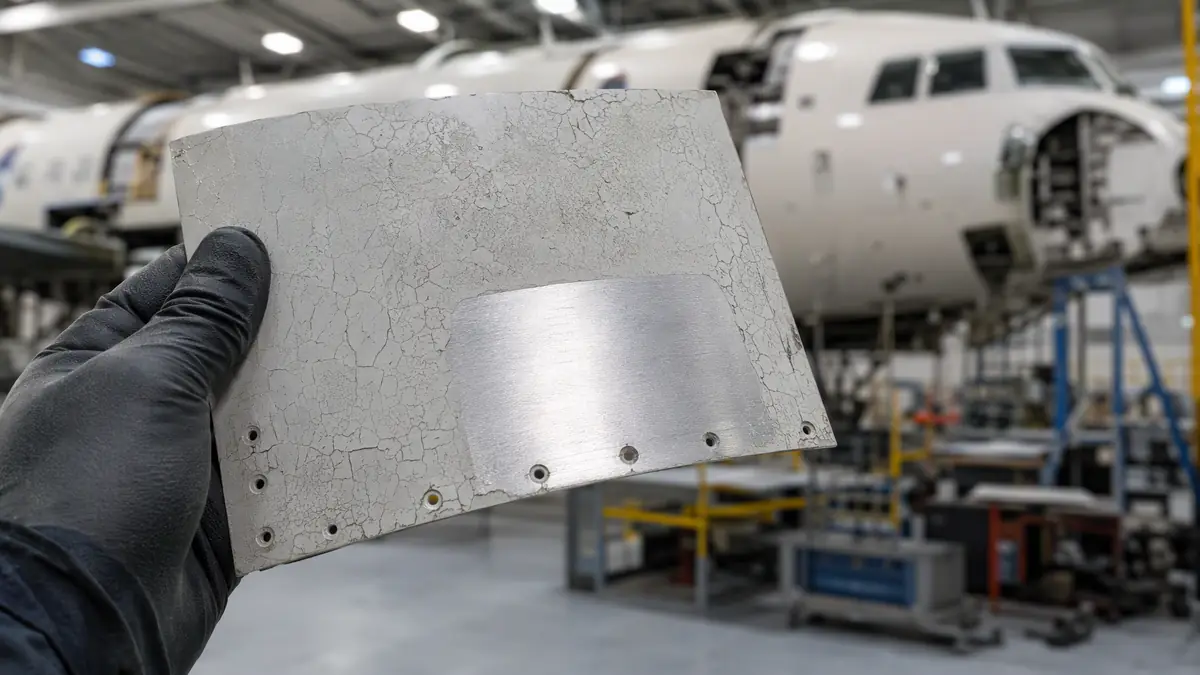
A thin aircraft skin section demonstrates the precision of plastic media blasting, which removes coatings without damaging the delicate substrate.
Close-up of a technician inspecting a curved aircraft fuselage skin. A test area shows clean, bright aluminum achieved by plastic media blasting, contrasting with the surrounding aged paint, highlighting the process's ability to preserve thin substrates in aerospace MRO.
Aerospace maintenance, repair, and overhaul (MRO) teams face a recurring challenge: how to strip paint, primers, and protective coatings from airframe skins, composite panels, and thin aluminium structures without compromising the base material. Traditional metallic abrasives—steel grit, aluminium oxide, or chilled iron—cut aggressively. On a 0.040-inch fuselage skin or a bonded honeycomb panel, that aggression translates directly into metal loss, surface stress, and expensive rework.
Plastic media blasting was developed specifically to solve this problem. It is a dry stripping process that uses engineered polymer particles to remove coatings while leaving the substrate intact. For MRO engineers, procurement managers, and surface preparation contractors working under strict OEM repair specifications, understanding when and how to apply PMB is a practical necessity—not an academic exercise.
This article explains what plastic media blasting is, why it matters in aerospace MRO, how to select the right media grade, and what can go wrong when the process is not properly controlled.
03 What Is Plastic Media Blasting?
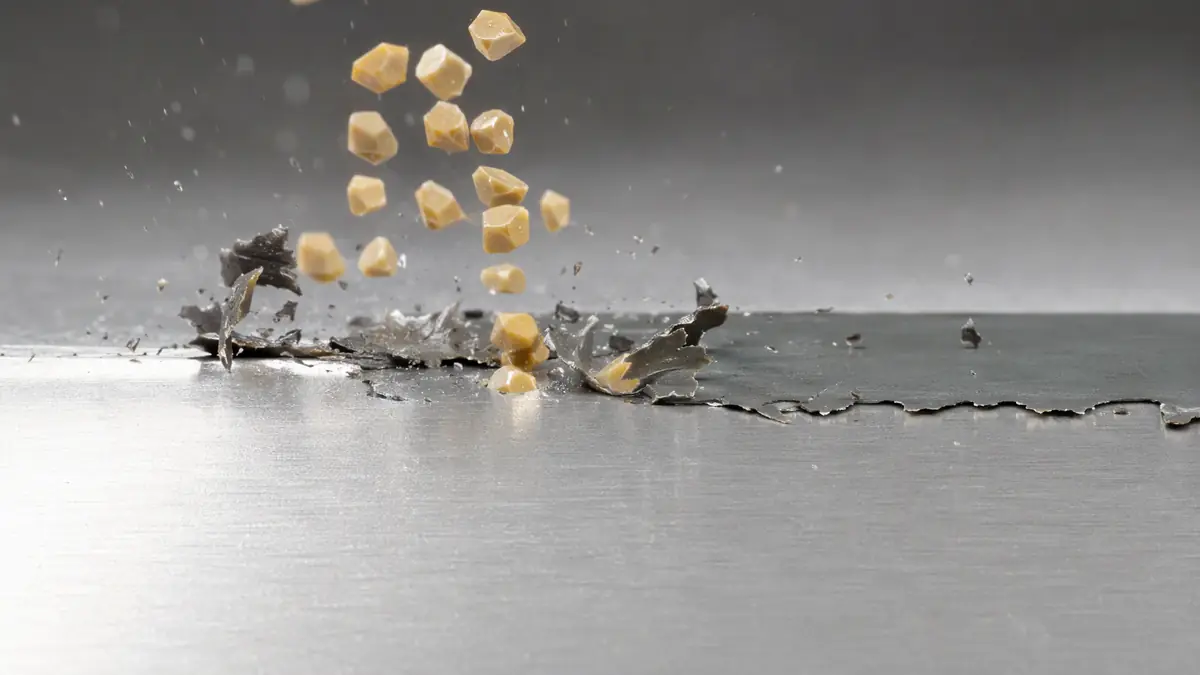
Plastic media particles fracture upon impact, shearing away the coating while the softer substrate remains intact, illustrating the principle of differential ha
A high-speed macro photograph capturing the exact moment angular plastic media particles strike a painted aluminum surface. The particles shatter, removing a paint chip, while the underlying metal shows no signs of impact or deformation, visually explaining the core PMB mechanism.
Plastic media blasting is a dry abrasive blasting process that uses angular particles of thermoset polymers—typically urea-formaldehyde, melamine, or acrylic—as the impact medium. Unlike mineral or metallic abrasives, plastic media particles are relatively soft (measuring approximately 3.0–4.0 on the Mohs hardness scale). They possess enough hardness to shear through paint films and primers on impact, yet they deform or fracture before they can cut into aluminium, titanium, or composite substrates.
The key operating principle is differential hardness. The media is harder than the coating but softer than the substrate. When propelled by compressed air at controlled pressure (commonly 20–55 psi at the nozzle), the angular particles strike the surface, crack the coating bond, and lift it away in a micro-chipping action. Because the particles absorb energy through deformation, they transfer less cutting force into the base material than a harder abrasive would.
In aerospace MRO, PMB is also referred to as "dry stripping" to distinguish it from chemical stripping methods that use solvents or acid-based removers.
04 Why Plastic Media Blasting Matters in Aerospace MRO
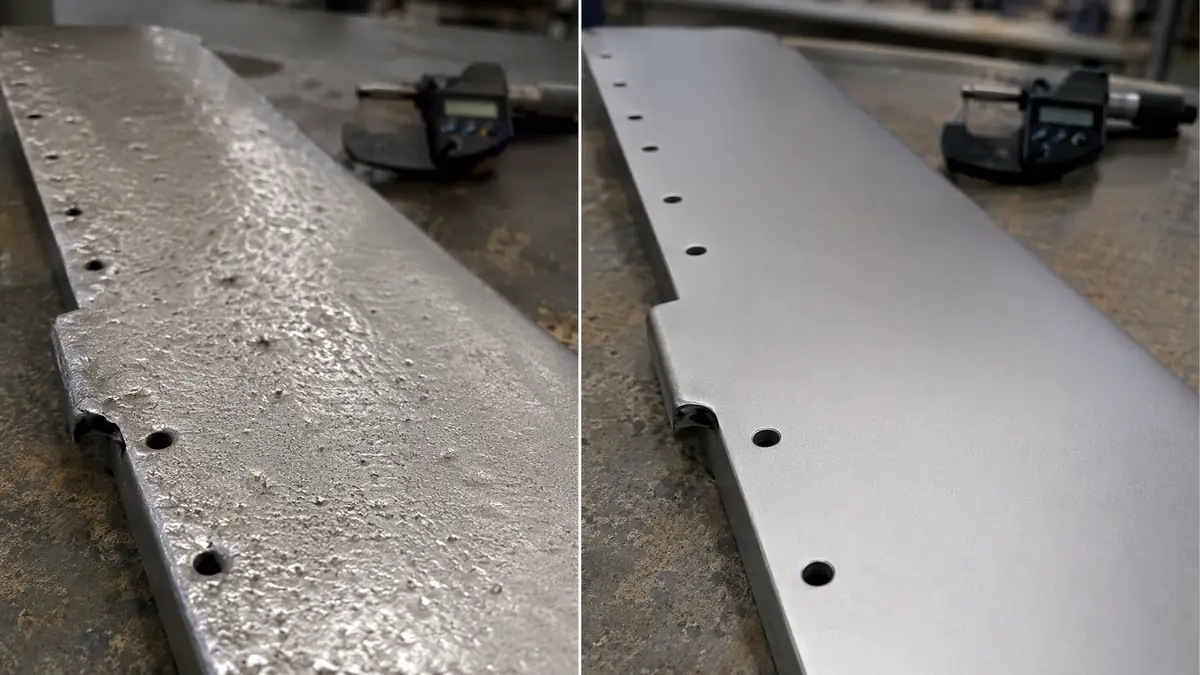
A direct comparison showing the substrate damage from metallic grit (left) versus the perfect preservation achieved with plastic media blasting (right).
A split comparison image for aerospace MRO. The left side shows a thin aluminum panel with a rough, peened surface caused by aggressive metallic grit blasting. The right side shows an identical panel stripped with plastic media, revealing a smooth, undamaged surface, highlighting the critical benefi
The primary value of PMB is substrate preservation. Aerospace structures are designed for strength-to-weight ratios, not for repeated metal removal. Every thousandth of an inch lost to aggressive blasting can push a component outside its allowable dimensional tolerance.
Key benefits that make PMB relevant for aerospace MRO include:
No base metal removal: When correctly specified and operated, PMB removes coatings without measurable substrate loss. This is critical for thin aluminium skins (often 0.025–0.063 inch thick) and for clad aluminium where the pure aluminium cladding layer provides corrosion protection.
No metallurgical alteration: Unlike steel grit, plastic media does not introduce surface stresses, micro-cracking, or heat-affected zones. The process is mechanically gentle.
No embedment risk: Hard abrasives can embed in soft substrates, creating corrosion initiation sites. Plastic media particles are less prone to embedment and are easier to detect during post-blast inspection.
Composite compatibility: PMB can be used on certain composite structures (subject to process qualification) where metallic blasting is prohibited outright.
Selective stripping: Masking allows PMB to remove coatings from designated areas only, preserving adjacent paint or sealant.
When PMB Is a Poor Fit
Plastic media blasting is not a universal solution. It has clear limitations that MRO planners should recognise:
Heavy corrosion or thick mill scale: PMB is designed for coating removal, not for aggressive rust or scale removal. If the substrate requires a deep surface profile for subsequent coating adhesion, a harder abrasive may be necessary after stripping.
Hard, brittle coatings: Some epoxy or polyurethane topcoats with high cross-link density can resist PMB. Process trials are essential before committing to production.
High-production steel blasting: PMB is not a substitute for steel grit in structural steel preparation or blast-room operations where throughput and profile generation are the priorities. This is an aerospace-specific process, not a general steel-prep method.
Inadequate dust extraction: PMB generates fine dust from fractured media and stripped coating particles. Without proper containment and extraction, visibility drops and contamination risk rises.
05 Types of Plastic Media for Aerospace Applications
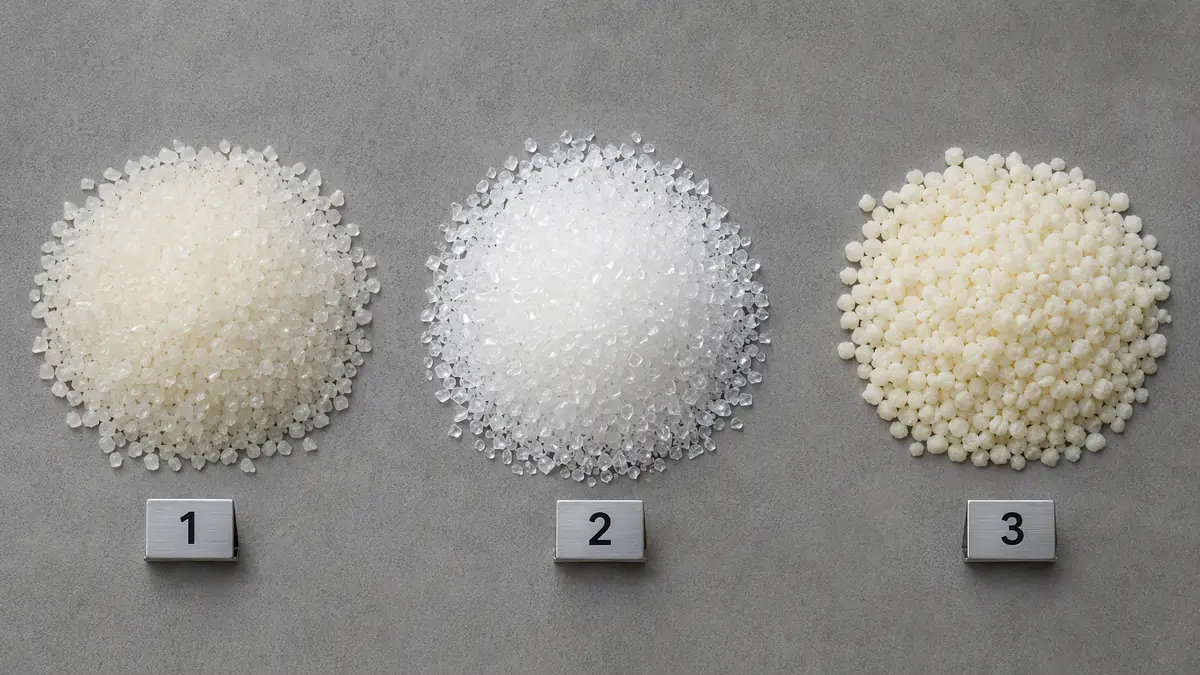
Three common types of plastic media for aerospace: urea-formaldehyde, melamine, and acrylic, each with distinct particle shapes and hardness properties.
A detailed macro photograph showing three separate piles of plastic blasting media used in aerospace MRO. The image compares the visual texture and angularity of urea-formaldehyde, melamine, and acrylic particles, aiding in material identification and selection.
Plastic media is classified by polymer type, hardness, particle size, and shape. Aerospace MRO typically uses three broad categories:
Urea-Formaldehyde Media
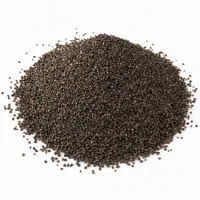
The most common type for aerospace coating removal. It offers a good balance of hardness and friability (tendency to fracture on impact). It cuts effectively through polyurethane and epoxy paint systems while remaining safe for aluminium and clad surfaces.
Melamine-Based Media
Harder than urea-formaldehyde grades. Melamine media is sometimes specified for tougher coating systems or for applications where slightly faster strip rates are needed. The trade-off is a narrower process window before substrate effects become a concern. Melamine media requires tighter pressure and standoff control.
Acrylic Media
Softer and less aggressive. Acrylic media is used on particularly sensitive substrates—thin composite skins, fibreglass radomes, or components where even minimal surface disturbance is unacceptable. Strip rates are slower, but the safety margin is wider.
Media is further classified by particle size (mesh range). Typical aerospace grades range from approximately 12–16 mesh (coarse, faster cutting) to 30–40 mesh (fine, for delicate work). Selection depends on the coating system, substrate sensitivity, and required strip rate.
06 How to Select Plastic Media for Aerospace Coating Removal
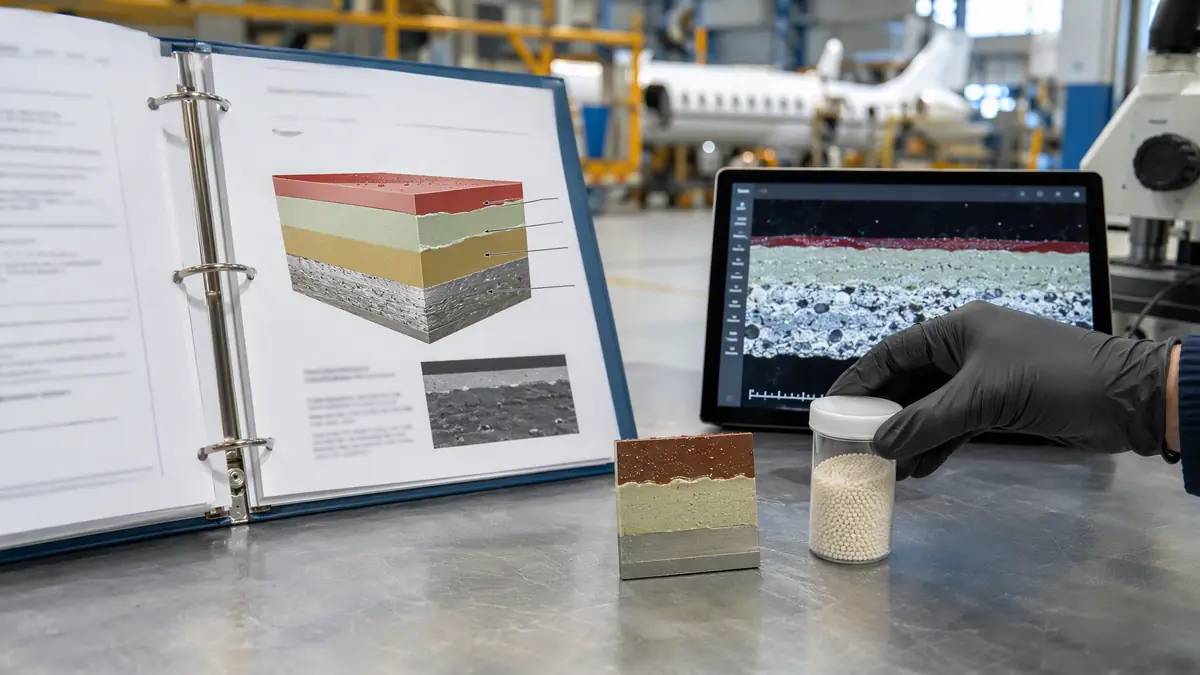
Media selection involves matching the plastic media grade to the specific coating system and substrate, using technical documentation and physical samples.
An aerospace engineer's workstation showing the media selection process. A technical binder with a coating cross-section diagram, a digital microscope image, and a physical sample of plastic media are placed next to a coated aircraft skin coupon, illustrating the analytical approach to matching medi
Media selection is not a catalogue exercise—it requires matching the media to the specific coating system, substrate, and process constraints. MRO engineers and procurement teams should evaluate the following factors:
1. Substrate Material and Thickness
Identify the base material: clad or bare aluminium, titanium, steel, or composite. Confirm the minimum allowable thickness from the component repair manual. Thinner skins demand finer, softer media and lower blast pressures.
2. Coating System
Document the coating type, number of layers, and approximate total thickness. High-solids epoxy primers with tough topcoats may require a harder media grade or a two-step process (coarse media for bulk removal, fine media for final clean-up).
3. OEM or Regulatory Approval
Most aerospace OEMs and regulatory bodies (such as the FAA or EASA) publish approved process specifications for PMB. Common references include aircraft maintenance manuals (AMM), structural repair manuals (SRM), and service bulletins. Always verify that the selected media grade and process parameters fall within the approved envelope for the specific airframe or component.
4. Equipment Capability
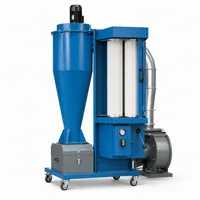
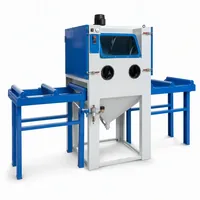
PMB requires a pressure-blast system with precise pressure regulation, a moisture separator (to prevent media clumping), and a media reclamation system that removes fractured fines and coating debris. Direct-pressure pots are standard; suction-blast systems generally lack the control needed for aerospace work.
5. Strip Rate vs. Safety Margin
Faster strip rates reduce labour hours but narrow the safety margin. For critical structural components, a slower, more conservative process is usually justified. The cost of one damaged skin panel far exceeds the labour savings from aggressive blasting.
07 Common Mistakes and How to Avoid Them
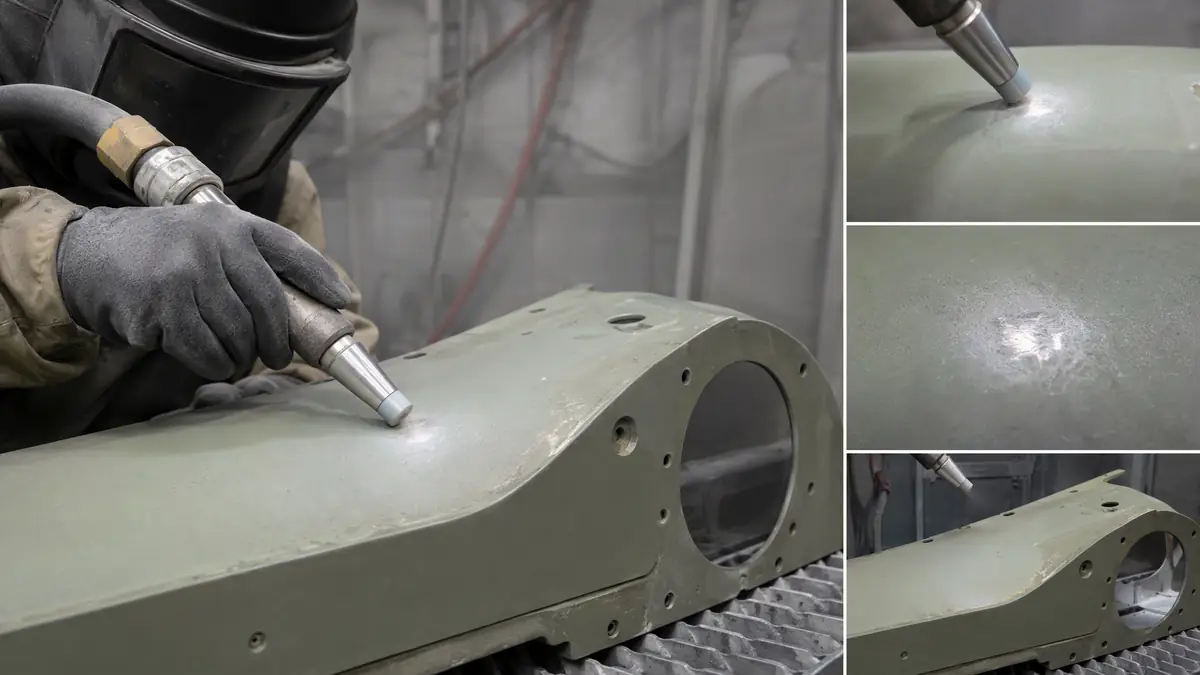
A common PMB mistake: an incorrect nozzle angle and standoff distance creates a concentrated impact area, causing localized substrate polishing and damage.
A detailed close-up showing a process error in plastic media blasting. A blast nozzle is positioned too close and at a wrong angle to an aircraft part, resulting in a small, shiny divot on the aluminum surface where the substrate has been unintentionally affected, contrasting with the surrounding in
Even with the right media specified, process execution determines the outcome. The following are frequent problems encountered in aerospace PMB operations:
Excessive Blast Pressure
Operators accustomed to steel blasting may increase pressure to speed up the job. With plastic media, higher pressure increases particle fracture and dust generation more than it increases strip rate. It also raises the risk of substrate damage. Stick to the pressure range validated during process qualification—typically 20–55 psi at the nozzle, depending on the media and substrate.
Incorrect Standoff Distance and Angle
Too close a nozzle distance concentrates impact energy and can cause localised substrate erosion. Too far reduces effectiveness. A standoff of approximately 12–18 inches with a nozzle angle of 60–75 degrees to the surface is a common starting point, but the exact parameters should be confirmed through on-aircraft trials or approved process data.
Contaminated or Degraded Media
Plastic media breaks down with each impact cycle. As it fractures, the particle size distribution shifts toward fines, and strip efficiency drops. Media that is not properly reclaimed and classified will contain dust and coating debris that can clog the system and produce inconsistent results. Regular media replenishment and classification are essential.
Inadequate Masking
PMB will remove paint wherever it strikes. Adjacent surfaces, fasteners, windows, antennae, and sealant joints must be carefully masked. Overspray onto unprotected areas creates rework and can introduce foreign object debris (FOD) risks.
Skipping Process Qualification
Every new coating system, substrate combination, or media batch should be validated on a representative test coupon or a non-critical area before production blasting begins. Assuming that "it worked last time" without verifying current parameters is a common source of non-conformance.
08 Implementation Considerations for Aerospace MRO
Plastic media blasting is not a plug-and-play process. Facilities introducing or upgrading PMB capability should address several practical factors:
Containment and dust collection: PMB generates fine, potentially hazardous dust (coating particles may contain chromates or other regulated substances). Blast enclosures or temporary containment with HEPA-filtered extraction are standard.
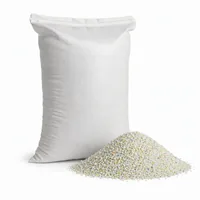
Media storage: Plastic media absorbs moisture, which causes clumping and feed problems. Store in dry conditions and avoid opened bags sitting on the shop floor.
Operator training: PMB technique differs from conventional abrasive blasting. Operators need training on pressure control, nozzle manipulation, and recognition of proper end-points (e.g., when the coating is removed but the substrate is undisturbed).
Post-blast inspection: After stripping, inspect for residual coating, media embedment, and any signs of substrate disturbance. Water-break tests or dye-penetrant inspection may be specified depending on the component.
09 Comparing Plastic Media with Alternatives
For aerospace coating removal, the practical alternatives to PMB are chemical stripping and hand sanding. Each has a place:
Method
Advantages
Limitations
Plastic media blasting
No substrate loss; fast on large areas; no chemical exposure; controllable
Requires equipment investment; dust management needed; not for heavy corrosion
Chemical stripping
Effective on complex geometries; no mechanical impact
Chemical exposure and disposal; potential for intergranular attack on high-strength alloys; slower process time
Hand sanding
Simple; low equipment cost
Labour-intensive; inconsistent; risk of localised thinning; impractical for large surfaces
The choice depends on the component, the coating, and the facility's capabilities. Many aerospace MRO operations use PMB as the primary method for large-area stripping and reserve chemical or manual methods for areas where blasting is impractical.
10 Conclusion
Plastic media blasting is a proven, specification-driven process for removing coatings from delicate aerospace components without substrate damage. Its value lies in the differential hardness principle: hard enough to strip paint, soft enough to preserve the airframe. For MRO engineers and procurement professionals, the key decisions revolve around media type, particle size, process parameters, and strict adherence to OEM-approved specifications.
Success depends as much on process control—pressure, standoff, media condition, operator technique—as on media selection. When properly implemented, PMB delivers clean, damage-free surfaces ready for inspection and recoating. When shortcuts are taken, the cost of rework or component replacement quickly erases any perceived savings.
11 Frequently Asked Questions
What is plastic media blasting and how does it differ from sandblasting?
Plastic media blasting (PMB) is a dry stripping process using engineered polymer particles that are harder than coatings but softer than the substrate. Unlike sandblasting or grit blasting with hard, aggressive minerals, PMB removes paint and primers without cutting into or distorting the base metal, composite, or clad surface. This makes it essential for thin-skinned aerospace components where substrate loss is unacceptable.
On which aerospace components is PMB safe to use?
PMB is safe for thin aluminium fuselage skins, clad aluminium surfaces where the corrosion-resistant cladding must be preserved, certain composite panels, and titanium parts. It is specifically designed for components where dimensional tolerances are tight and metallurgical alteration from aggressive media is prohibited. Always verify the specific component's structural repair manual (SRM) for approved process parameters.
When should I avoid using plastic media blasting?
Avoid PMB for removing heavy corrosion, thick mill scale, or rust, as it lacks the cutting aggression needed. It is also a poor fit for extremely hard, brittle coatings that resist the media's impact, or for high-production structural steel blasting where a deep surface profile is required. PMB is an aerospace coating removal process, not a general steel preparation method.
How do I choose between urea-formaldehyde, melamine, and acrylic plastic media?
Urea-formaldehyde is the standard choice for most aerospace paint systems, offering a good balance of cutting speed and substrate safety. Melamine is harder and used for tougher coatings but requires tighter process control to avoid substrate damage. Acrylic is the softest option, reserved for highly sensitive substrates like thin composite skins or radomes where the widest safety margin is needed.
What are the most common mistakes that cause substrate damage during PMB?
The most frequent mistakes are using excessive blast pressure, holding the nozzle too close to the surface, and failing to maintain the correct 60–75 degree angle. Other errors include using contaminated or degraded media that has broken down into dust, and skipping process qualification on a representative test panel before starting production work.
Does plastic media blasting require special equipment?
Yes, PMB requires a direct-pressure blast system with precise pressure regulation, a moisture separator to prevent media clumping, and an effective media reclamation and classification system. Suction-blast systems generally lack the control needed for aerospace work. Proper dust extraction and containment are also mandatory to manage the fine dust generated during the process.
How do I validate a PMB process before stripping production parts?
Process qualification must be performed on a representative test coupon or a non-critical area of the component using the exact media, pressure, standoff distance, and angle intended for production. The stripped surface should be inspected for any substrate loss, embedment, or surface stress. Always cross-reference the aircraft maintenance manual (AMM) or OEM service bulletin for approved parameters.
12 Solution
Selecting the right plastic media for your aerospace MRO application starts with understanding your substrate, coating system, and process requirements. Compare available abrasive media options on SPA2Z, review technical specifications, and enquire about compatibility with your existing blasting equipment. Contact the SPA2Z sales team to discuss your specific stripping application and request a quotation for media grades that meet aerospace process specifications.
13 Get a quote
Get a quote
Tell us what you need. We reply within one business day.
Recommended products
Catalogue products matched to this article. Ask for grade, quantity and destination.