ABRASIVES GUIDE

Abrasive Media for Railcar and Rolling Stock Refurbishment

Stripping decades of heavy coatings from railcars and rolling stock demands an abrasive that balances aggressive cutting with controlled surface profiling — all...

Published
05 Dec 2020
Category
Abrasives
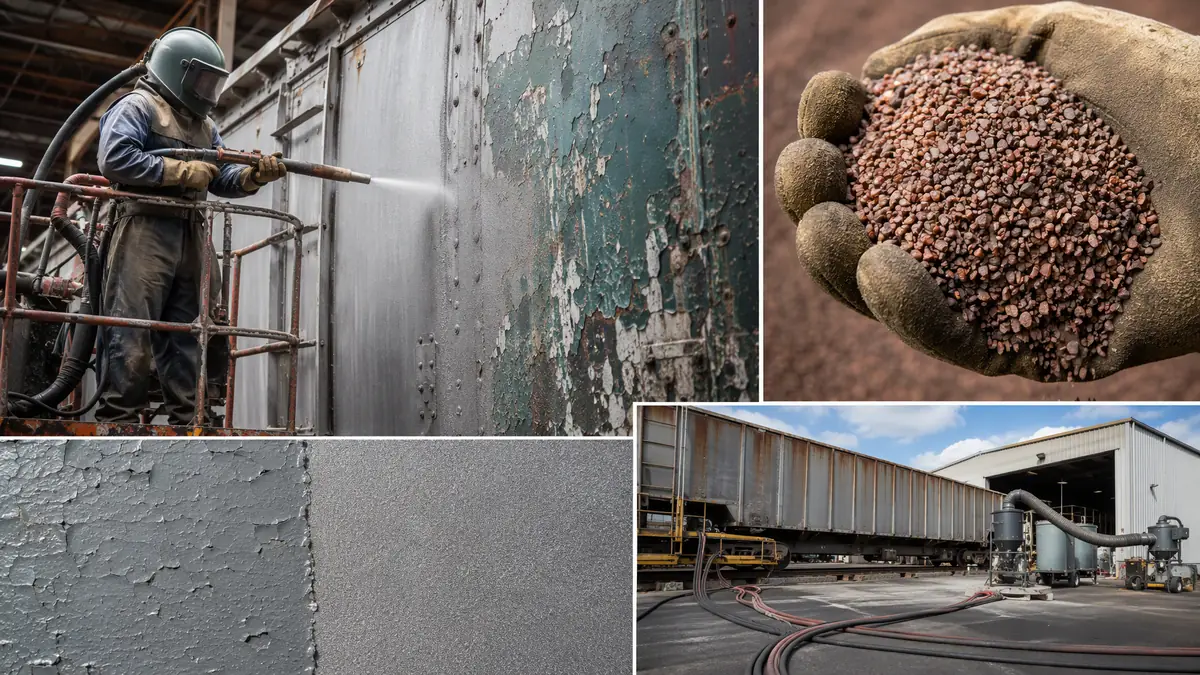
Multi-panel industrial collage showing garnet abrasive blasting process on a railcar, including media close-up, surface profi
FIG. 01A multi-panel editorial view of the railca...

Featured image for an article on abrasive media for railcar refurbishment. A professional multi-panel collage shows a dominant scene of garnet blasting on a railcar, supported by close-ups of garnet grit, a before-and-after surface profile comparison, and a wide shot of a railcar on a maintenance si

Introduction

Stripping decades of heavy coatings from railcars and rolling stock demands an abrasive that balances aggressive cutting with controlled surface profiling — all while covering vast surface areas without crippling productivity.

Introduction

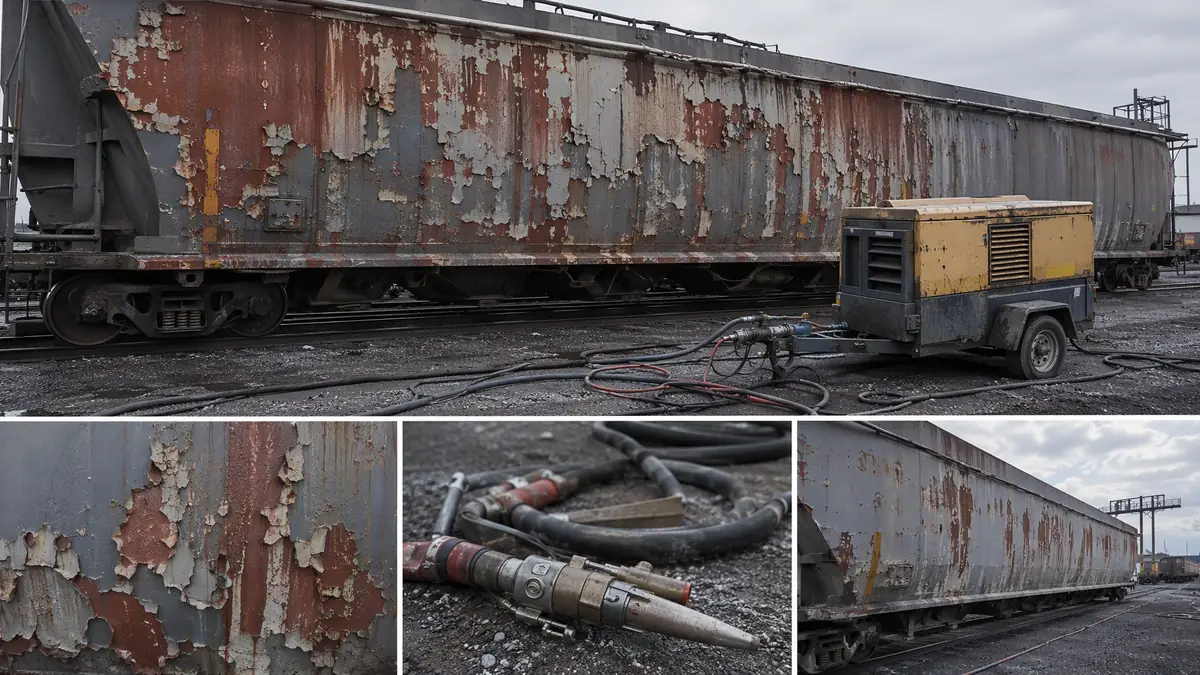
Weathered freight railcar with peeling thick coatings on a maintenance siding, blast hoses and compressor staged nearby for r
A weathered railcar on a maintenance siding, its thick, peeling coatings illustrating the demanding surface preparation challenge facing rail MRO contractors.

A wide shot of a weathered freight railcar on a maintenance siding. Multiple layers of failing epoxy and polyurethane coatings are visible on the large surface area. Blast hoses and a mobile compressor are staged nearby, highlighting the logistical reality of open-air railcar refurbishment.

Weathered freight railcar with peeling thick coatings on a maintenance siding, blast hoses and compressor staged nearby for r

Railcar and rolling stock refurbishment presents one of the most demanding surface preparation challenges in industrial maintenance. Unlike structural steel or small fabricated components, a single railcar exposes hundreds of square metres of surface area, often coated with multiple layers of epoxy, polyurethane, and anti-corrosion primers applied over years of service. Add to this the logistical reality that work must happen on a siding or in a maintenance shed — not in a controlled shop environment — and the choice of blasting media becomes a direct driver of contract profitability.

This article is written for rail MRO contractors and maintenance managers who need to move beyond generic abrasive recommendations. We examine which media types perform on heavy rail coatings, how to match media to the substrate and coating system, and where the wrong choice quietly erodes margins through excessive consumption, slow strip rates, or profile rework.

What Makes Railcar Blasting Different

Macro cross-section comparing thick multi-layer railcar epoxy coating on steel versus thin standard shop primer
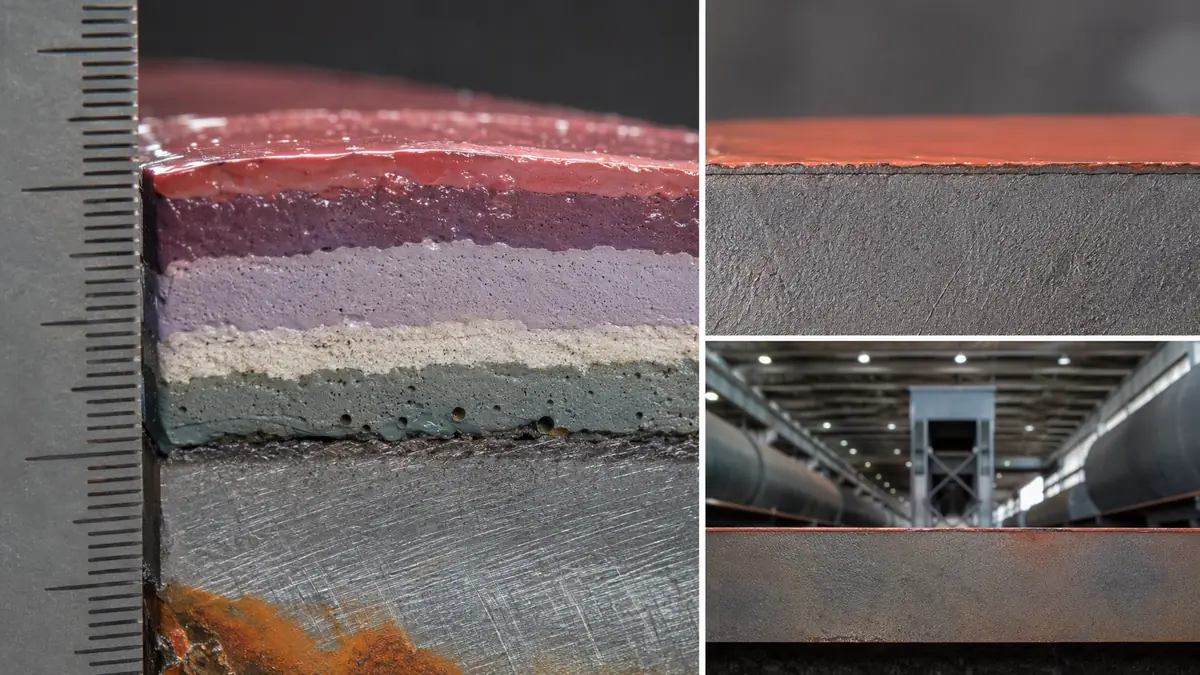
A macro comparison highlighting the extreme coating thickness on railcars (left) versus standard structural steel primers (right), a key factor in media selecti

A clinical macro photograph showing a cross-section of a thick, multi-layered railcar coating system on a steel substrate, contrasted with a thin standard shop primer. A micrometer scale provides context for the significant difference in thickness, emphasizing the unique challenge of railcar paint r

Macro cross-section comparing thick multi-layer railcar epoxy coating on steel versus thin standard shop primer

Blasting railcars is not simply a larger version of shop blasting. Several factors combine to make media selection uniquely critical.

Coating thickness and layering. Freight wagons, tank cars, and passenger coaches typically carry coating systems 300–800 microns thick, sometimes exceeding 1 mm when multiple maintenance coats have been applied. These are not light shop primers — they are high-build epoxies and polyurethanes designed to resist impact, chemicals, and UV exposure. A media that performs well on mill scale or light rust may stall entirely on a thick, flexible topcoat.

Substrate sensitivity. Railcar bodies and structural members are predominantly mild steel, but thinner gauge panels — particularly on passenger rolling stock — can distort under aggressive blasting. Aluminium body panels, increasingly common in modern passenger trains, require even more careful media selection to avoid embedding, warping, or excessive profile.

Large, continuous surface areas. A single boxcar exterior can exceed 100 m². Media that fractures on impact and generates excessive dust not only slows the operator but also creates visibility and containment problems. Productivity is measured in square metres per hour, and the difference between a media that strips at 15 m²/h versus 25 m²/h is the difference between profit and loss on a fixed-price refurbishment contract.

Access and geometry. Railcars combine large open panels with complex geometries — underframe members, bogie cutouts, door tracks, and corrugated sides. Media must flow consistently through blast pots and nozzles without bridging, and spent media must be manageable in areas where recovery and recycling are impractical.

Key Requirements for Railcar Paint Removal Media

Close-up of a clean, angular anchor profile on blasted railcar steel with a surface profile gauge resting on it
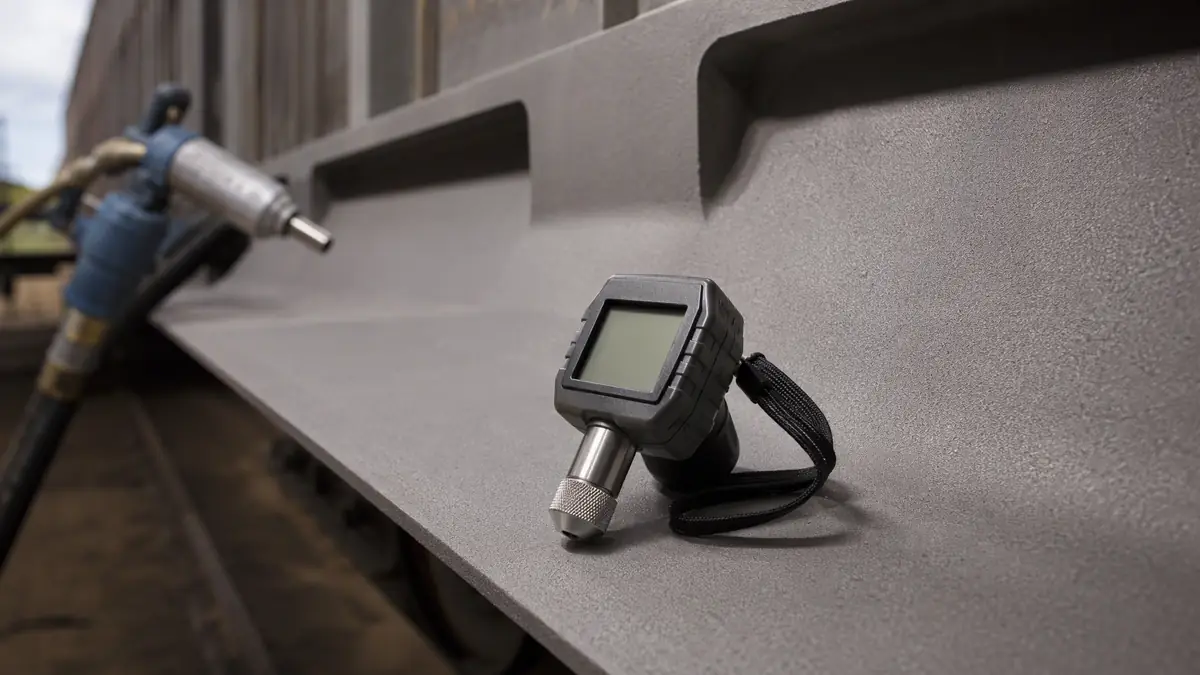
A clean, angular blast profile on railcar steel, demonstrating the controlled surface preparation essential for long-term coating adhesion.

A detailed close-up of a freshly blasted railcar steel surface, showing a uniform, angular anchor profile. A digital surface profile gauge rests on the metal, emphasizing the precision required in railcar refinishing specifications. An out-of-focus blast nozzle is visible in the background.

Close-up of a clean, angular anchor profile on blasted railcar steel with a surface profile gauge resting on it

Before evaluating specific abrasive types, it helps to define what a rail MRO contractor actually needs from a blasting media:

  • High strip rate on heavy coatings. The media must cut through thick, flexible paint systems without requiring multiple passes.
  • Controlled surface profile. Rail refinishing specifications typically require an anchor profile in the 50–75 micron (2–3 mil) range for coating adhesion. Excessive profile wastes primer and risks peak rusting; insufficient profile causes premature coating failure.
  • Low substrate damage risk. Particularly on thin steel panels and aluminium substrates.
  • Acceptable dust generation. Open blasting on a siding cannot generate the dust cloud that might be tolerated in a fully enclosed blast room with dust extraction.
  • Consistent particle size distribution. Wide variation in particle size leads to uneven profiling and unpredictable consumption rates.
  • Cost-effectiveness over the full job. Not just price per tonne, but consumption rate, disposal cost, and labour hours per square metre.

Abrasive Media Options for Railcar Blasting

Top-down comparison of garnet, coal slag, and aluminium oxide abrasive grits in separate container segments
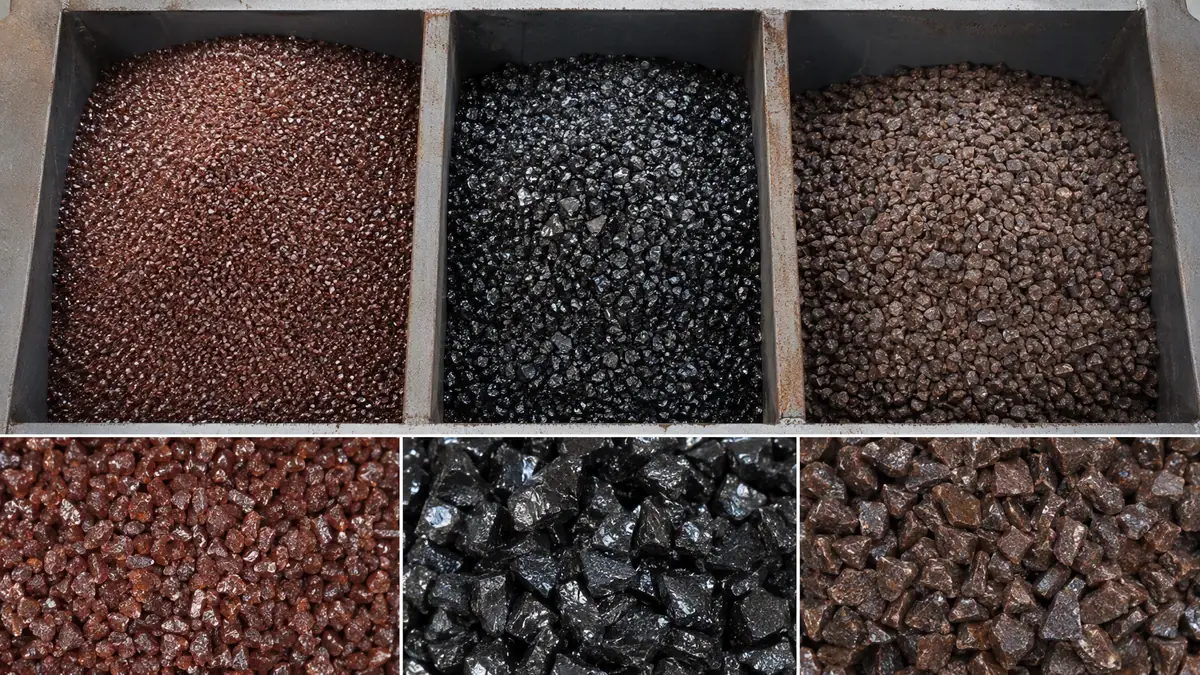
A direct visual comparison of three primary abrasive media for railcar blasting: garnet, coal slag, and aluminium oxide.

A top-down studio photograph comparing three common abrasive media for railcar refurbishment. Separate segments of a container hold reddish-brown garnet, dark angular coal slag, and brown aluminium oxide grit, highlighting their distinct particle shapes, colors, and textures for industrial evaluatio

Top-down comparison of garnet, coal slag, and aluminium oxide abrasive grits in separate container segments

Garnet

Garnet is the most widely specified abrasive for railcar refurbishment, and for good reason. Hardness (typically 7.5–8.0 Mohs) combined with a sub-angular particle shape delivers an effective balance of cutting speed and profile control.

Advantages for rail work:
- Strips heavy coatings efficiently when used in the correct mesh size (typically 30/60 or 20/40 for heavy coatings)
- Produces a clean, angular profile well-suited to epoxy and polyurethane adhesion
- Low dust generation compared to slag abrasives — significant for open-air blasting
- Low free silica content (typically <1%), supporting occupational health compliance
- Can be recycled 3–5 times in recovery systems, though rail siding blasting is often single-pass

Limitations:
- Higher upfront cost per tonne than coal slag or copper slag
- Performance drops sharply if the mesh size is too fine for the coating thickness
- Almandine garnet from different sources varies in hardness and friability; confirm the specification before bulk purchase

Typical application: Primary media for exterior railcar body blasting where productivity, profile quality, and dust control all matter.

Steel Grit

Steel grit is the productivity leader for heavy steel substrates. Angular particles with hardness in the 40–65 HRC range cut aggressively through thick coatings and mill scale.

Advantages for rail work:
- Highest strip rate among commonly available media on heavy epoxy and polyurethane systems
- Produces a pronounced angular profile; readily achieves SA 2.5 (Near White) or SA 3 (White Metal) standards
- Extremely durable — can be recycled hundreds of times in contained blasting operations
- Low dust generation relative to expendable mineral abrasives

Limitations:
- Requires dedicated blast equipment with effective media recovery and air-wash separation; not practical for single-pass open-air siding blasting without recovery
- Risk of embedding in aluminium or thin-gauge steel panels
- Can distort thin sheet metal if blast pressure and standoff distance are not carefully controlled
- Higher capital cost for the media inventory, though cost per cycle is low in recycling operations
- Spent grit left on tracks or ballast creates a contamination and safety hazard

Typical application: Enclosed blast facilities refurbishing steel freight wagons, tank cars, or underframe components where media recovery is in place.

Coal Slag / Copper Slag

Slag abrasives are common in rail MRO because of their low upfront cost and wide availability, particularly in regions with strong shipbuilding or foundry industries.

Advantages for rail work:
- Low cost per tonne, attractive for single-pass open blasting
- Angular particles provide reasonable cutting speed on moderately thick coatings
- Available in a range of grades

Limitations:
- High friability — particles fracture on impact, generating substantial dust and consuming media rapidly
- High dust levels can slow operators, reduce visibility, and require extensive containment on open sites
- Spent media volume is high, increasing disposal costs and handling time
- Inconsistent quality between batches and suppliers
- May contain heavy metals depending on the source; confirm leachability before specifying for environmentally sensitive rail sites

Typical application: Budget-driven projects where dust generation and disposal logistics are manageable, or where the coating system is relatively thin.

Aluminium Oxide

Aluminium oxide is a high-hardness (9 Mohs), angular abrasive typically reserved for specialised applications rather than general railcar blasting.

Advantages for rail work:
- Extremely fast cutting on tough coatings
- Produces a consistent, sharp profile
- Can be recycled multiple times

Limitations:
- High cost per tonne makes it uneconomical for large-area railcar blasting in most scenarios
- High particle hardness can embed in softer substrates if not carefully controlled
- Overkill for standard steel railcar coatings — the extra hardness rarely translates to proportionally faster strip rates on epoxy/polyurethane systems

Typical application: Spot blasting of hardened steel components, traction motor housings, or areas requiring a specific high-profile anchor pattern. Not recommended for whole-railcar exterior blasting on cost grounds.

Glass Bead

Glass bead is a spherical, relatively soft media used primarily for cleaning and peening rather than coating removal.

Limitations for rail paint removal:
- Spherical shape provides minimal cutting action on thick coatings
- Unacceptably slow strip rates on any coating system beyond light surface contamination
- Not suitable as a primary paint removal media for railcar refurbishment

Typical application: Secondary finishing of stainless steel or aluminium components after coating removal, or cleaning of sensitive parts where no dimensional change is permitted. Not a paint removal solution.
How to Select the Right Media for a Railcar Job

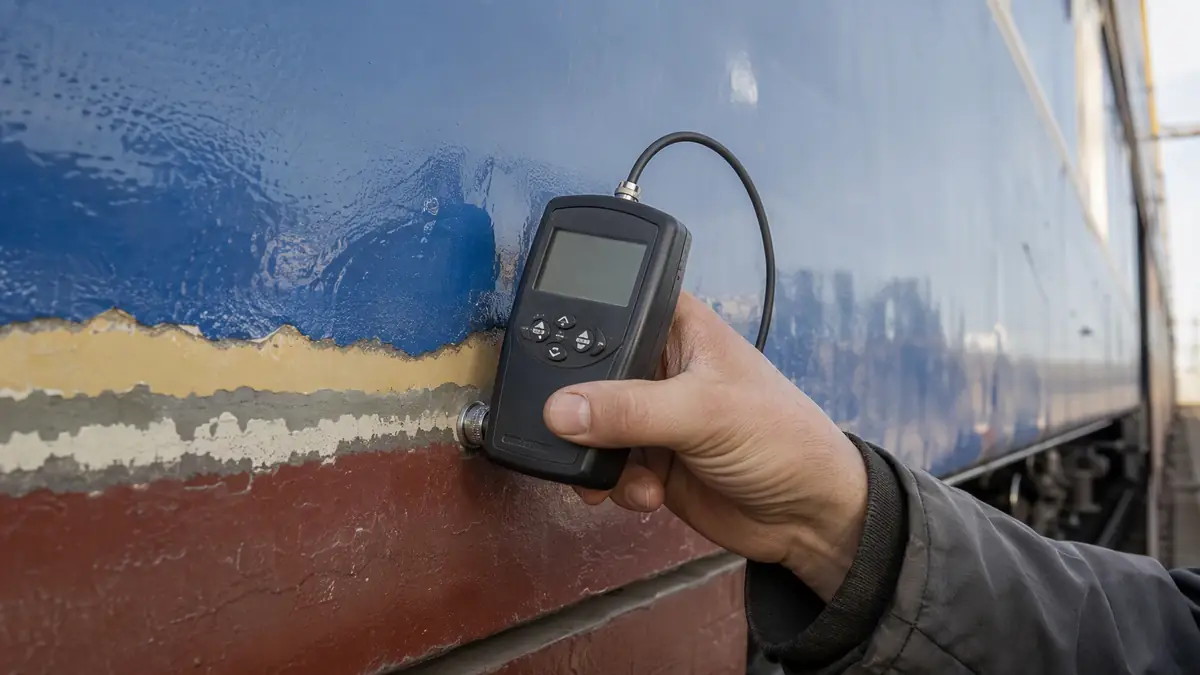
Technician's hand using a dry film thickness gauge on a railcar's thick polyurethane coating
A technician measures the dry film thickness of a railcar's coating system, a crucial step in selecting the correct abrasive media.

A detailed close-up of a technician's gloved hand using a digital dry film thickness gauge on the thick, glossy polyurethane coating of a railcar. The background shows layered edges of different colored coatings, illustrating the 'Step 2: Characterise the coating system' process for media selection.

Technician's hand using a dry film thickness gauge on a railcar's thick polyurethane coating

Selection should follow a structured evaluation of the specific job conditions, not a default preference.

Step 1: Confirm the substrate. Is the railcar body mild steel, Corten steel, stainless steel, or aluminium? Aluminium and stainless require non-ferrous media (garnet, aluminium oxide, glass bead) to avoid galvanic corrosion from embedded ferrous particles. Thin-gauge panels require lower blast pressure and less aggressive media.

Step 2: Characterise the coating system. Identify the generic type (epoxy, polyurethane, alkyd, zinc-rich primer) and measure the total thickness with a dry film thickness gauge. Coatings over 500 microns generally demand a coarser, more aggressive media — typically 20/40 or 30/60 garnet, or steel grit in the G40–G50 range.

Step 3: Define the required surface preparation standard. Rail refinishing specifications commonly reference ISO 8501-1 (SA 2.5) or SSPC-SP 10 (Near White Blast). Confirm the required anchor profile depth — this directly constrains media particle size. A profile of 50–75 microns typically requires a media with a maximum particle size in the 0.5–1.0 mm range.

Step 4: Assess the blasting environment. Open siding blasting with no recovery favours garnet or slag as single-pass expendables. Enclosed blast facilities with recovery systems favour steel grit for its recyclability and lower long-term cost per square metre.

Step 5: Calculate total job cost, not just media price. A lower-priced media that strips at half the speed, generates twice the dust, and requires additional containment and disposal can easily cost more in total than a higher-priced media that finishes the job faster and cleaner.

Common Mistakes in Railcar Abrasive Selection

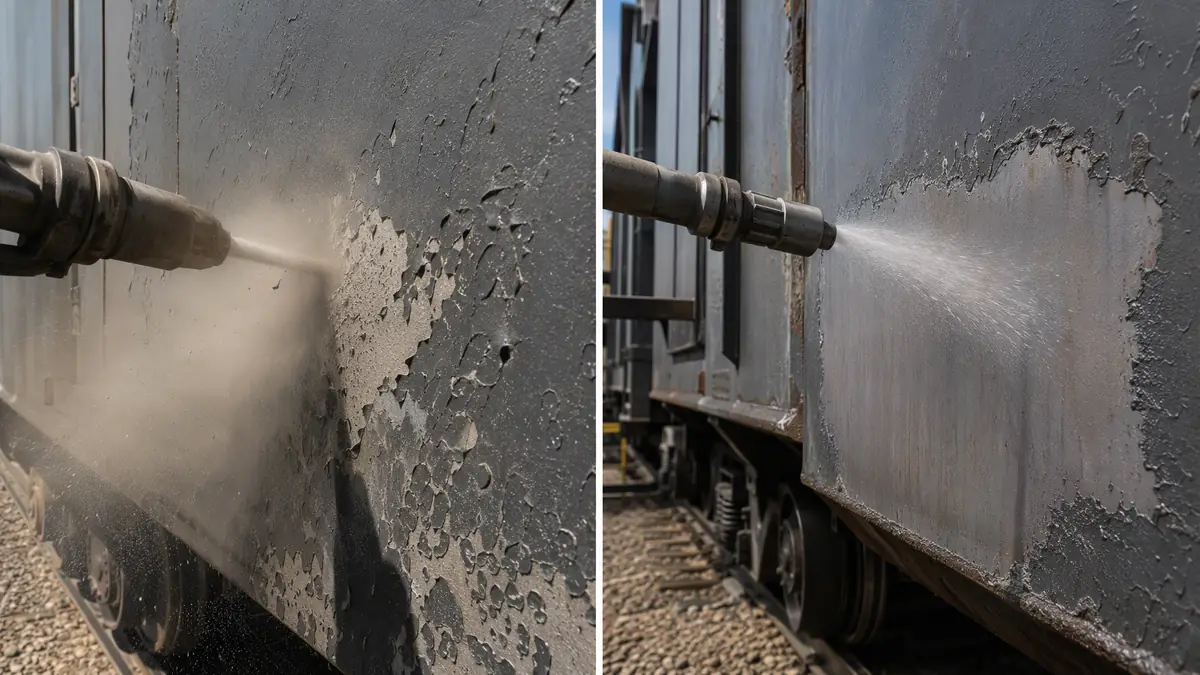
Split-screen comparison of ineffective fine media blasting versus productive coarse media blasting on a railcar epoxy coating
A visual comparison showing the slow strip rate of fine mesh media (left) versus the high productivity of correct coarse media (right) on thick railcar coatings

A split-screen industrial photograph demonstrating a common mistake in railcar abrasive selection. The left side shows a nozzle blasting with fine, dusty media, ineffectively stripping thick epoxy. The right side shows a coarser media stream at the correct distance, quickly removing the coating to r

Split-screen comparison of ineffective fine media blasting versus productive coarse media blasting on a railcar epoxy coating

Using too fine a mesh size on heavy coatings. Fine garnet (80 mesh or finer) may produce an acceptable profile but will strip thick epoxy at a fraction of the speed of 20/40 or 30/60 mesh. The operator compensates by dwelling longer, increasing labour cost and substrate heating.

Defaulting to the cheapest media without evaluating productivity. A slag abrasive priced 60% lower than garnet but consuming at twice the rate and generating three times the dust may increase total job cost when labour, containment, and disposal are factored in.

Ignoring spent media disposal requirements. Slag and single-pass garnet generate significant volumes of spent media mixed with paint residue. If the paint contains heavy metals (common in older railcar coatings), disposal may require hazardous waste handling. Confirm coating composition before selecting a high-consumption, single-pass media.

Applying steel grit to aluminium or stainless without a post-blast treatment plan. Ferrous embedment on these substrates leads to rapid pitting corrosion unless removed by chemical treatment or blasting with a non-ferrous media as a final step.

Overlooking media contamination. Recycled or low-cost abrasives can contain contaminants — chlorides, sulphates, oil — that become trapped in the blast profile and cause premature coating failure. For critical railcar coatings, specify washed, high-purity media and verify with a conductivity test if in doubt.

Productivity Considerations for Large-Area Blasting

Railcar blasting productivity depends on more than media choice, but media is the foundation. Key interactions to manage:

  • Nozzle size and blast pressure. Coarser media requires larger nozzle orifices (typically 10–12 mm for garnet 20/40) and adequate air supply (minimum 350–400 CFM at 100 PSI for a single large nozzle). Undersized air supply starves the nozzle and kills strip rate regardless of media quality.
  • Standoff distance and angle. Maintaining a consistent 450–600 mm standoff and 60–70° angle to the surface optimises media impact energy. Operators blasting from scaffolding or mobile platforms need training to maintain this on large vertical surfaces.
  • Media conditioning. In recycling operations, effective air-wash separation removes spent fines and paint chips, maintaining consistent particle size distribution and strip rate cycle after cycle.

Conclusion

For most railcar and rolling stock refurbishment contractors, almandine garnet in the 20/40 or 30/60 mesh range represents the best balance of strip rate, profile quality, dust control, and substrate safety on steel bodies. Steel grit becomes the preferred choice where enclosed blasting with media recovery is available and maximum productivity on heavy steel substrates is the priority. Slag abrasives have a place where budget constraints dominate, but the total cost calculation must account for lower productivity and higher disposal volumes.

The right media decision starts with the substrate, the coating system, and the blasting environment — not the price per tonne. Contractors who evaluate media against total job cost and required surface preparation standards consistently achieve better margins and fewer callbacks than those who buy on price alone.

Frequently Asked Questions

What is the best all-around abrasive for blasting railcars on a siding?

For most open-air railcar blasting, 30/60 or 20/40 mesh garnet is the preferred choice. It offers the best balance of high strip rate on heavy coatings, controlled surface profile for paint adhesion, and low dust generation compared to slags. Its low free silica content also supports better occupational health compliance on uncontrolled sites.

Can I use steel grit for open-air railcar blasting?

Steel grit is generally not practical for single-pass, open-air blasting on a siding. It requires dedicated recovery and air-wash separation systems to be economical, and spent grit left on tracks or ballast creates a contamination and safety hazard. It is best reserved for enclosed blast facilities with media recycling capabilities.

How do I choose the right abrasive for aluminium railcar bodies?

You must use a non-ferrous abrasive like garnet or aluminium oxide to prevent galvanic corrosion from embedded ferrous particles. Additionally, aluminium panels are often thinner and more sensitive, so you may need to use a finer mesh size and lower blast pressure to avoid warping or excessive surface profile.

Why is coal slag causing so much dust on my railcar blasting job?

Coal slag is highly friable, meaning the particles fracture into fine dust upon impact. This rapid breakdown generates substantial dust clouds that reduce visibility, slow down operators, and can require extensive containment measures, making it a challenging choice for open-air siding work despite its low upfront cost.

What mesh size of garnet should I use for thick railcar coatings?

For coating systems exceeding 500 microns, a coarser mesh like 20/40 or 30/60 garnet is typically required. Finer meshes will lose cutting speed and productivity on thick, flexible topcoats. Always confirm the total coating thickness with a dry film thickness gauge before selecting your media size.

Is glass bead a viable option for stripping paint from rolling stock?

No, glass bead is not suitable for primary paint removal. Its spherical shape provides minimal cutting action on thick coatings, resulting in unacceptably slow strip rates. It is only appropriate for secondary finishing or cleaning of sensitive components after the paint has already been removed.

Solution

Selecting the optimal abrasive for your railcar refurbishment project requires matching media specifications to your specific substrate, coating system, and site conditions. Compare garnet, steel grit, and slag abrasive options available through SPA2Z, and contact our technical team to discuss mesh size recommendations, bulk availability, and pricing for your next rail MRO contract.

Get a quote

Get a quote

Tell us what you need. We reply within one business day.

Sending…
Need a price? Ask us here.