When to Switch from Mineral Abrasive to Metallic Recycling
For growing blast operations, the rising cost of expendable mineral abrasives eventually forces a hard question: keep buying garnet by the tonne or invest in a...
Published
19 Dec 2022
Category
Abrasives
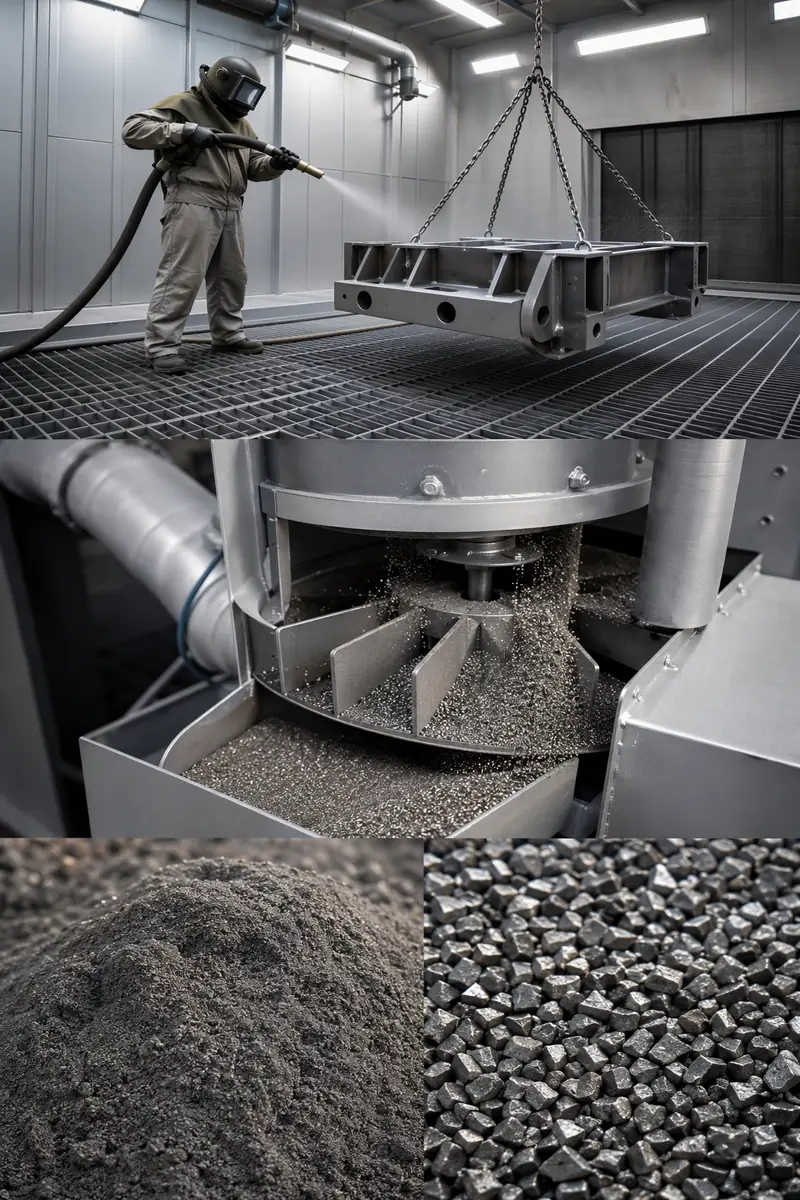
FIG. 01The shift from mineral to metallic abrasiv...
A professional multi-panel editorial image for an industrial blog post. The main panel shows a blast room with a recovery floor in operation. Supporting panels detail the key air-wash separator component, the waste generated by mineral abrasives, and the reusable nature of steel grit. The compositio
01 Introduction
For growing blast operations, the rising cost of expendable mineral abrasives eventually forces a hard question: keep buying garnet by the tonne or invest in a steel grit recycling system. The answer hinges on throughput, disposal costs, and the poi…
02 Introduction
For daily production operations, the rapid consumption and disposal of mineral abrasives like garnet become a significant and escalating cost.
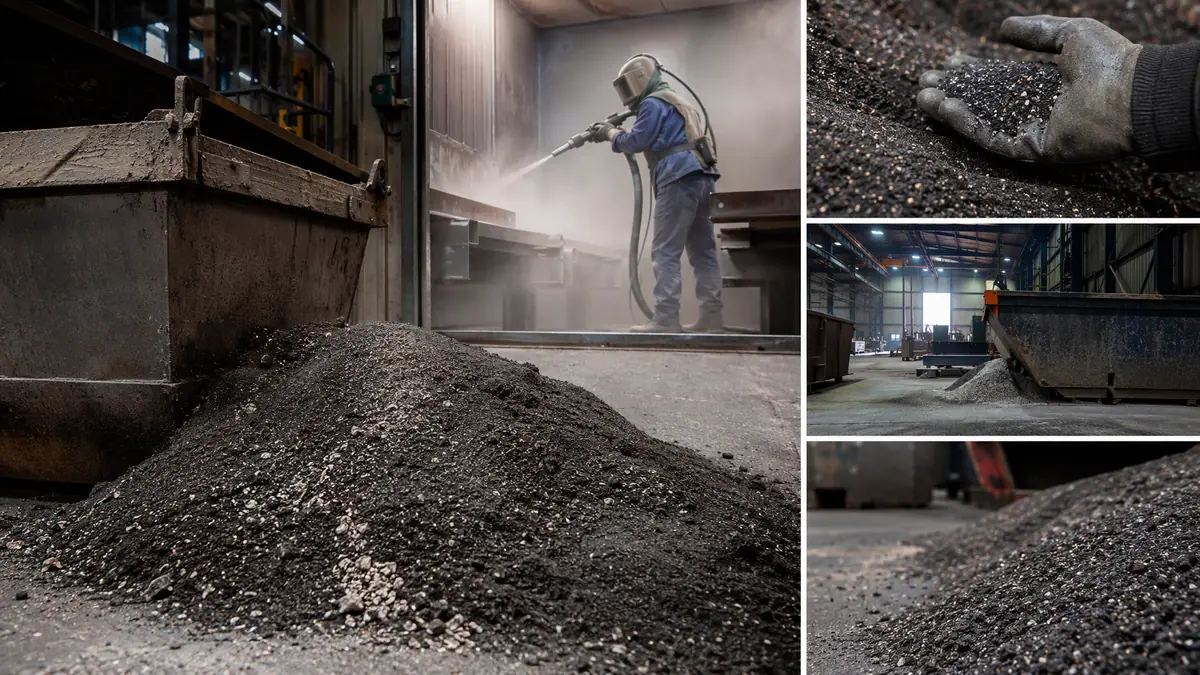
A photorealistic image depicting the reality of high-volume mineral abrasive blasting. A worker operates a blast nozzle in a dusty environment, while a large pile of spent garnet and debris in the foreground visually represents the linear cost and waste problem that drives the need for a recycling s
If your operation has moved from occasional blasting to daily production, you have probably noticed that garnet and other mineral abrasives become a significant line item. Mineral abrasives are effective, predictable, and simple to manage — but they are consumed rapidly, generate substantial dust and waste, and their cost per square metre never decreases with volume. At some threshold, the economics tilt decisively toward metallic media that can be recovered, cleaned, and reused hundreds of times.
This article is written for operations managers, capital planners, and growing job-shop owners who are evaluating whether now is the right time to switch to steel grit recycling. It provides a practical, no-hype framework for identifying the volume trigger, understanding the system conversion requirements, and building a realistic return-on-investment picture — without fabricated cost figures or invented case studies. Every operation is different; use this as a decision-support guide, not a substitute for your own process data and supplier quotations.
03 What a Mineral-to-Metallic Conversion Actually Means
Switching to steel grit is a system conversion from a linear, single-use process to a closed-loop cycle of recovery, cleaning, and reuse.
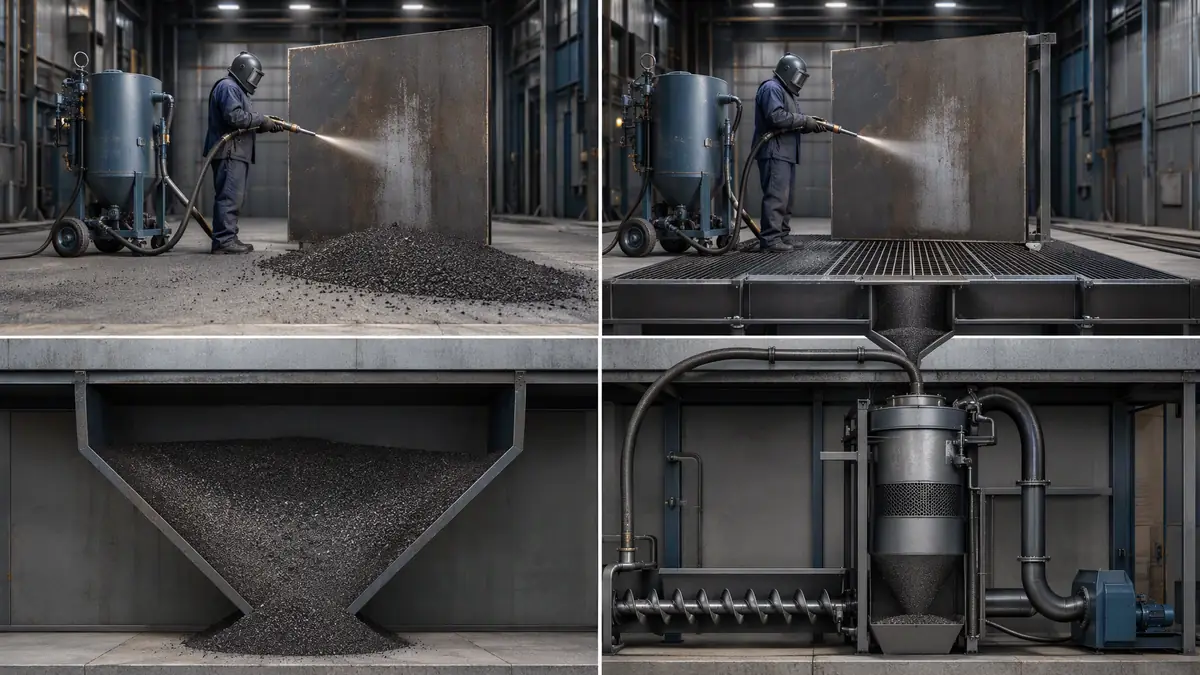
A side-by-side photorealistic industrial image contrasting two blasting systems. The left shows a simple open-loop system with abrasive falling to waste. The right shows a closed-loop metallic system with a recovery floor, conveyor, and air-wash separator returning clean grit to the blast pot, visua
Switching from a mineral abrasive like garnet to a recyclable metallic abrasive — most commonly steel grit — is not simply a media change. It is a system conversion.
In a mineral-abrasive setup, the blast machine draws fresh media from a supply hopper, propels it through the nozzle, and the spent abrasive falls to the floor mixed with dust, rust, paint chips, and broken-down fines. That mixture is typically swept up and disposed of. The abrasive works once.
In a metallic recycling system, the spent steel grit is collected, conveyed, and passed through an air-wash separator that removes dust, fractured particles, and contaminants. The cleaned, properly sized grit returns to the blast machine for reuse. A small percentage of fresh grit is added periodically to replace the fraction lost to fracture and carry-out. The media works dozens to hundreds of cycles.
This difference defines the entire cost structure: mineral abrasive costs are linear with production volume; metallic abrasive costs are front-loaded into capital equipment and then flatten dramatically per square metre blasted.
04 Why the Economics Shift at Higher Throughput
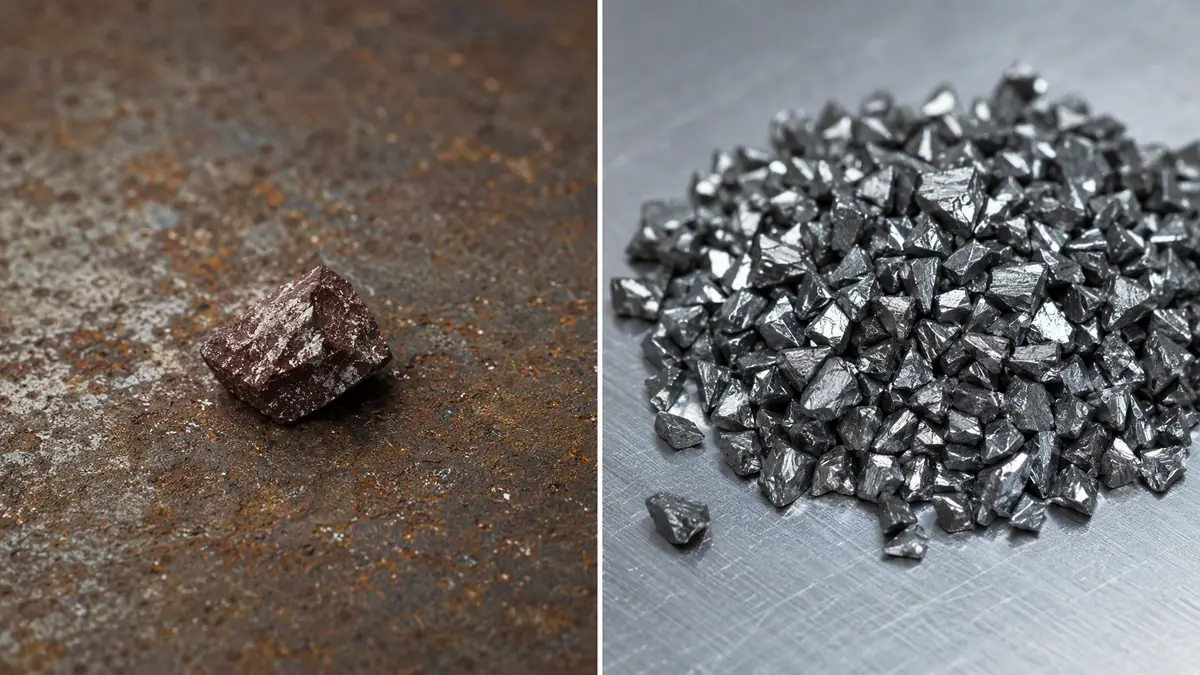
The economic shift is driven by consumption rate: a garnet particle is used once, while steel grit is recycled hundreds of times, drastically lowering the cost
A macro photorealistic split image. The left side shows a single, dusty garnet particle on a rusted surface, representing one-time use. The right side shows a pile of clean, uniform, angular steel grit on a bright steel surface, representing hundreds of reuses. The image visualizes the core economic
The primary driver for conversion is the escalating cost of expendable media. Garnet, aluminium oxide, copper slag, and other mineral abrasives are priced per tonne or per kilogram, and every kilogram you blast is a kilogram you buy again. As production hours increase, the abrasive bill rises in lockstep.
Steel grit costs more per kilogram upfront — often several times more — but the consumption rate drops by 90 to 95 percent after the initial fill because the media is recycled. The true cost comparison is not price per kilogram of media; it is media cost per square metre of cleaned surface, including disposal.
Three factors accelerate the crossover point:
Throughput volume. The more hours per day and days per week you blast, the faster the mineral abrasive bill accumulates and the sooner the recycling system pays for itself.
Disposal cost. Spent mineral abrasive contaminated with paint and rust is often classified as industrial waste. Landfill fees, transport, and regulatory paperwork add a hidden cost that disappears when you recycle.
Labour for media handling. Shovelling spent garnet, refilling hoppers, and managing waste bins consumes labour hours that a closed-loop recycling system largely eliminates.
When any two of these factors are significant in your operation, a conversion analysis is worth conducting.
05 When a Mineral Abrasive Still Makes Sense
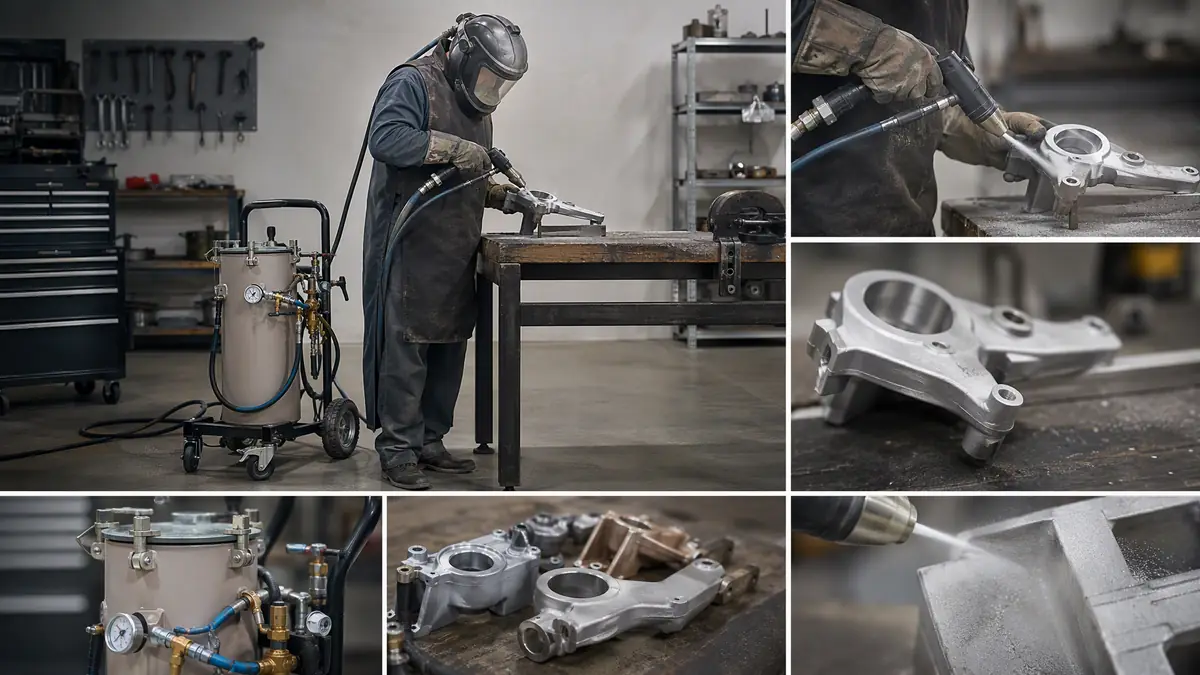
For intermittent, low-volume, or non-ferrous blasting, a simple mineral abrasive setup remains the more practical and cost-effective choice.
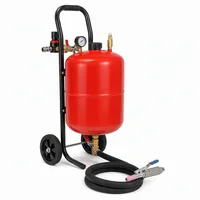
A photorealistic image of a small-scale blasting operation. A worker uses a portable blast pot to clean a non-ferrous component on a workbench. The absence of a recovery floor or recycling equipment highlights the scenarios where a mineral abrasive system is still the better fit due to low volume or
Before committing to a conversion, it is equally important to recognise where mineral abrasives remain the better choice. A metallic recycling system is not universally superior — it is superior under the right conditions.
Mineral abrasives are typically the right fit when:
Blasting is intermittent or low-volume. If your operation blasts a few hours per week, the payback period on a recycling system may stretch beyond a practical horizon.
You blast a wide variety of substrates with different profile requirements, and you change media frequently. Mineral abrasives are easier to swap out; a recycling system is optimised for one media type and grade.
You require a non-metallic finish for corrosion-sensitive applications. Steel grit can embed in certain substrates or leave ferrous contamination that is unacceptable for stainless steel, aluminium, or food-grade surfaces without additional passivation steps.
Your facility lacks the floor space or infrastructure for a recovery floor, conveyor, and separator. Retrofitting a recycling system into an existing blast room is possible, but not always practical or permitted.
The capital budget is genuinely unavailable. This is a cash-flow reality, not a technical preference. In such cases, optimising mineral abrasive consumption — through nozzle pressure control, proper mesh selection, and dust collection — can reduce costs while deferring the capital decision.
06 The Core Equipment: What a Recycling System Requires
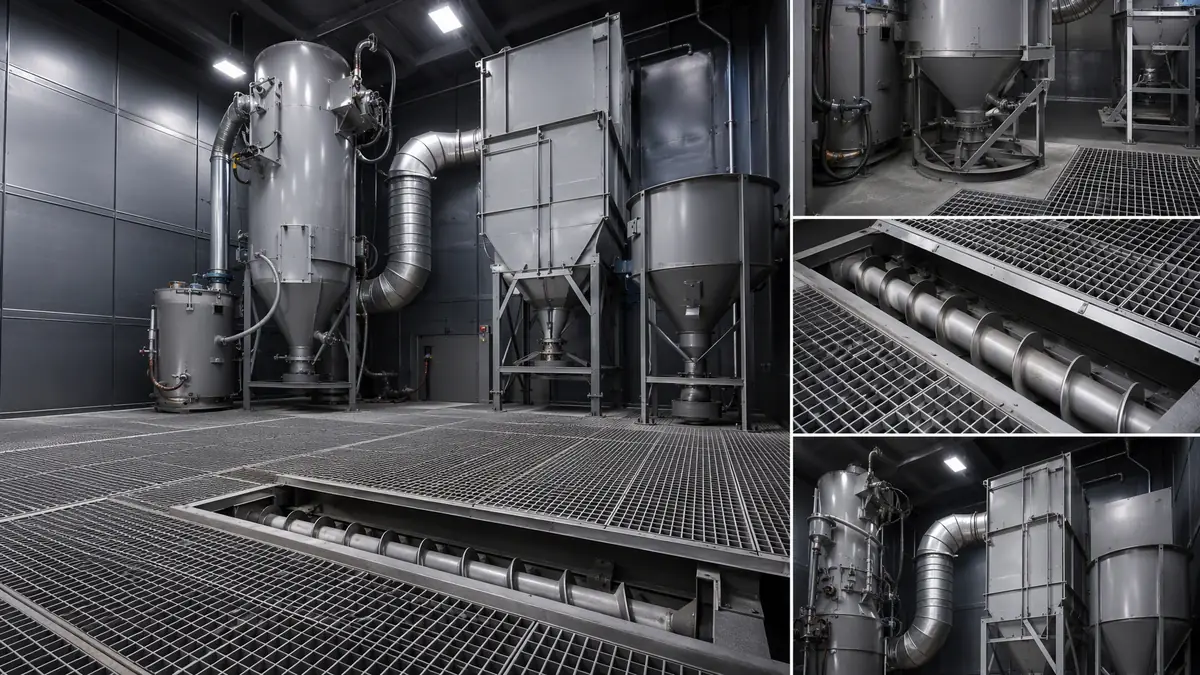
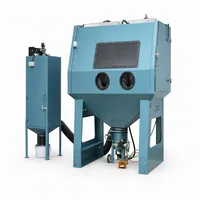
A functional steel grit recycling system is an integrated setup of a recovery floor, conveyor, air-wash separator, and blast machine, not just a media swap.
A photorealistic wide shot of a complete steel grit recycling blast room interior. The image clearly displays the grated recovery floor, a screw conveyor, the air-wash separator, dust collector ducting, and a blast pot, illustrating the interdependent hardware required for a successful mineral-to-me
Understanding the hardware helps you evaluate the scope of a conversion and avoid underestimating the investment. A functional steel grit recycling system comprises several interdependent components beyond the blast machine itself.
Recovery Floor and Conveying
Spent grit must be collected from the blast area. In a dedicated blast room, this typically means a grated recovery floor with hoppers or a pneumatic sweep system that moves media to a central collection point. In a blast cabinet, the recovery is integrated into the cabinet sump. For outdoor or field blasting, true recycling is rarely practical — this is a key limitation.
Air-Wash Separator (the CAPEX Separator)
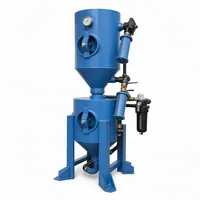
The separator is the heart of the recycling loop and often the single most expensive component. It uses controlled airflow to strip away dust, broken-down fines, and light contaminants while returning clean, properly sized grit to the storage hopper. A poorly designed or undersized separator will allow fines to accumulate in the working mix, degrading blast efficiency and surface finish. When evaluating system proposals, the separator specification deserves more scrutiny than the blast machine itself.
Media Storage and Metering
Recycled grit is held in a storage hopper and fed to the blast machine through a metering valve. The system must include a means to add small amounts of fresh grit to compensate for the media that fractures beyond the usable size range during each cycle.
Dust Collection
A recycling system generates less waste than expendable blasting, but it still generates dust. The dust collector must be sized to handle the separator's air volume plus the blast room ventilation. Undersized dust collection is a common mistake that leads to poor visibility, premature wear on the separator, and housekeeping problems.
07 How to Evaluate the ROI of a Switch to Steel Grit Recycling
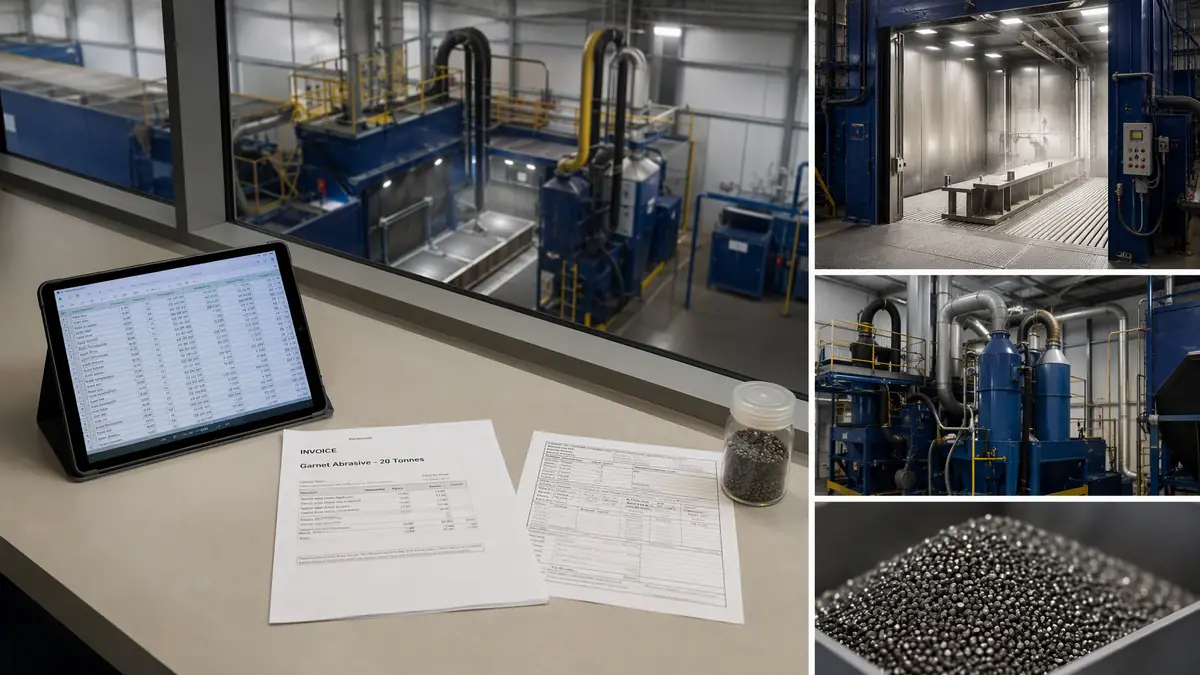
A credible ROI analysis compares total operational costs, including media, disposal, and labor, against the capital investment in a recycling system.
A photorealistic image from the perspective of a mezzanine office. In the foreground, a desk holds tools for ROI evaluation: a tablet, a mineral abrasive invoice, and a waste manifest, next to a steel grit sample. The background overlooks an active blast room with a recycling system, visually linkin
A credible return-on-investment analysis for a mineral-to-metallic conversion compares the total cost of blasting over a defined period — typically three to five years — under both scenarios. Avoid the temptation to look only at media price per kilogram; the real comparison is total cost of operation.
Step 1: Establish Your Current Baseline
Document your actual mineral abrasive consumption over the past 12 months. Include:
Labour hours spent on media handling, clean-up, and waste management.
Average monthly or annual square metres blasted, if available.
This baseline is your "business as usual" cost. Be honest — using optimistic estimates will distort the ROI calculation.
Step 2: Scope the Conversion Cost
Obtain budget quotations for the complete recycling system: recovery floor or sweep system, separator, storage hopper, conveying, dust collection upgrades, and installation. Include the initial fill of steel grit, which represents a meaningful upfront cost. Also account for any production downtime during installation and commissioning.
Step 3: Estimate the Post-Conversion Operating Cost
With a recycling system, your ongoing abrasive cost drops to the replacement rate — typically 5 to 10 percent of the initial fill per month, depending on the application and grit hardness. Disposal costs fall to near zero for the media itself, though dust collector waste still requires handling. Labour for media management decreases. Maintenance costs for the separator, conveyors, and dust collector must be added.
Step 4: Calculate the Crossover
The payback period is the point where the cumulative savings from reduced abrasive, disposal, and labour costs equal the total capital investment. A simplified example illustrates the logic:
If your current mineral abrasive and disposal costs run ₹X per month, and the post-conversion operating cost (replacement grit, maintenance, incremental power) runs ₹Y per month, the monthly saving is ₹(X – Y). Divide the total capital cost by this monthly saving to estimate the simple payback in months.
Operations blasting two or more shifts per day often see payback within 12 to 24 months. Low-utilisation operations may see payback stretch beyond five years, which may not meet internal investment thresholds. Run the numbers with your own data — generic payback claims are meaningless without your throughput figures.
Step 5: Factor in Non-Financial Benefits
Some benefits resist easy quantification but matter in the decision:
Consistent surface profile. Recycled steel grit maintains a tighter particle size distribution than a single-pass mineral abrasive that fractures and mixes with dust during blasting. This can reduce rework and improve coating adhesion.
Reduced dust in the blast environment. Better visibility means faster, more accurate blasting and less operator fatigue.
Lower environmental footprint. Reduced waste generation and lower transport emissions for media delivery can support sustainability reporting requirements.
Production predictability. You are less exposed to mineral abrasive price fluctuations and supply chain disruptions.
08 Common Mistakes When Converting to a Steel Grit System
Conversions that underperform or fail to deliver expected ROI usually share a handful of root causes. Knowing them in advance helps you plan around them.
Undersizing the Separator
The separator must handle the peak media flow rate with margin for surges. An undersized unit allows fines to recirculate, which reduces blast efficiency and increases grit consumption. When comparing system proposals, ask for the separator's rated capacity in kilograms per minute and verify it exceeds your blast machine's maximum media flow rate by at least 20 percent.
Ignoring the Initial Fill Cost
The first charge of steel grit for a production blast room can represent a significant capital outlay — often 10 to 20 percent of the equipment cost. Budgeting for equipment but not for media leads to unpleasant surprises at commissioning.
Overlooking Substrate Compatibility
Steel grit leaves a profile that may not suit every coating specification or substrate. For galvanised steel, aluminium, or stainless steel where ferrous contamination is a concern, confirm compatibility with your coating supplier or specification before committing. In some cases, a non-metallic recyclable abrasive such as aluminium oxide (recycled in a cabinet system) may be the appropriate middle ground.
Assuming Zero Maintenance
A recycling system adds mechanical equipment — screw conveyors, bucket elevators, rotary valves, air-wash fans — that requires preventive maintenance. Budget for wear-part replacement (separator baffles, conveyor flights, screen decks) and include maintenance labour in your operating cost estimate.
Neglecting Operator Training
Operators accustomed to mineral abrasive blasting may need training on recycling system operation: monitoring separator performance, adjusting the media feed, recognising when the working mix needs replenishment, and spotting signs of contamination. A well-designed system with an untrained operator will still produce poor results.
09 Is a Partial Conversion an Option?
Not every operation needs to jump from 100 percent mineral abrasive to a full recycling blast room. Several intermediate steps can reduce costs while deferring major capital expenditure:
Blast cabinets with integrated recycling. For smaller components, a cabinet with a built-in cyclone separator and dust collector provides recycling benefits at a fraction of the cost of a full blast room conversion. This is often the entry point for operations testing the metallic-abrasive approach.
Dedicated recycling for a single blast machine. Some facilities convert one blast station to metallic recycling while keeping others on mineral abrasive for specialised work. This hybrid approach limits capital exposure.
Switching to a lower-cost mineral abrasive. If garnet is your current media, evaluating copper slag or coal slag may reduce cost per square metre while you build the volume case for metallic recycling. The trade-off is typically higher dust generation and faster consumption, so run the numbers carefully.
10 Decision Checklist: Are You Ready to Switch?
Use this checklist as a quick self-assessment. If you answer "yes" to most of these, a detailed conversion analysis is warranted:
[ ] Blasting is a daily production activity, not an occasional maintenance task.
[ ] Monthly abrasive expenditure is a top-five consumable cost in your operation.
[ ] Disposal costs for spent abrasive are rising or subject to tightening regulations.
[ ] You have (or can allocate) dedicated floor space for a recovery and recycling system.
[ ] Your primary substrates are carbon steel or ferrous materials compatible with steel grit.
[ ] You can tolerate the production downtime required for system installation and commissioning.
[ ] Capital budget is available or can be justified with a credible payback analysis under three years.
[ ] Your team is willing to adopt new operating and maintenance procedures.
11 Conclusion
The decision to switch from mineral abrasive to steel grit recycling is fundamentally an economic one, driven by throughput volume, disposal costs, and the capital recovery period. For operations that blast daily, the crossover point often arrives sooner than expected — and delaying the decision simply extends the period of paying for abrasive that is used once and discarded.
The key is to run the analysis with your real consumption data, obtain system quotations that specify separator capacity and initial media fill, and build a total-cost-of-operation comparison that includes disposal, labour, and maintenance — not just the price per kilogram of media. A properly specified recycling system, matched to your production volume, transforms abrasive from a variable consumable cost into a manageable fixed asset.
12 Frequently Asked Questions
At what production volume does switching to steel grit recycling make financial sense?
The crossover point is driven more by total operating cost than a single volume number. Operations running two or more shifts per day often see payback within 12 to 24 months because the linear cost of expendable mineral abrasive is replaced by a capital investment that flattens the cost per square metre. You should run the calculation using your actual abrasive consumption, disposal fees, and labor costs to find your specific threshold.
What is the most critical piece of equipment in a steel grit recycling system?
The air-wash separator is the heart of the system and often the most expensive single component. It uses controlled airflow to remove dust, fractured fines, and contaminants, returning only clean, properly sized grit to the blast machine. An undersized or poorly designed separator will allow fines to accumulate, degrading blast efficiency and surface finish, so its specification deserves the most scrutiny.
Can I simply change the media in my existing blast machine to start recycling steel grit?
No, this is a system conversion, not just a media change. A mineral abrasive setup uses the media once and disposes of it, while a metallic system requires a recovery floor, conveying equipment, an air-wash separator, and a storage hopper to collect, clean, and reuse the steel grit. Retrofitting an existing blast room is possible but requires significant infrastructure additions.
When is it a mistake to switch from garnet to a steel grit system?
A metallic recycling system is not the right choice for intermittent or low-volume blasting, as the payback period may stretch beyond a practical horizon. It is also unsuitable if you frequently change media types for different profiles, require a non-metallic finish for corrosion-sensitive applications like stainless steel, or lack the floor space and infrastructure for a recovery floor and separator.
What hidden costs should I include in my ROI calculation for the switch?
Beyond the media price, you must include the escalating costs of spent mineral abrasive disposal, including landfill fees and transport, which disappear with recycling. Also factor in current labor hours for shoveling spent media and refilling hoppers, the initial fill of steel grit, and the ongoing maintenance costs for the new separator, conveyors, and dust collector.
Is steel grit recycling practical for outdoor or field blasting?
True steel grit recycling is rarely practical for outdoor or field blasting. The process depends on a contained area with a recovery floor or sweep system to collect the spent media for cleaning and reuse. Without this containment, the media is lost, making mineral abrasives the more viable option for mobile operations.
What is the next step after determining a switch to steel grit could be profitable?
The next step is to obtain budget quotations for a complete recycling system, including the recovery floor, separator, conveying, dust collection, and initial media fill. You should then compare relevant abrasive systems and suppliers to build a precise capital cost for your ROI model, and you can enquire for availability and detailed specifications to move forward.
13 Solution
If your operation is approaching the volume threshold where a mineral-to-metallic conversion makes financial sense, the next practical step is to compare the abrasive media options available for your application and throughput level. Review steel grit grades, initial fill quantities, and separator-compatible media specifications relevant to your blast equipment. Explore the abrasive product range on SPA2Z to understand available media types and enquire about compatibility, specifications, and current availability for your planned conversion.
14 Get a quote
Get a quote
Tell us what you need. We reply within one business day.