Abrasive Selection Checklist Before Requesting a Quotation
A vague abrasive enquiry wastes time and often delivers the wrong blast media. Use this checklist to build a specification-ready RFQ that gets you an accurate q...
Published
18 Jul 2021
Category
Abrasives
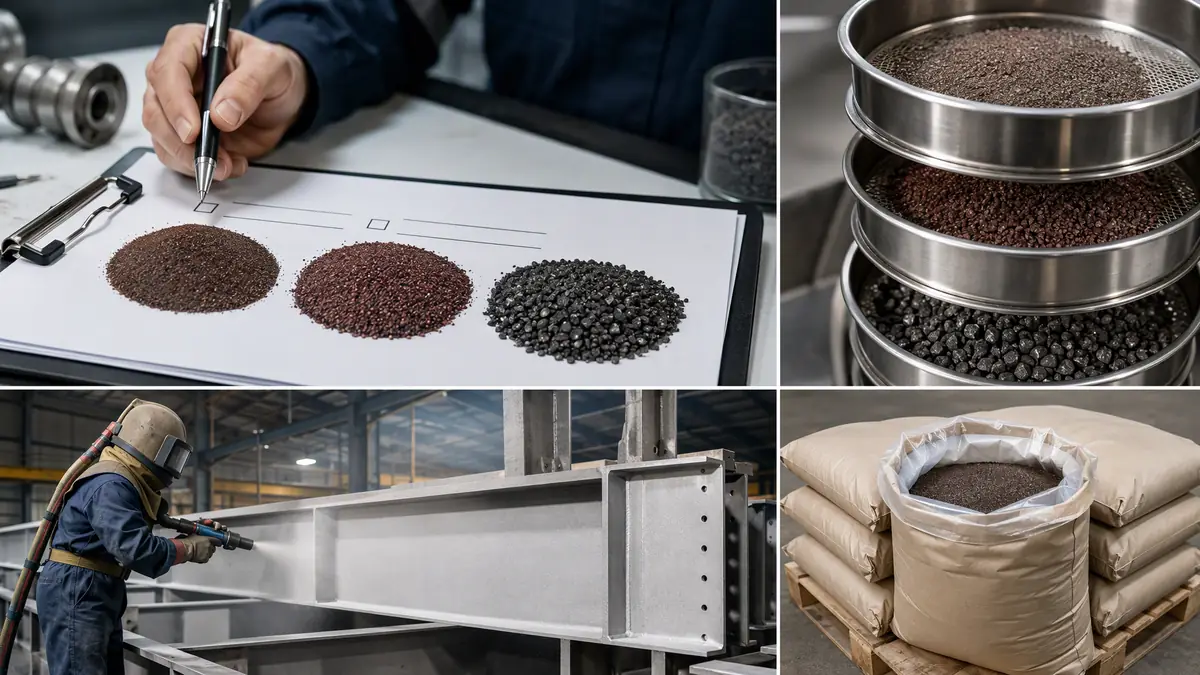
FIG. 01A visual checklist for specifying abrasive...
A multi-panel editorial image for an abrasive selection guide. The dominant panel shows a hand comparing Aluminum Oxide, Garnet, and Steel Grit samples. Supporting panels detail a mesh size sieve analysis, an industrial blasting operation achieving a near-white finish, and packaged abrasive bags on
01 Introduction
A vague abrasive enquiry wastes time and often delivers the wrong blast media. Use this checklist to build a specification-ready RFQ that gets you an accurate quote—and the right product—the first time.
02 Introduction
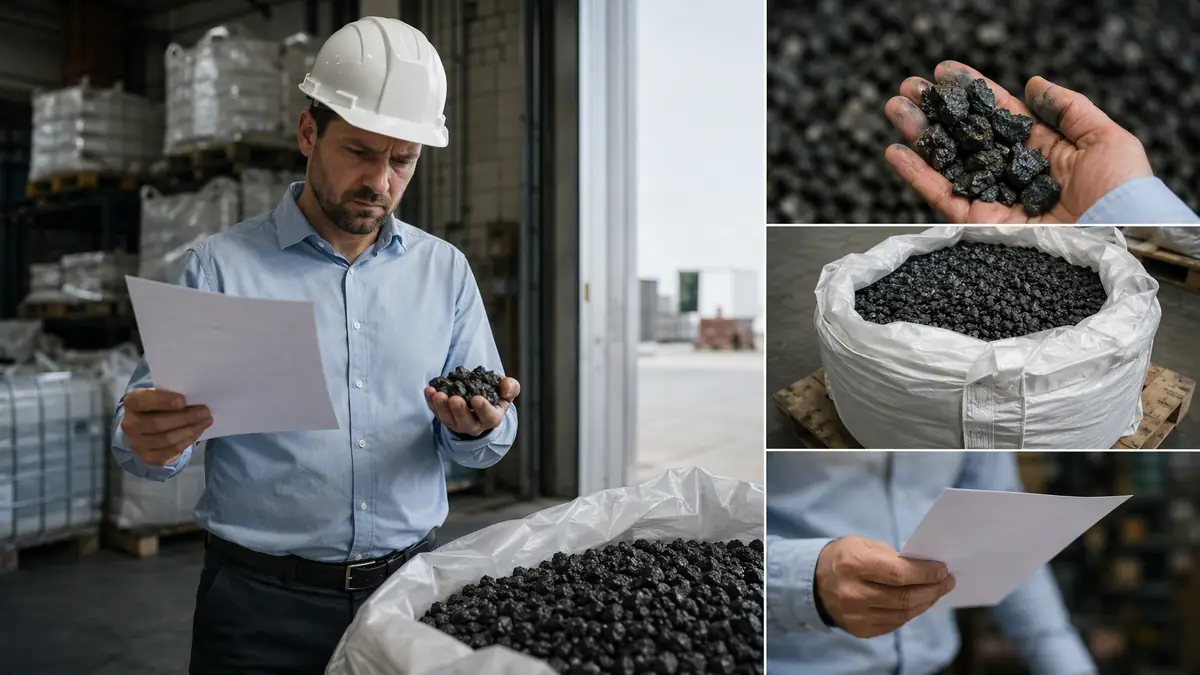
A vague purchase order often results in receiving the wrong blast media, causing delays and extra costs.
An industrial scene showing a procurement officer in a warehouse realizing the delivered abrasive media does not match the job requirement. He compares a vague purchase order with a sample of incorrect grit, illustrating the core problem the article addresses for first-time buyers.
This article is written for first-time buyers, procurement officers, and workshop supervisors who need to specify abrasive media correctly before approaching a supplier. By the end, you will have a structured checklist that maps directly to the information a technical sales team needs to quote accurately—covering mesh size, hardness, material type, packaging, and the standards your job must meet. You will also understand why each field matters, so you can discuss requirements confidently rather than guessing.
03 Why Vague RFQs Cost You Money
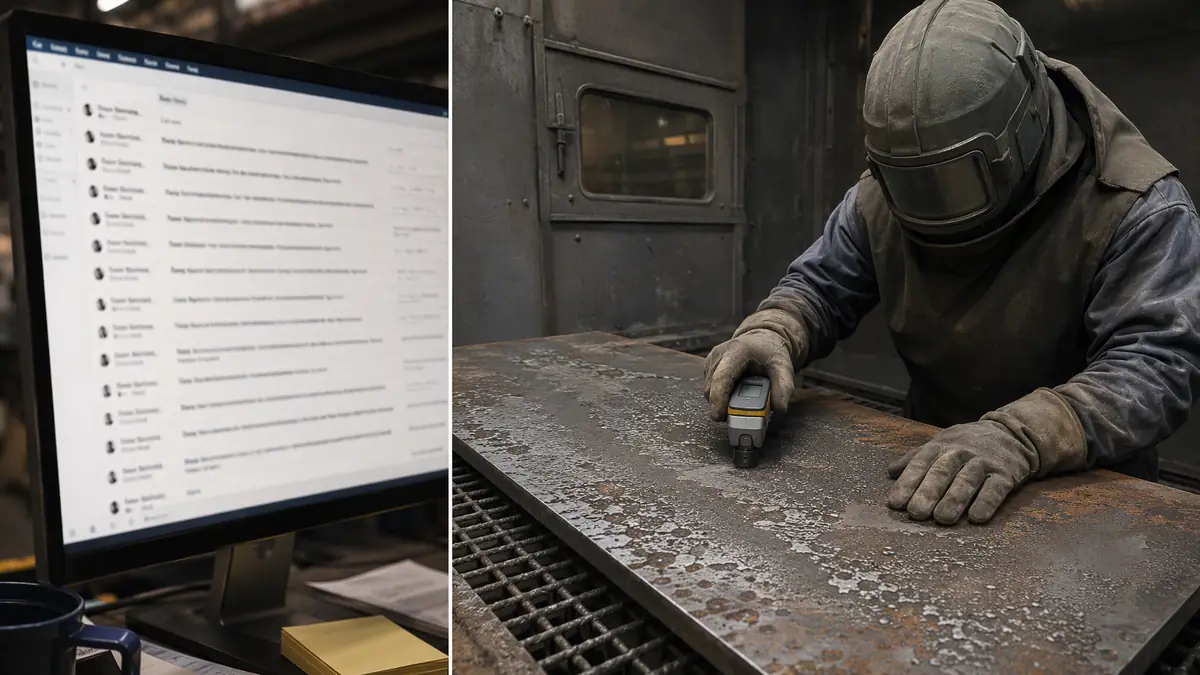
A vague enquiry leads to supplier guesswork, email delays, and ultimately, a failed surface preparation job.
A split-screen industrial image. The left side shows a computer screen with a chain of clarification emails, representing quote delays. The right side shows a worker inspecting a poorly blasted steel surface with a profile gauge, representing the costly on-site consequences of receiving the wrong me
An abrasive quotation is only as good as the specification behind it. When the enquiry lacks detail, one of three things usually happens:
The supplier guesses. They assume a common grade or application and quote accordingly. If your job requires SA 2.5 near-white metal finish but they priced general-purpose media, you will discover the mismatch on site—after the purchase order is closed.
The quote gets delayed. The supplier sends a clarification email. You reply. They ask again. Days turn into a week before you have a firm number.
You pay for the wrong product. Different mesh sizes, hardness levels, and material types carry different costs. A vague RFQ often defaults to a middle-ground product that may be more expensive than what you need, or cheaper but unsuitable.
A complete specification upfront eliminates these problems. It signals to the supplier that you are a serious buyer, and it gives their technical team enough information to recommend the optimal media—or flag a mismatch before money changes hands.
04 The Abrasive Quotation Checklist: What to Specify
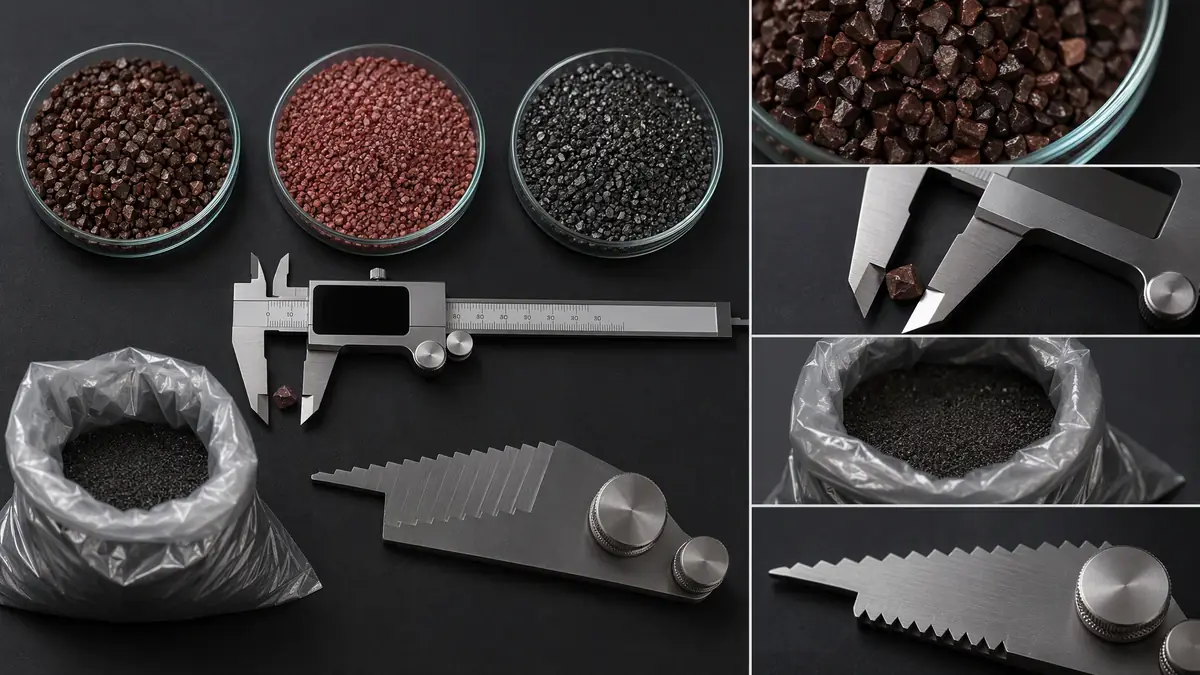
Essential elements to specify: abrasive material type, particle size, packaging, and desired surface profile.
A top-down industrial flat lay representing the abrasive quotation checklist. It features petri dishes with Aluminum Oxide, Garnet, and Steel Grit, a digital caliper for size reference, a small sample bag for packaging, and a surface profile comparator, visually summarizing the key fields needed for
Below are the essential fields to prepare before you request a quotation for blast media. Each one directly affects price, performance, and availability.
1. Abrasive Material Type
Start with the media itself. Common industrial abrasives include:
Aluminum Oxide – high hardness, angular particles, used for aggressive cutting, surface etching, and preparation before coating. Suitable for ferrous and non-ferrous metals.
Garnet Sand – natural mineral abrasive with moderate hardness, low dust generation, and good recyclability. Widely used in shipyards, structural steel blasting, and waterjet cutting.
Steel Grit – angular metallic abrasive for fast stripping and profile creation on steel surfaces. Common in shot blasting machines and recycling systems.
Steel Shot – spherical metallic abrasive used for peening, descaling, and finishing in wheel-blast equipment.
Copper Slag – low-cost disposable abrasive for open-nozzle blasting. Higher dust generation; restricted in some regions due to environmental regulations.
Glass Bead – spherical, relatively soft media for cleaning, deburring, and cosmetic finishing without dimensional change to the substrate.
Silicon Carbide – the hardest commonly available blast media; used for etching hard materials, ceramics, and specialized surface preparation.
Mesh size defines the abrasive particle size range and is one of the most critical specifications. It directly controls:
Surface profile depth – coarser grit produces a deeper anchor pattern; finer grit produces a smoother finish.
Coverage rate – larger particles clean faster but may leave a rougher surface than the coating specification allows.
Nozzle compatibility – the orifice diameter must be at least three to four times the largest particle size to prevent clogging.
Common mesh ranges you will see on a quotation:
Mesh Range
Typical Application
12/24 or 16/30
Heavy rust and mill scale removal, deep profile for thick coatings
20/40 or 30/60
General structural steel blasting, standard coating preparation
36/80 or 80
Light cleaning, thin coatings, aluminum or stainless steel
100/200
Fine finishing, glass etching, delicate substrates
Specify the mesh range your process requires. If you are working to a coating specification, the coating data sheet will often state the required surface profile in microns or mils—use that to determine the appropriate mesh size. Do not simply ask for “fine” or “coarse”; those terms mean different things to different suppliers.
3. Hardness (Mohs or Rockwell)
Hardness determines how aggressively the abrasive cuts and how quickly it breaks down. Key points:
Aluminum Oxide is typically around 9 on the Mohs scale, making it suitable for hard metals and high-stress applications.
Garnet ranges from approximately 7.5 to 8 Mohs depending on the source deposit. Hardness affects both cutting speed and friability (tendency to fracture).
Steel Grit hardness is measured in Rockwell C (HRC), commonly ranging from 40 to 65 HRC. Higher hardness cuts faster but may fracture more readily in high-impact recycling systems.
Steel Shot hardness typically falls between 40 and 50 HRC for standard grades, with higher-hardness variants available for specific peening applications.
If your process recycles abrasive (e.g., shot blasting machine with a reclaimer), hardness directly affects consumption rate and operating cost. Specify the hardness range your equipment manufacturer recommends, or ask the supplier to quote based on your recycling setup and target consumption rate.
4. Quantity and Packaging
This seems obvious, but incomplete packaging instructions cause real problems:
Bulk quantity – specify in kilograms or metric tonnes. For ongoing production, indicate whether this is a one-time purchase or a recurring monthly requirement. Recurring volumes often attract different pricing.
Packaging type – options typically include 25 kg bags, 50 kg bags, 1-tonne bulk bags (FIBC/jumbo bags), or loose bulk for silo delivery. Your site's material handling equipment (forklift, crane, hopper access) determines what you can receive.
Palletization – specify if bags must be palletized, the pallet type (wood, plastic, heat-treated for export), and any stacking restrictions.
Special requirements – moisture-proof packaging for water-sensitive media, export-worthy packing for international shipments, or branded/labeled bags if required by your quality system.
A clear packaging specification prevents the awkward situation of receiving 25 kg bags when your blast pot hopper is designed for bulk bag loading.
5. Applicable Standards and Specifications
If your surface preparation work must meet a specific standard, state it in the RFQ. The abrasive itself may need to comply with certain specifications. Common references include:
SSPC-AB 1 (Mineral and Slag Abrasives)
SSPC-AB 2 (Cleanliness of Recycled Ferrous Metallic Abrasives)
SSPC-AB 3 (Ferrous Metallic Abrasive)
ISO 11124 (Metallic blast-cleaning abrasives) and ISO 11126 (Non-metallic blast-cleaning abrasives)
SAE J444 (Cast Shot and Grit Size Specifications)
Coating manufacturer specifications – many paint and coating systems specify the required surface profile and cleanliness level, which in turn dictate abrasive characteristics.
Equipment type – for wheel-blast machines, specify the machine make and model if known, as some abrasives are optimized for specific blast wheel designs.
Substrate material – mild steel, stainless steel, aluminum, concrete, stone, glass, etc.
Contaminant to be removed – rust, mill scale, old paint, epoxy coating, weld slag, foundry sand, etc.
Recycling – single-pass (disposable) or recycled through a reclaimer. This determines whether you need a low-cost disposable abrasive or a durable media with high recyclability.
Production rate target – square meters per hour or components per shift. This helps the supplier balance cutting speed against finish quality.
7. Delivery Location and Timeline
Include the delivery site address, any access restrictions (residential area, port, remote location), and your required delivery date or lead time tolerance. Freight cost can be a significant portion of the total quote, especially for dense materials like steel grit or bulk garnet. An accurate delivery postcode allows the supplier to include realistic freight in the quotation rather than adding it later as a surprise.
05 Common Mistakes When Requesting an Abrasive Quote
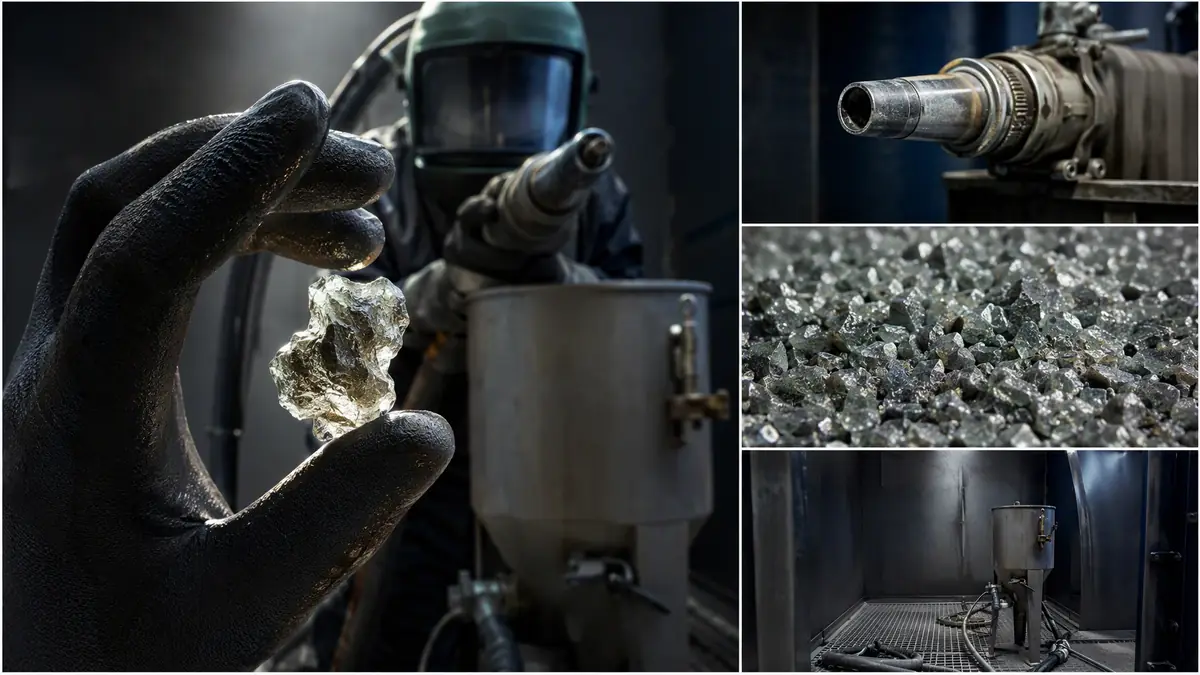
Ignoring equipment compatibility can cause abrasive media to shatter prematurely, reducing efficiency.
A detailed industrial close-up showing a worker's gloved hand examining a crushed abrasive particle. The background shows a blast nozzle and pot, visually representing the common mistake of not specifying the blasting method, which can lead to using an abrasive that is incompatible with the equipmen
Mistake 1: Specifying only the material name. “Quote for aluminum oxide” is not enough. Mesh size, quantity, and packaging are the bare minimum.
Mistake 2: Confusing mesh size with surface profile. Mesh size describes the abrasive particle; surface profile describes the resulting surface roughness. They are related but not identical. Do not ask for “50-micron abrasive” unless you mean the particle size—and clarify which one you intend.
Mistake 3: Ignoring equipment compatibility. An abrasive that works perfectly in an open nozzle may shatter too quickly in a wheel-blast machine, or vice versa. Always mention your blasting method.
Mistake 4: Overlooking packaging handling. Ordering 25-tonnes in 25 kg bags when your crew has no mechanical handling creates a labor bottleneck. Ordering bulk bags without a forklift or hoist is worse.
Mistake 5: Omitting the end standard. If the finished surface must pass a coating inspector's check, the abrasive must be capable of producing that result. Stating the standard protects both you and the supplier.
06 How This Checklist Maps to a Quotation Form
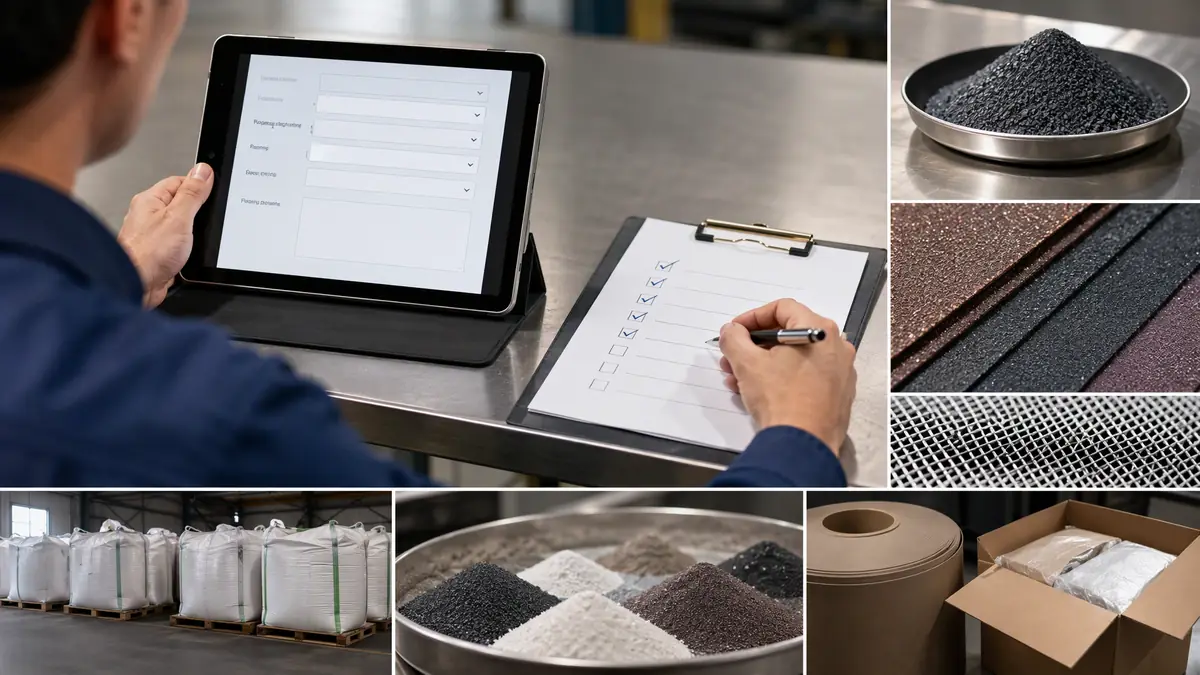
A structured RFQ form mirrors the abrasive specification checklist, streamlining the enquiry process.
An over-the-shoulder view of a professional using a tablet to fill out an online abrasive quotation form. The screen shows fields for material type, mesh size, and quantity. A paper checklist beside the tablet is being ticked off, visually demonstrating how the article's checklist maps directly to a
When you submit an enquiry through a structured RFQ form, the fields typically mirror the checklist above. A well-designed industrial quotation form will ask for:
Preparing your answers to these fields before you start the enquiry process reduces back-and-forth and gets you an accurate quote faster. If the form you are using does not ask for some of these details, include them in the comments or additional notes field—or reconsider whether the supplier is asking the right technical questions.
07 Putting the Checklist to Work
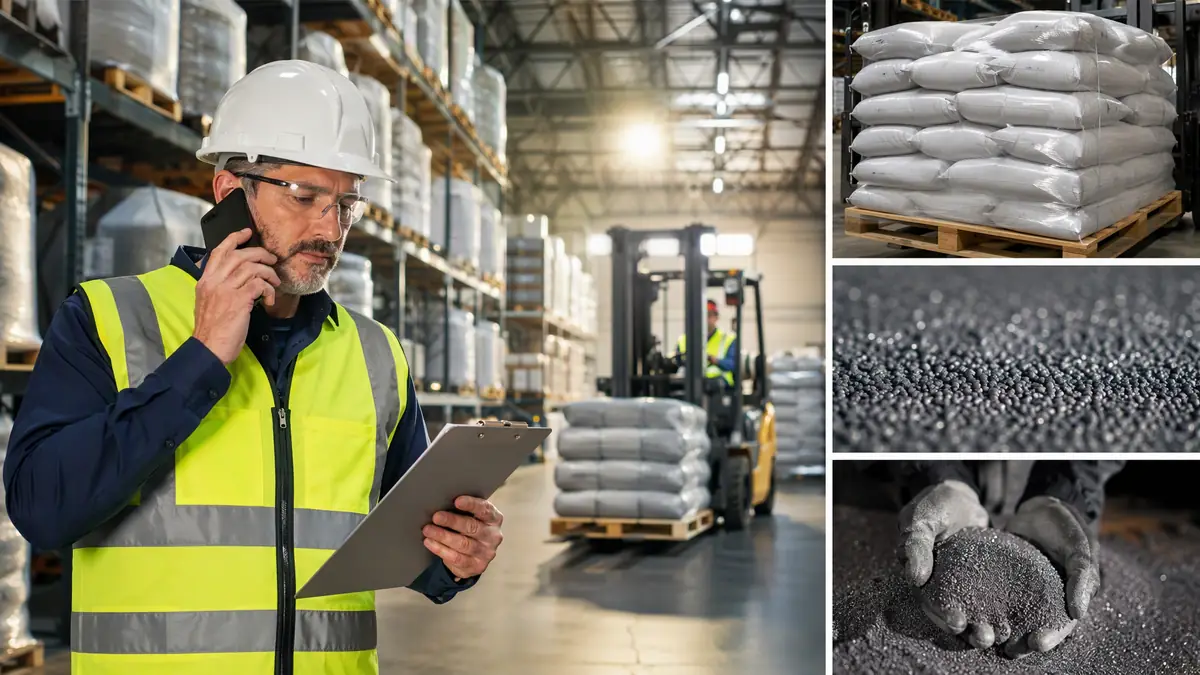
With a completed checklist, the supervisor confidently places the order, ensuring the right product is dispatched.
An industrial warehouse scene showing a supervisor in safety gear on the phone, holding a completed abrasive specification checklist. A forklift moves a pallet of properly packaged abrasive bags in the background, representing the successful outcome of using the checklist to get an accurate quote an
Before you pick up the phone or fill out an online enquiry, run through this summary:
Material type – what abrasive? If unsure, describe the job.
Mesh size – what particle size range? Tie it to your profile requirement.
Hardness – any specific hardness requirement for your process or equipment?
Quantity – how much now, and is it recurring?
Packaging – bag size, palletization, moisture protection?
Standards – what surface preparation standard must the finished work meet?
A well-prepared abrasive quotation checklist does more than speed up procurement. It reduces the risk of receiving media that fails on the job, protects your production schedule, and demonstrates to suppliers that you are a buyer who understands the technical requirements. The time you invest in gathering these specifications before the RFQ is repaid many times over in accurate pricing, faster turnaround, and fewer surprises on the shop floor.
When you are ready to request a quotation, have your checklist in hand. A supplier who can respond to a complete specification with a precise quote—and who asks clarifying questions when something does not match—is a supplier worth working with.
09 Frequently Asked Questions
What information must I have ready before I ask for an abrasive quotation?
Prepare the material type, mesh size, hardness, quantity, packaging needs, and any relevant surface preparation standards. Also include your blasting method, substrate material, and delivery location. Having these details ready prevents delays and ensures the quote matches your actual job requirements.
How do I choose the right abrasive material if I am not sure what I need?
Describe the substrate you are blasting and the objective, such as rust removal, paint stripping, or creating a surface profile. A technical supplier can then recommend the correct media. Avoid simply asking for a generic material like 'garnet' without explaining the application.
Why does mesh size matter so much in a quotation?
Mesh size controls the surface profile depth, coverage rate, and nozzle compatibility. Using the wrong mesh can result in an anchor pattern that is too deep or too shallow for your coating. Always check your coating data sheet for the required profile and specify the corresponding mesh range.
What is the most common mistake buyers make when ordering blast media?
The most frequent error is providing only the material name without any grade, size, or application context. This forces the supplier to guess, often leading to a product that is unsuitable for the job. A vague request also delays the quotation process with unnecessary back-and-forth questions.
How do I specify packaging correctly to avoid receiving the wrong format?
State the exact weight per bag you need, such as 25 kg bags or 1-tonne bulk bags, based on your site's hopper and lifting equipment. Also specify if palletization, export wrapping, or moisture-proof packaging is required. This prevents the costly mistake of receiving bulk bags when your system only handles small sacks.
What standards should I reference when buying abrasive for coating preparation?
Reference the surface preparation standard you must meet, such as SA 2.5 (ISO 8501-1), and the required profile in microns. You can also cite abrasive-specific standards like SSPC-AB 1 or ISO 11126. Providing the end specification allows the supplier to confirm the media will achieve a compliant result.
Does the blasting equipment I use affect which abrasive I should buy?
Yes, the equipment type is critical. Wheel-blast machines often require specific hardness and size distributions for optimal recycling, while open-nozzle pots can use disposable media. Telling the supplier your machine make, model, and whether you recycle the abrasive helps them recommend a compatible product that won't damage your equipment.
10 Solution
Prepare your abrasive specification using the checklist above, then submit your requirements for a quotation matched to your exact application. If you are uncertain about any field—mesh size for your coating specification, the right abrasive for your substrate, or packaging options for your site—include your application details and a technical representative can help you finalize the specification before quoting.
11 Get a quote
Get a quote
Tell us what you need. We reply within one business day.