How Fines Buildup Changes Cleaning Rate in Recycled Media
When a blast room that was cleaning steel to specification yesterday suddenly falls behind schedule with the same pressure, same abrasive, and same operator, th...
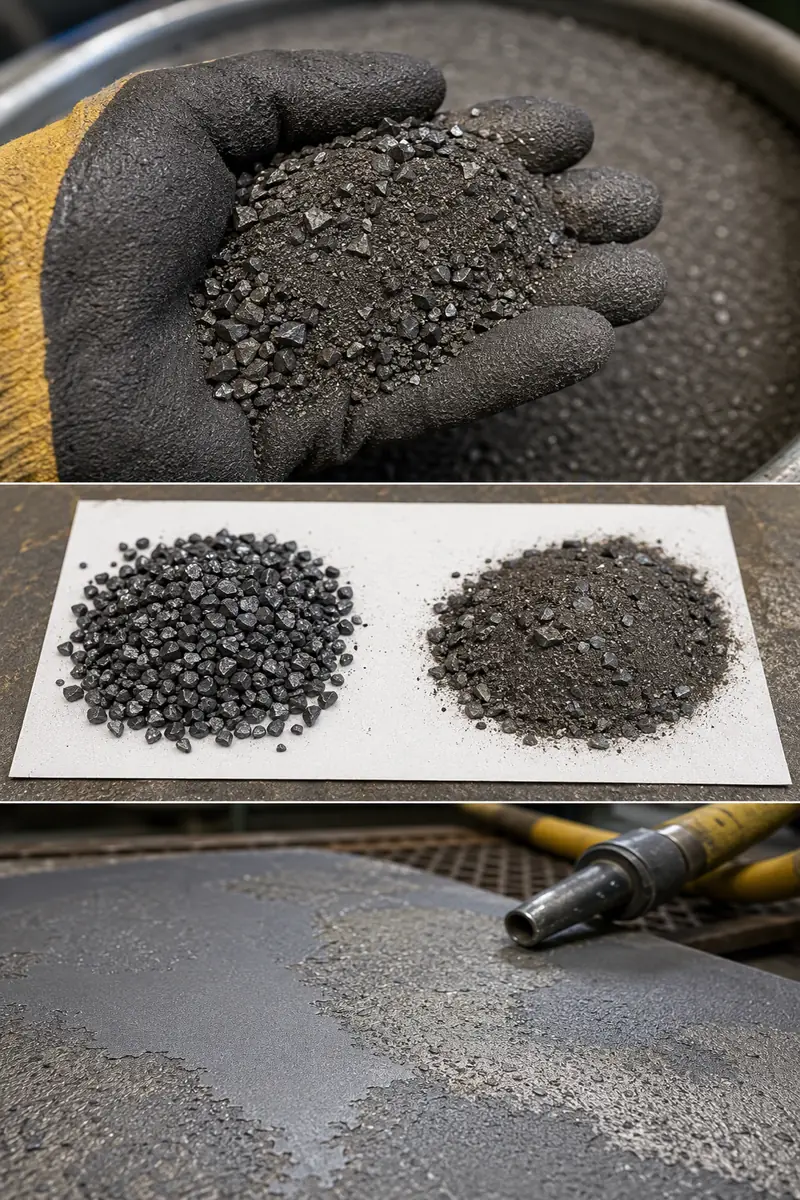
A professional multi-panel editorial image for an article on abrasive fines buildup. It visually links the root cause—a contaminated working mix full of dust and fractured particles—to the solution, an air-wash classifier, and the operational symptom, an inconsistent anchor profile on blasted steel.
01 Introduction
When a blast room that was cleaning steel to specification yesterday suddenly falls behind schedule with the same pressure, same abrasive, and same operator, the first place an experienced supervisor looks is the working mix. More often than not, th…
02 Introduction
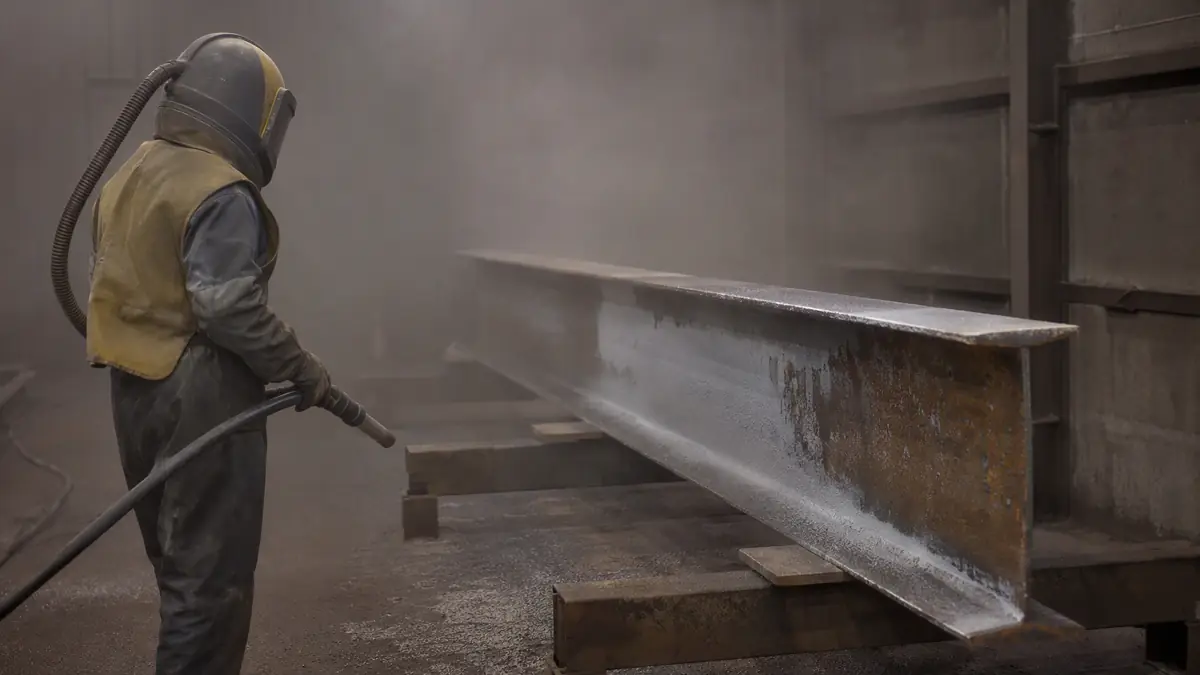
A blast operator encounters a slowdown in cleaning rate on a steel beam, with excessive dust hinting at a fines problem in the recycled media.
A wide shot inside an industrial blast room showing an operator in protective gear standing before a partially cleaned steel I-beam. Patches of rust and mill scale remain, and fine dust clouds the air, visually representing the introduction's scenario of a sudden, unexplained drop in cleaning perfor
Every blast operation that recycles abrasive lives with a fundamental trade-off: reuse cuts media cost, but it also changes the media itself. Each impact against the workpiece fractures a small percentage of particles. The resulting undersized fragments — called fines — accumulate in the system unless the classifier or air-wash separator removes them effectively. When removal cannot keep pace with generation, the working mix drifts away from the specification that originally delivered the required cleaning rate and surface profile. This article explains why that drift happens, how to recognise it, and what blast room supervisors can do to bring the system back into balance.
03 What Are Fines and Why Do They Matter?
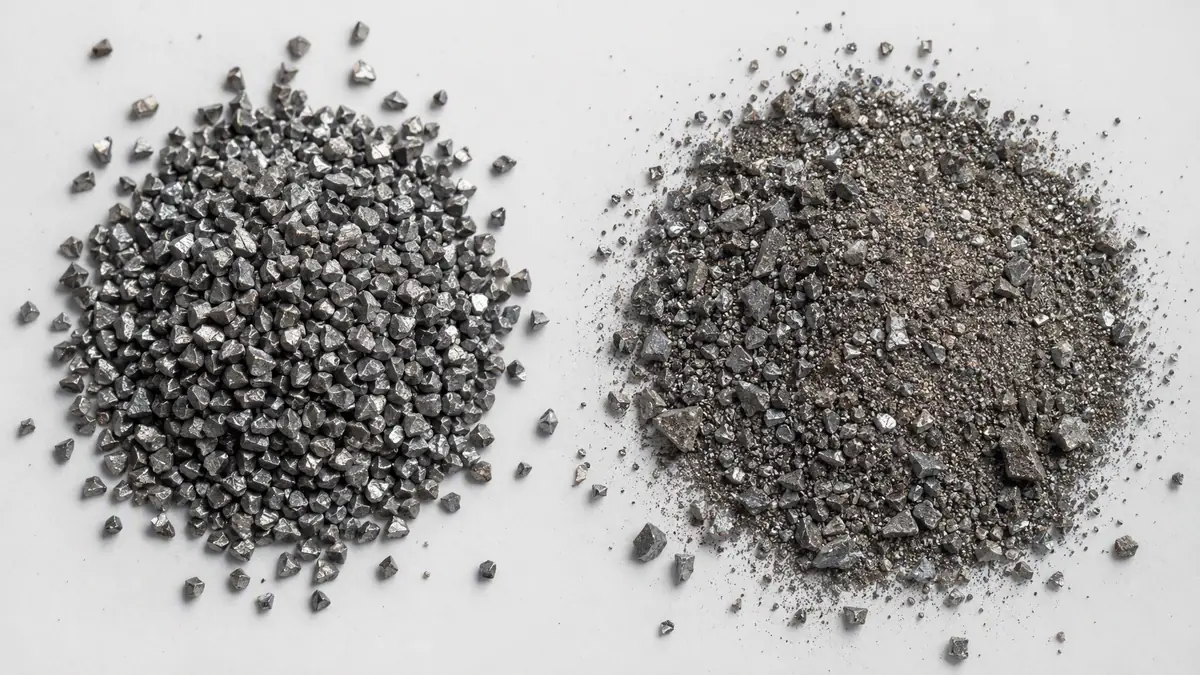
A side-by-side comparison reveals how impact fracture creates undersized, low-mass fines that contaminate the working mix.
A detailed macro photograph comparing two samples of steel grit abrasive. The left sample is uniform and angular, representing specification media. The right sample is heavily contaminated with dust and tiny fractured particles, visually defining 'fines' and illustrating their lack of mass and cutti
In abrasive blasting, fines are particles that have broken down below the usable size range for the media type in service. For example, in a steel grit operation targeting a G40 working mix, anything that passes a screen mesh finer than the bottom of the specification — typically dust and sub-angular fragments below 0.3 mm — qualifies as fines. They originate from normal impact fracture, but also from contaminants, soft abrasive, or incorrect operating pressure that shatters media prematurely.
Fines are not simply "small abrasive." They carry far less mass per particle than full-size grit or shot. Because kinetic energy scales with mass, a fine particle strikes the surface with a fraction of the impact energy of an in-spec particle. The result is a media stream that looks dense but hits like a mist — plenty of dust, little cleaning.
04 How Fines Buildup Steals Cleaning Power
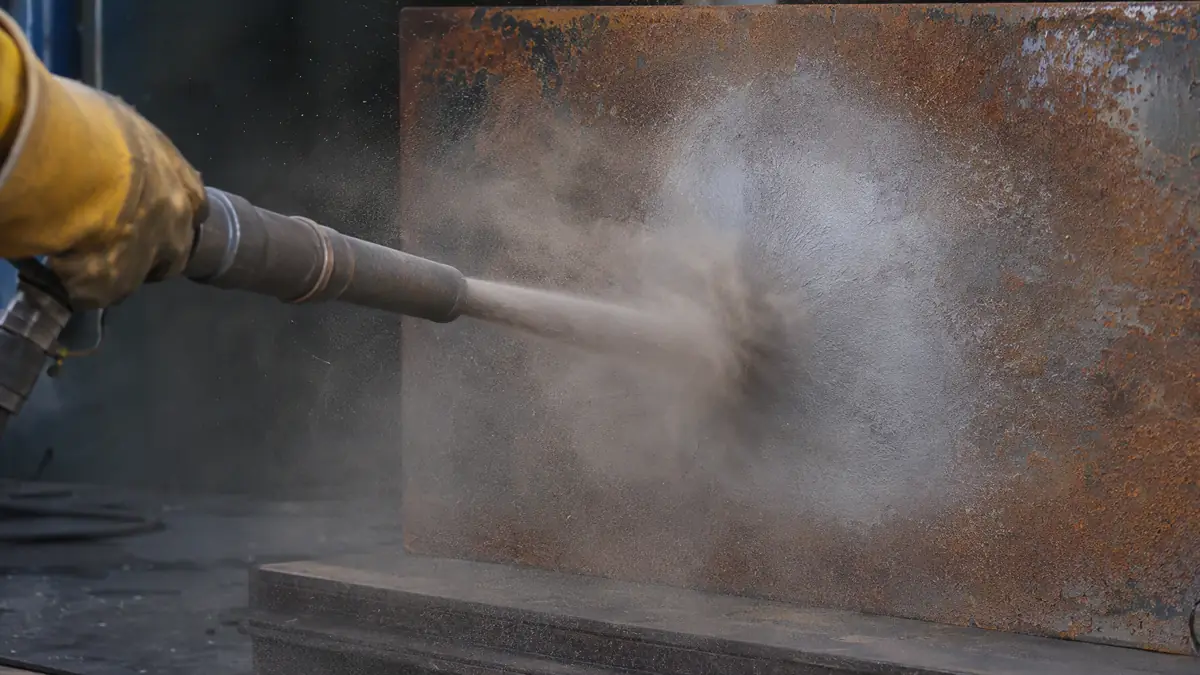
A fines-dominated blast stream delivers low impact energy, polishing the surface and creating a dust cushion that absorbs kinetic energy.
A close-up action shot of a blast nozzle directing a diffuse, dusty stream of abrasive onto a rusted steel plate. The impact zone appears dull and polished rather than cleanly profiled, with a cloud of rebounding dust visually demonstrating the cushioning effect and lost kinetic energy described in
The relationship between particle size and cleaning rate is not linear. A working mix that drifts from, say, 5 percent fines to 20 percent fines can lose a disproportionate amount of effective cleaning energy. Three mechanisms combine to produce this effect.
Reduced impact energy per particle. Blast cleaning relies on high-velocity impact to fracture mill scale, rust, or old coating and eject it from the substrate. A particle with half the diameter carries roughly one-eighth the mass. At the same nozzle pressure, it delivers far less kinetic energy to the surface. The media stream may still register adequate flow at the abrasive metering valve, but the useful work per kilogram of abrasive drops sharply.
Cushioning at the surface. When fines concentration rises, a layer of shattered particles and dust builds up on the workpiece. Incoming full-size particles must punch through this debris blanket before they reach the substrate. The cushion absorbs energy that should be going into the steel. Operators often describe this as the blast "not biting" — the sound changes, dust increases, and cleaning slows even though all gauges read normal.
Classifier inefficiency compounds the problem. The air-wash separator or rotary classifier on a recycling system is designed to remove fines and dust from the returning media stream. When the classifier is set incorrectly, overloaded, or poorly maintained, it fails to strip enough fines. The fines that should have gone to the dust collector instead recirculate back into the blast stream, accelerating the contamination of the working mix. A media classifier fines problem is often self-reinforcing: the more fines in circulation, the faster the remaining good media fractures because it is striking a cushioned surface and ricocheting into other particles.
05 Recognising a Fines-Dominated Working Mix
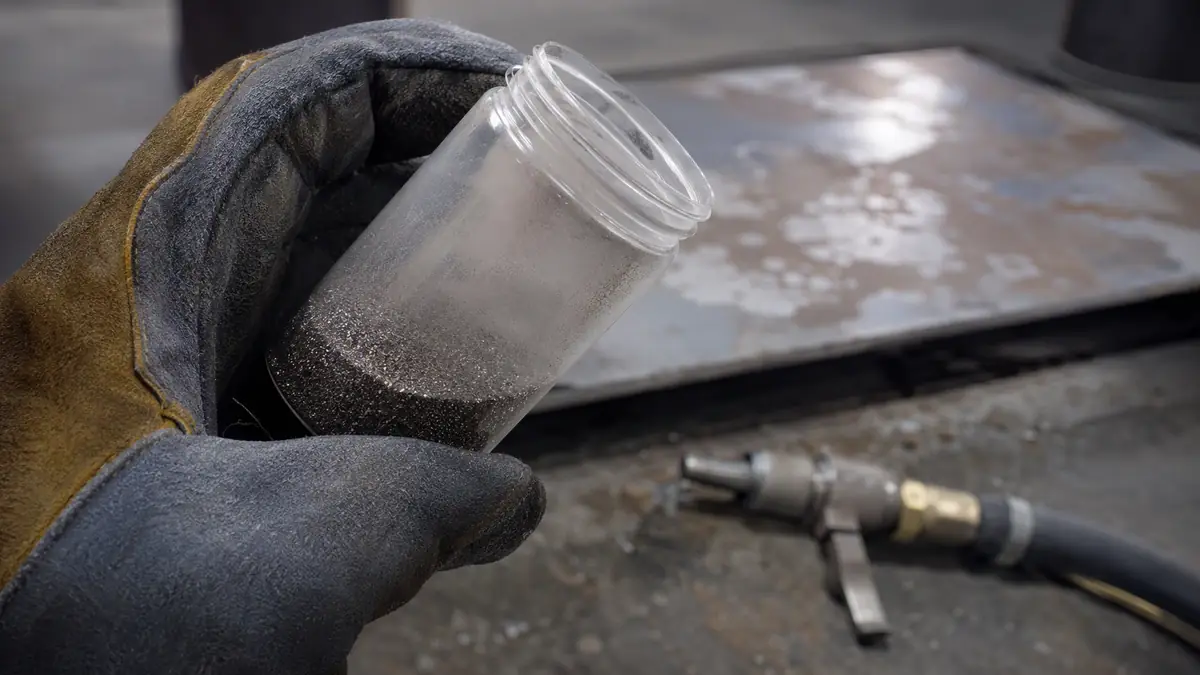
A simple visual check of the working mix in a sample jar reveals excessive dust, a key sign of a fines-dominated system.
A supervisor's gloved hand holds a tilted sample jar containing dark abrasive media. A cloud of fine dust separates and coats the glass, providing a visual diagnostic for fines buildup. The blurred background shows a blast nozzle and a steel workpiece with an inconsistent, patchy surface profile, re
Before reaching for a sieve analysis, supervisors can spot several operational signs of lost cleaning power from fines buildup:
Cleaning time increases on the same workpiece with no change in pressure, stand-off distance, or nozzle size.
Dust generation rises inside the blast room, sometimes to the point where visibility drops faster than normal between ventilation cycles.
Surface profile becomes inconsistent. The anchor pattern may appear shallower or patchy, particularly on harder substrates, because fines polish rather than profile.
Media consumption appears to drop — a deceptive indicator. The abrasive metering valve may be passing the same volume, but because fines pack differently and flow faster through the valve, the actual weight of effective abrasive delivered per minute can be lower.
The separator or classifier discharge shows a heavy stream of dust, yet the working mix still looks dark and powdery when sampled from the blast pot.
A simple sieve test tells the real story. Take a representative sample from the operating mix (not from a fresh bag, and not from the dust collector). Shake it through a set of screens matching the media specification. If the percentage passing the finest specified screen exceeds the media manufacturer's recommended maximum — typically 5 to 10 percent for most metallic abrasives — the working mix has tipped into fines territory.
06 Why the Classifier Is the First Place to Look
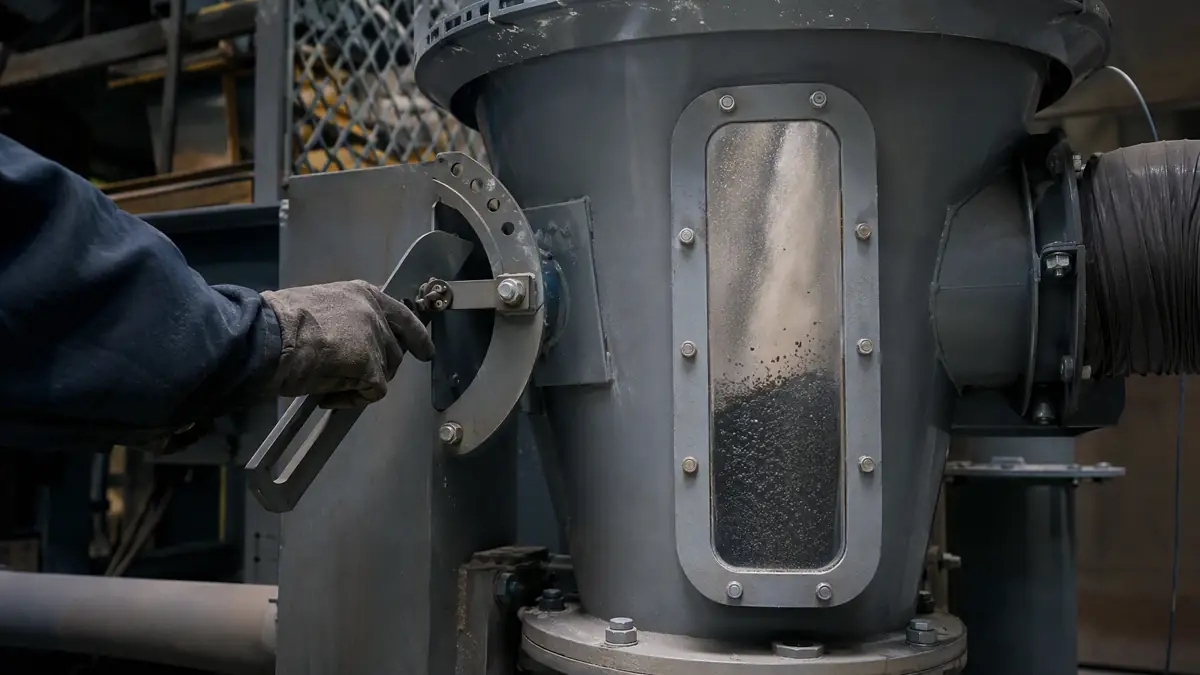
Adjusting the air-wash velocity on the classifier is the first and most critical step to control the level of fines in the working mix.
A technician's hand adjusts a damper lever on an industrial abrasive media classifier. A sight glass on the machine reveals the separation process in action: heavy steel grit falls downward while a stream of lighter dust and fines is extracted upward by the air wash, visually explaining the classifi
The separator or classifier is the only active control a blast room has over working mix quality. It cannot prevent media from fracturing, but it determines how much of that fractured material stays in circulation. When cleaning rate drops, checking classifier settings should come before changing abrasive type, increasing pressure, or blaming the operator.
Common classifier-related causes of fines buildup include:
Air wash velocity set too low. The separator uses an air stream to lift lighter fines away from heavier good media. If the air flow is insufficient — due to a damper set too closed, a clogged dust collector reducing system draw, or a fan belt slipping — fines are not carried away effectively.
Overloading the separator. Recycling systems have a rated capacity in tonnes per hour. Running above that capacity, even intermittently, floods the separation zone and allows fines to fall through with the good media.
Worn internal components. Baffles, distribution cones, and air wash decks wear over time. A hole in a distribution plate can create a channel of unclassified media that dumps fines straight back into the storage hopper.
Incorrect lip seal or gate adjustment. On rotary classifiers, the gap between the rotor and the housing controls the split between reclaim and discard. A gap set too wide sends good media to waste; set too narrow, it returns fines to the working mix.
07 Restoring Cleaning Performance
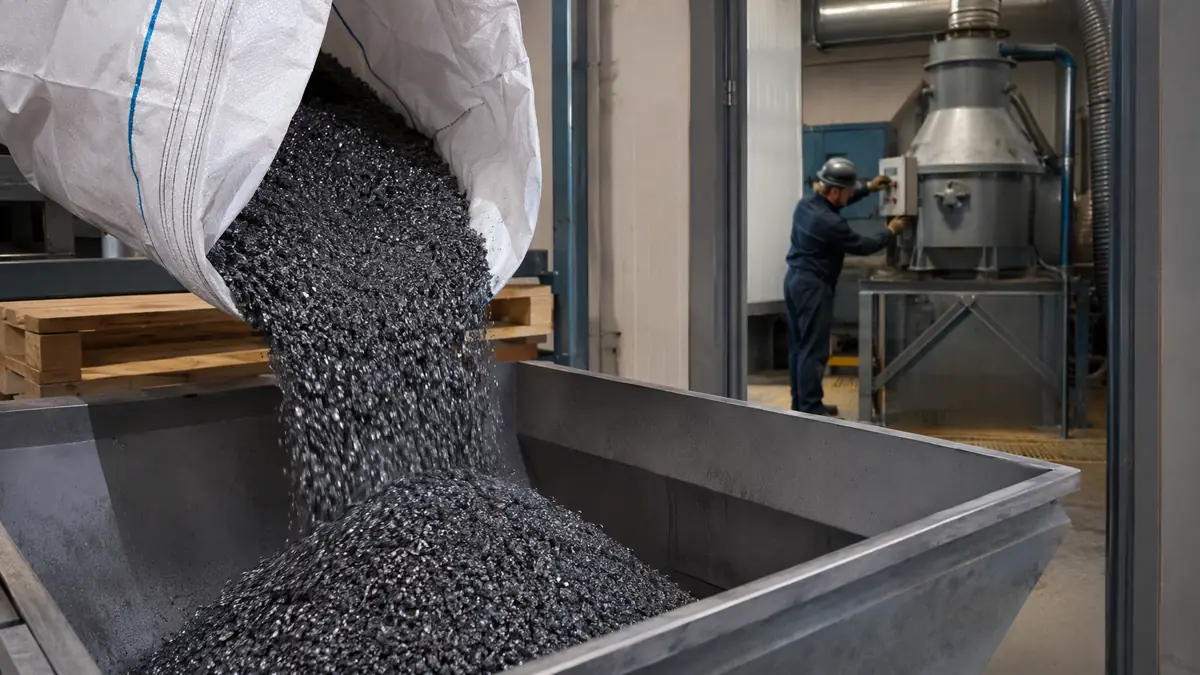
Restoring cleaning performance requires both recharging the system with fresh media and tuning the classifier to prevent future fines buildup.
A two-part scene illustrating the solution to fines buildup. In the foreground, fresh, clean steel grit pours from a bulk bag into a blast system hopper. In the background, visible through an open doorway, a technician works on adjusting a media classifier. The image connects the immediate fix of re
Addressing lost cleaning power from abrasive fines buildup requires action on two fronts: fixing the immediate working mix and correcting the root cause in the recycling system.
Step one: purge and recharge. If a sieve test confirms excessive fines, the fastest path back to production speed is to dump the contaminated working mix and recharge with fresh abrasive. A partial dump may be sufficient if the fines percentage is only marginally above the limit — calculate the required purge volume based on the total system capacity and the measured fines fraction. In severe cases, a full dump is the only reliable reset.
Step two: tune the classifier. With fresh media in the system, adjust the separator air wash or classifier settings to the media manufacturer's recommended values. Verify the adjustment by sampling the working mix after several hours of operation. The fines percentage should stabilise within the acceptable range. If it continues to climb, the separator is still underperforming — check air flow, inspect for wear, and confirm the dust collector is maintaining design static pressure.
Step three: monitor as a routine, not a reaction. Working mix quality should be checked at least once per shift in high-production blast rooms. A quick sieve test takes less than ten minutes and provides an early warning before cleaning rate suffers. Record the results; a trend of gradually rising fines points to classifier wear or dust collector degradation that can be scheduled for maintenance rather than discovered through a failed inspection.
08 When Fines Buildup Is Not the Problem
Not every slowdown in cleaning rate traces back to fines. Before committing to a media dump, rule out other common causes that can mimic the same symptoms:
Moisture in the media or air supply causes clumping and irregular flow, which can look like low impact energy.
Worn nozzle — a nozzle that has opened beyond its rated bore diameter drops blast pressure at the surface even though the gauge at the pot reads normal.
Low abrasive flow rate from a partially blocked metering valve or a bridging condition in the blast pot.
Compressor underperformance — reduced CFM at the nozzle due to intake restrictions, leaks, or unloaded compressor stages.
A systematic check of air pressure at the nozzle, abrasive flow rate, and media condition together isolates the true cause. Fines buildup is the most common reason for gradual, progressive loss of cleaning power, but it is not the only one.
09 Conclusion
Abrasive fines buildup is a predictable consequence of media recycling, but it should never be an accepted one. When the working mix drifts beyond the specified fines limit, cleaning rate falls, dust increases, and surface profile suffers — all while the blast pressure gauge insists nothing has changed. The separator or classifier is the primary defence, and its performance directly determines whether the blast room operates at peak productivity or bleeds time and abrasive into a dust collector that cannot keep up. Regular working mix checks, combined with classifier maintenance and correct air wash settings, keep fines where they belong: out of the blast stream and on their way to the dust disposal system.
10 Frequently Asked Questions
What exactly are 'fines' in a blast media working mix?
Fines are abrasive particles that have fractured below the usable size range for the specified media. They carry far less mass than full-size grit, so they deliver a fraction of the impact energy. A media stream heavy with fines looks dense but cleans poorly, generating more dust than profile.
How do I know if fines buildup is slowing my cleaning rate?
Look for increased cleaning time with no change in pressure or settings, a dustier blast room, and an inconsistent or shallower surface profile. A deceptive sign is media consumption appearing to drop. The most reliable check is a quick sieve test of the working mix against the media specification.
Why does a small increase in fines cause such a large drop in cleaning power?
The relationship is not linear. A particle with half the diameter carries roughly one-eighth the mass and impact energy. Additionally, a layer of fines and dust cushions the surface, absorbing energy from good particles. This combination means a mix drifting to 20% fines can lose a disproportionate amount of effective cleaning energy.
What is the first thing I should check on my classifier when cleaning slows down?
Start by checking the air wash velocity, as insufficient airflow fails to lift and remove fines. Then, verify the separator isn't being overloaded beyond its rated capacity. Finally, inspect for worn internal components like baffles or distribution cones that can channel unclassified media back into the clean supply.
What's the fastest way to restore cleaning speed if my working mix is full of fines?
The fastest fix is to dump the contaminated working mix and recharge with fresh abrasive. A partial dump may work for marginal contamination, but a full dump is the most reliable reset. Immediately after, tune the classifier to the manufacturer's recommended settings to prevent a rapid repeat of the problem.
How often should I perform a sieve test on the working mix?
In high-production blast rooms, check the working mix at least once per shift. A sieve test takes less than ten minutes and provides an early warning of rising fines before the cleaning rate drops. Tracking results over time also helps predict classifier wear or dust collector degradation for scheduled maintenance.
Could a drop in cleaning rate be caused by something other than fines buildup?
Yes. Before dumping media, rule out moisture in the air or media causing clumping, a worn nozzle that drops blast pressure at the surface, a partially blocked abrasive metering valve, or a compressor not delivering its rated CFM. A systematic check of these factors isolates the true cause.
11 Solution
If your blast room is experiencing slower cleaning cycles or inconsistent surface profiles, start with a sieve analysis of your current working mix. Compare the fines percentage against your media specification. When the numbers confirm excessive fines, review your classifier settings and dust collector performance. For operations that need to rebalance their working mix or evaluate alternative abrasive grades that resist fracture, explore the abrasive product range at SPA2Z or contact the technical team to discuss your specific operating conditions and media requirements.
12 Get a quote
Get a quote
Tell us what you need. We reply within one business day.