ABRASIVES GUIDE

How to Compare Abrasive Price Quotes Like-for-Like

A low price per kilogram means nothing if the abrasive wears out twice as fast, arrives undersized, or costs a fortune to freight. Procurement professionals who...

Published
18 Oct 2023
Category
Abrasives
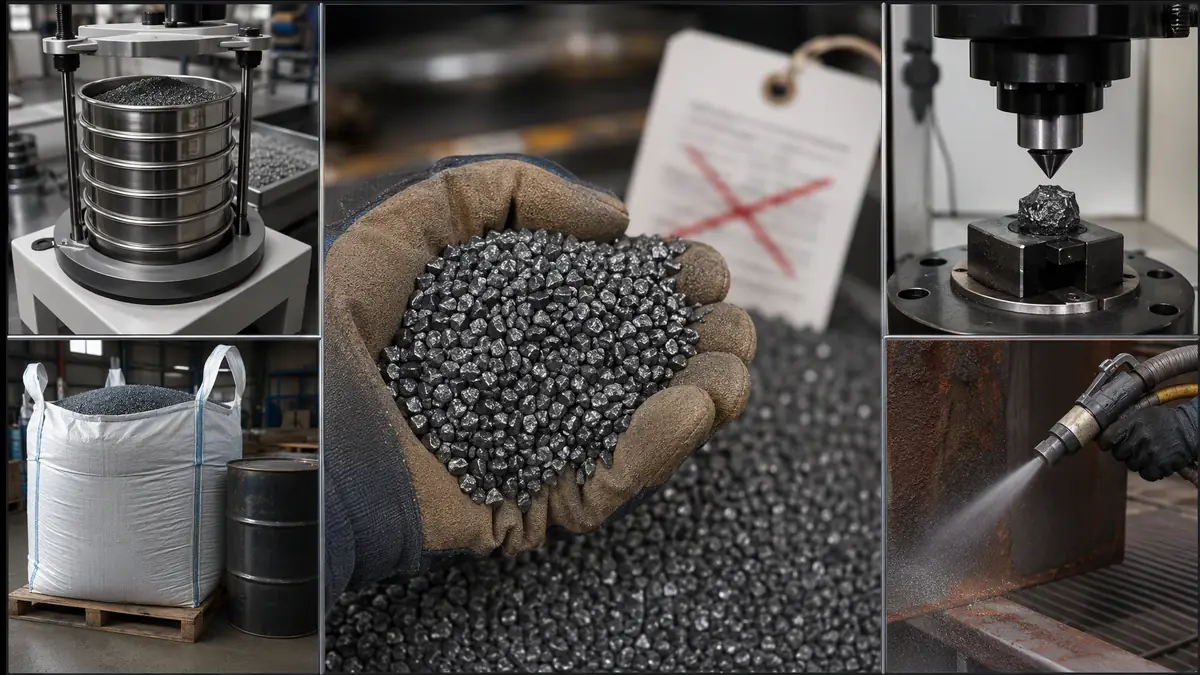
Multi-panel industrial collage comparing steel grit abrasive specifications including hardness testing, sieve analysis, packa
FIG. 01A visual breakdown of the key variables—si...

An editorial multi-panel photorealistic image for an article on comparing abrasive price quotes. The collage features a dominant view of steel grit, supported by panels showing a sieve shaker for size analysis, a hardness tester, bulk packaging options, and a blasting application, illustrating the t

Introduction

A low price per kilogram means nothing if the abrasive wears out twice as fast, arrives undersized, or costs a fortune to freight. Procurement professionals who learn to normalize quotes before choosing a supplier avoid the most expensive mistake in…

Introduction

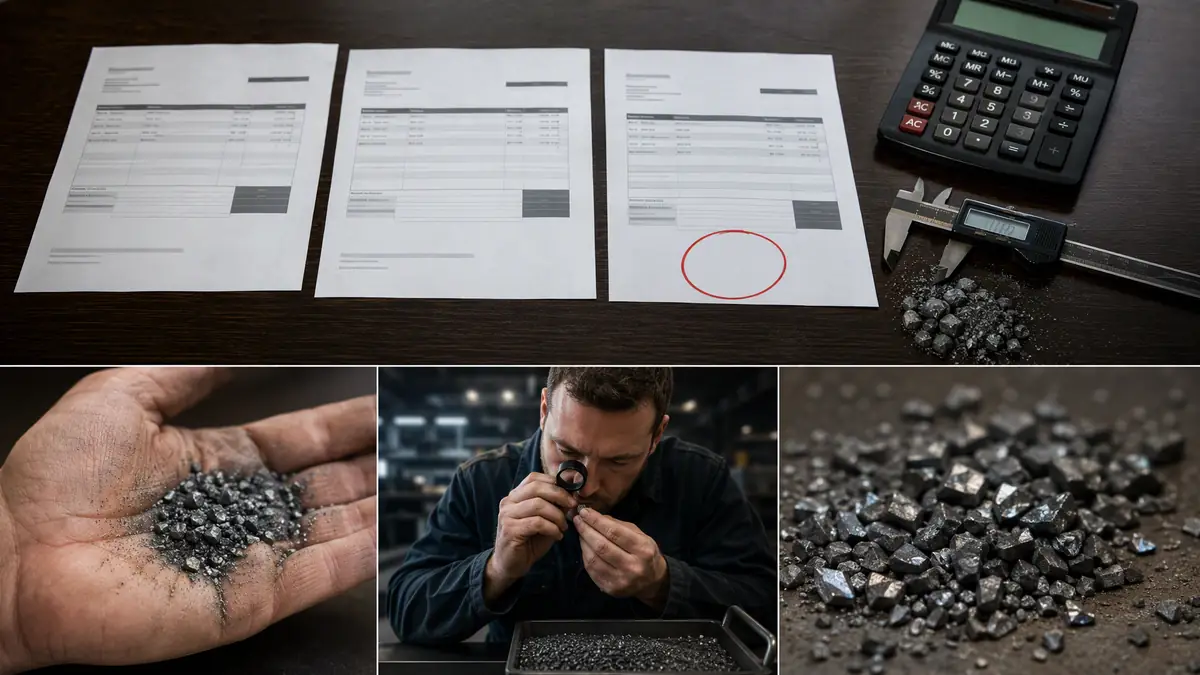
Three abrasive price quotes on a desk with a calculator and a sample of inconsistent steel grit, highlighting the risk of cho
A low price per kilogram means nothing if the abrasive wears out twice as fast. Procurement professionals must look beyond the quoted number.

A photorealistic top-down view of a procurement desk with three steel grit quotes, a calculator, and a physical sample of low-quality abrasive, illustrating the introductory concept that cheap quotes often hide off-spec products.

Three abrasive price quotes on a desk with a calculator and a sample of inconsistent steel grit, highlighting the risk of cho

You have three quotes on your desk for steel grit. One is 15% cheaper than the others. On the surface, the decision looks simple. But abrasive blasting media is not a commodity where the lowest unit price reliably wins. A cheap quote frequently conceals a product with lower bulk density, wider size distribution, or softer metallurgy — all of which increase your actual cost per square meter blasted.

This guide is written for industrial buyers, maintenance managers, and procurement teams who need to compare abrasive price quotes on a genuinely equal footing. You will learn which specification variables matter most, how to normalize quotes so you are comparing identical deliverables, and what hidden cost drivers turn an apparent saving into a loss.

Why a Raw Price Comparison Misleads

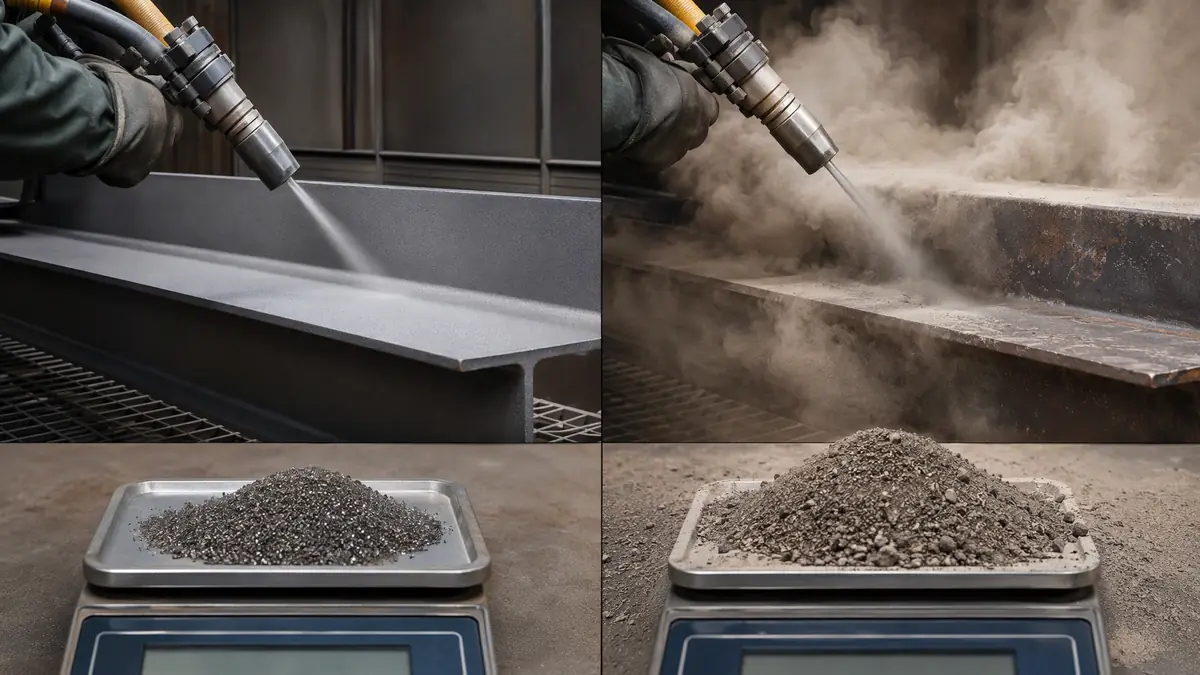
Split view comparing efficient steel grit blasting with minimal dust versus off-spec abrasive creating excessive dust and poo
A softer or off-spec abrasive fractures faster, generating more dust and fewer useful impacts. The true cost is measured in consumption rate and rework.

A photorealistic split-scene showing an efficient blasting operation next to an inefficient one generating excessive dust, visually explaining how raw price comparisons mislead by ignoring consumption rate and productivity losses.

Split view comparing efficient steel grit blasting with minimal dust versus off-spec abrasive creating excessive dust and poo

Abrasive media pricing looks straightforward only when you ignore what the media actually does. The true cost of an abrasive is not the purchase price — it is the cost to achieve an acceptable surface finish at the required production rate.

Three mechanisms make raw price comparisons dangerous:

1. Consumption rate differences. A softer or more friable abrasive fractures faster, generating more dust and fewer useful impacts per kilogram. You may need 30–50% more material to clean the same area. A 15% cheaper quote that requires 40% more consumption is not cheaper at all.

2. Productivity losses. Off-spec media can slow blasting speed. If particle size distribution is too wide, fines cushion the impact of larger particles. If hardness is low, each impact removes less material. Slower production means higher labor and compressed-air costs per square meter.

3. Rework and rejects. Inconsistent surface profile or embedded contaminants from low-quality abrasive can cause coating adhesion failures. The cost of re-blasting and re-coating a single structural steel section dwarfs any upfront saving on media.

The commercial buyer’s real question is not “what is the price per kilogram” but “what is the landed cost per square meter of properly prepared surface.” Answering that requires normalizing the quotes.

The Variables You Must Normalize

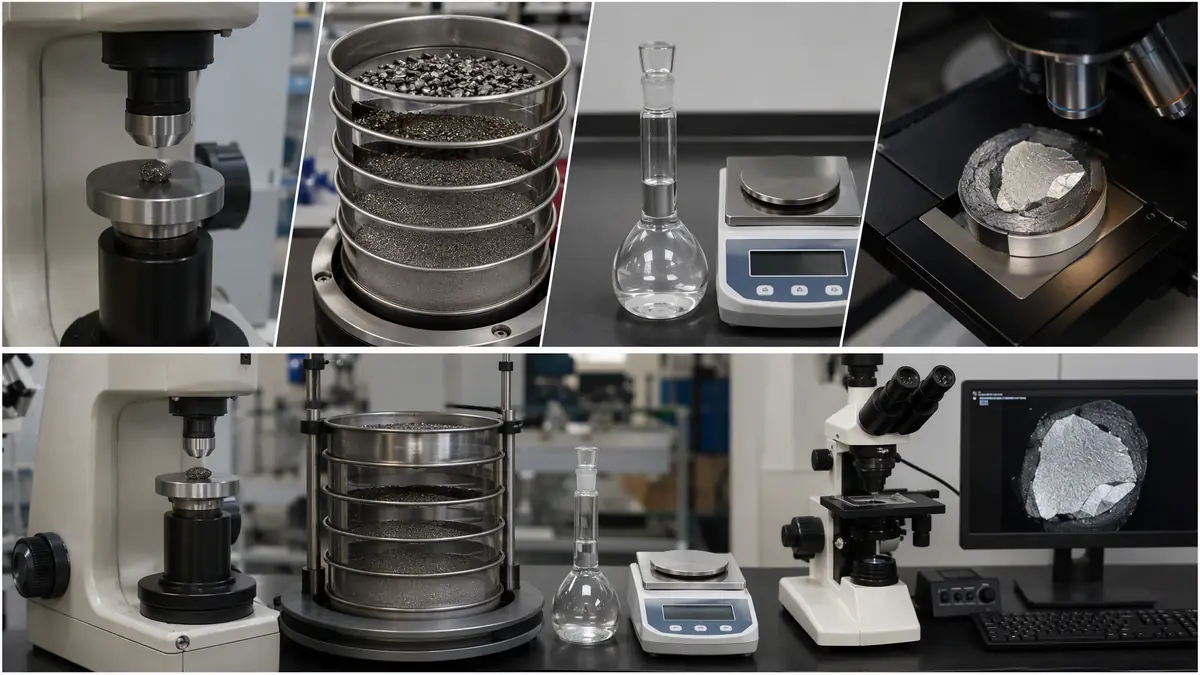
Laboratory setup with hardness tester, sieve shaker, density measurement tools, and microscope for analyzing steel grit abras
Hardness, size distribution, density, and microstructure are the variables that must be equalized to compare abrasive price quotes like-for-like.

A photorealistic image of an industrial lab bench featuring equipment for testing steel grit hardness, particle size distribution, and density, representing the critical specification dimensions buyers must normalize.

Laboratory setup with hardness tester, sieve shaker, density measurement tools, and microscope for analyzing steel grit abras

To compare abrasive price quotes like-for-like, identify and equalize these six specification dimensions. If a supplier cannot or will not provide data on any of them, treat the missing information as a risk factor.

1. Hardness

Hardness determines how the particle behaves on impact. For metallic abrasives such as steel grit, hardness is measured on the Rockwell C (HRC) or Vickers (HV) scale. Typical steel grit for general blasting falls in the 42–50 HRC range; harder grades (54–60 HRC) are available for demanding applications.

A quote that does not specify hardness may be supplying material at the bottom of the acceptable range — or below it. Softer grit rounds over quickly, reducing its cutting action and increasing consumption. Always confirm the hardness specification and the test method used. If one quote specifies 48 HRC minimum and another is silent, you are not comparing the same product.

For mineral abrasives such as garnet or aluminum oxide, hardness is typically expressed as Mohs hardness. Higher Mohs values generally correlate with faster cutting and lower consumption, but friability also matters — a hard mineral that shatters on impact may still consume quickly.

2. Particle Size Distribution

Abrasive size is specified as a range, not a single number. Steel grit might be quoted as G40 or G25; garnet as 30/60 or 80 mesh. The critical detail is the distribution within that range.

A proper specification defines the percentage of particles that must fall within the nominal size band, the maximum allowable oversize, and the maximum allowable fines. Excessive fines reduce blasting efficiency and increase dust generation. Excessive oversize can clog nozzles or produce an anchor profile deeper than the coating specification permits.

When comparing quotes, request the full sieve analysis or particle size distribution certificate. Two suppliers both offering “G25 steel grit” can deliver materially different performance if one runs wide on fines. Normalize by comparing against a common standard — SAE J444 for metallic abrasives or the relevant ISO 11126/11127 series for non-metallic media.

3. Bulk Density

Bulk density — the mass of abrasive that fills a given volume — directly affects how much media your blast machine actually delivers per cycle. A lower bulk density means each kilogram occupies more space, which can reduce the mass flow rate through a metering valve calibrated by volume.

More importantly, bulk density is a practical indicator of particle integrity and metallurgy. For steel grit, a typical loose bulk density is approximately 3.8–4.2 g/cm³ depending on the grade. A quote showing significantly lower density may indicate hollow particles, irregular chemistry, or excessive non-metallic inclusions — all of which accelerate breakdown.

Ask for the bulk density specification. If one supplier quotes 4.0 g/cm³ and another quotes 3.6 g/cm³ for the same nominal grade, you are looking at different products. Normalize to the expected density for the grade and application.

4. Packaging

Packaging affects handling, storage, and usable quantity. Quotes may specify 25 kg bags, 50 kg bags, one-tonne bulk bags, or loose bulk delivery. Differences in packaging create real cost differences:

  • Bag integrity. Low-cost woven polypropylene bags can split during handling, causing spillage and contamination. Lost product is paid-for product you cannot use.
  • Palletization and unitization. Is the quote for palletized, shrink-wrapped loads suitable for forklift handling, or loose bags that require manual unloading? Labor cost at your receiving dock is part of the total acquisition cost.
  • Moisture protection. Some abrasives — particularly mineral types — are hygroscopic or degrade when wet. Does the packaging include a moisture barrier or inner liner? A cheaper quote without it may deliver clumped or degraded media.

Normalize packaging by specifying your required format in the enquiry. Request quotes on an identical packaging basis: same bag size, same pallet configuration, same moisture protection.

5. Freight and Delivery Terms

Freight is where many apparent bargains evaporate. A supplier 1,000 kilometers away may quote a lower ex-works price but add freight charges that exceed the saving. Conversely, a local supplier with a higher unit price may deliver a lower total cost when freight is included.

To normalize freight, request all quotes on a common Incoterms basis — typically Delivered at Place (DAP) your facility. If a supplier will only quote ex-works, obtain a freight estimate from a known carrier and add it to the quote yourself. Do not rely on the supplier’s freight estimate unless it is a firm, all-inclusive figure.

Also consider:

  • Minimum order quantities and full truckload thresholds. A quote that looks competitive for one pallet may be uncompetitive for a full truckload, or vice versa.
  • Accessorial charges. Liftgate delivery, residential or restricted-access surcharges, and waiting time at your site all add cost.
  • Import duties and clearance costs if sourcing from overseas. A landed cost calculation must include duty, customs brokerage, port charges, and inland freight to your door.

6. Quality Certification and Traceability

A quote is only as good as the product it represents. Low-cost suppliers sometimes ship material that does not match the specification they quoted. The cost of discovering this on your production line — in downtime, rework, and rejected parts — far exceeds any price difference.

Normalize quality assurance by requiring:

  • A material test certificate or certificate of analysis with each delivery, showing actual values for hardness, chemistry, and particle size distribution.
  • Traceability to a heat or production lot number.
  • Conformity to a recognized standard (SAE J444, ISO 11124 for metallic abrasives; ISO 11126 for non-metallic; or an equivalent national standard).

A supplier who cannot provide these documents is offering a different value proposition — one that transfers significant quality risk to you. Price that risk accordingly.

How to Build a Normalized Comparison

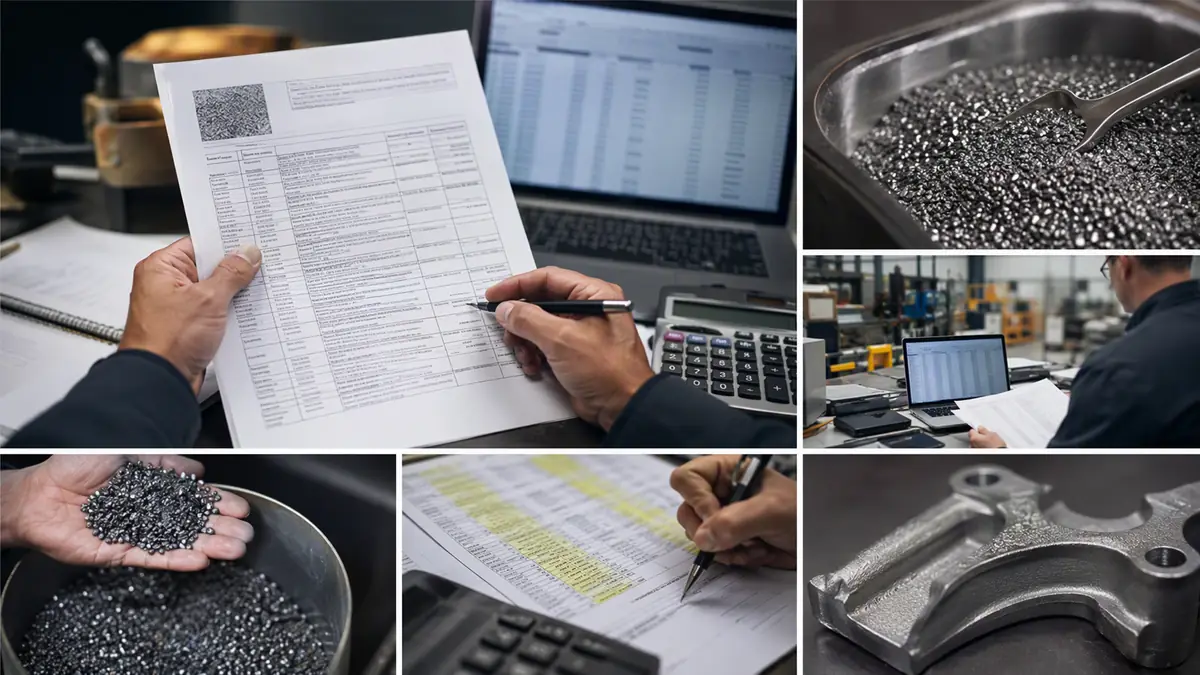
Procurement professional comparing a steel grit supplier quote against a detailed technical specification sheet and cost-per-
The practical workflow starts with a defined specification. Every quote must be confirmed against each parameter and converted to a work-based cost metric.

A photorealistic close-up of hands comparing a supplier's abrasive quote to a master specification sheet, with a cost-per-square-meter analysis in the background, illustrating the process of building a normalized comparison.

With the variables identified, the practical workflow for comparing abrasive price quotes like-for-like follows a clear sequence:

  1. Define your specification. Before requesting quotes, write down the exact abrasive type, grade, hardness range, size distribution, packaging, and delivery terms you require. This becomes the basis for all quotations.

  2. Request quotes against that specification. Ask each supplier to confirm compliance with each parameter in writing. A quote that says “G25 steel grit” without qualification is incomplete.

  3. Normalize to a common unit. Convert all quotes to the same basis — typically price per kilogram or per tonne, delivered to your facility, in your required packaging.

  4. Adjust for specification gaps. If one quote meets your hardness specification and another is 2 HRC points lower, do not compare them directly. Either disqualify the lower-spec quote or estimate the consumption penalty based on your experience or supplier data.

  5. Calculate estimated landed cost per unit of work. The most meaningful metric is cost per square meter blasted, or cost per kilogram of abrasive consumed to achieve the specified surface finish. This requires an estimate of consumption rate and productivity for each abrasive — data that reputable suppliers can provide, or that you can derive from your own blast records.

  6. Factor in commercial terms. Payment terms, minimum order quantities, lead times, and supply reliability all have financial value. A slightly higher unit price from a supplier who holds buffer stock and delivers in 48 hours may be cheaper than a lower price from a supplier with four-week lead times, if the latter exposes you to production stoppages.

Procurement professional comparing a steel grit supplier quote against a detailed technical specification sheet and cost-per-

Common Mistakes When Comparing Abrasive Quotes

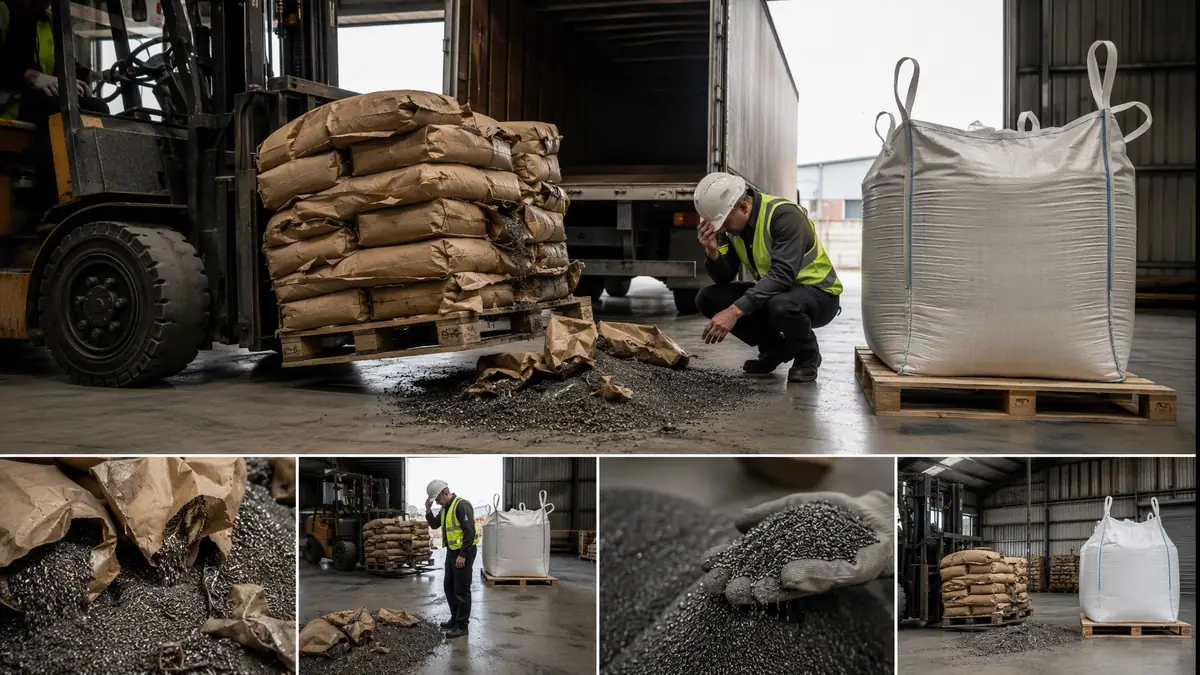
Forklift unloading damaged paper bags of steel grit next to a pristine supersack, illustrating common procurement mistakes in
Ignoring packaging integrity and freight terms can turn a low unit price into a costly cleanup. Delivered, ready-to-use material is the only valid basis for com

A photorealistic warehouse scene showing a forklift unloading damaged abrasive bags, contrasting with a bulk supersack, to visually represent common mistakes like ignoring packaging quality and freight costs when comparing quotes.

Forklift unloading damaged paper bags of steel grit next to a pristine supersack, illustrating common procurement mistakes in

Mistake 1: Comparing on unit price alone. This is the fundamental error. Unit price ignores consumption rate, productivity, and quality risk. Always convert to a work-based cost metric before deciding.

Mistake 2: Accepting vague specifications. “Steel grit” is not a specification. “G25” without a hardness range and size distribution tolerance is not a specification. If a supplier cannot define what they are selling, assume the worst-case interpretation.

Mistake 3: Ignoring freight until after the order. Freight on dense, heavy abrasives can be 20–40% of the total cost depending on distance and volume. Always obtain delivered pricing.

Mistake 4: Assuming all packaging is equal. Bags that split, pallets that collapse, and media that arrives wet all create hidden costs in labor, cleanup, and wasted product. Specify packaging requirements explicitly.

Mistake 5: Overlooking consumption data. The best predictor of total abrasive cost is the consumption rate on your specific job. If you do not track consumption per square meter by abrasive type and supplier, start now. Historical data from your own operation is the most reliable normalization tool available.

Mistake 6: Treating all suppliers as interchangeable. A supplier who provides technical support, consistent quality, and reliable delivery is delivering value beyond the product itself. A transactional, low-cost supplier who disappears when there is a quality problem imposes hidden costs that do not appear on any quote.

When a Low-Price Quote Might Be Acceptable

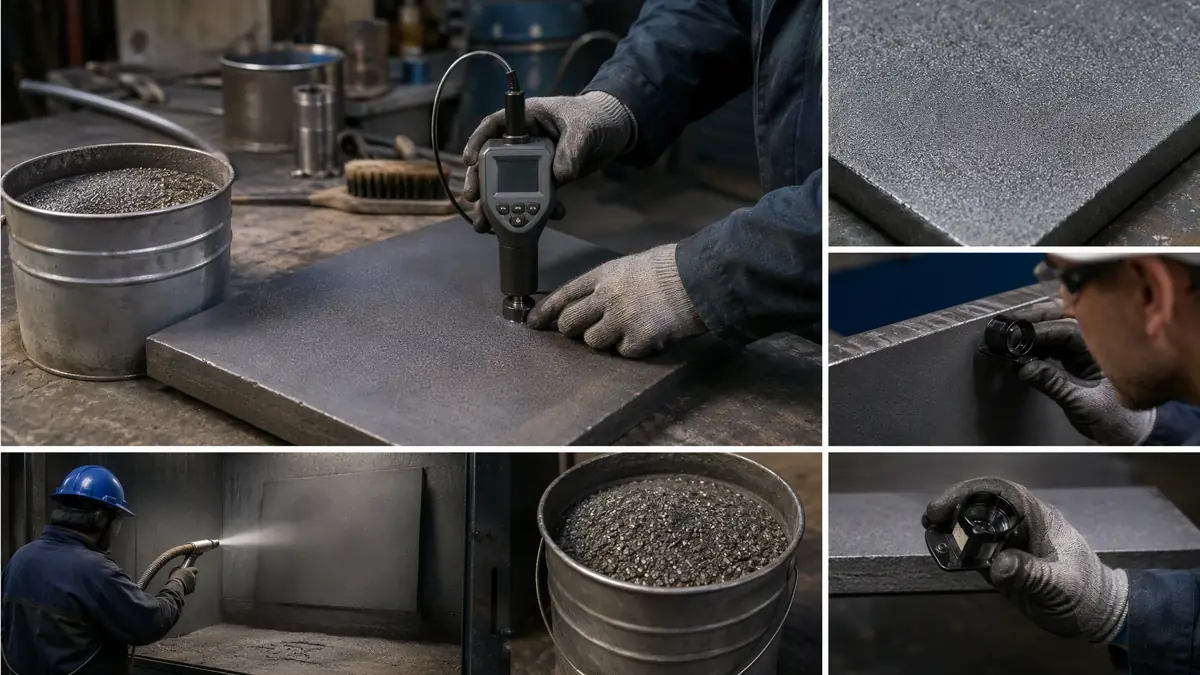
Technician performing hardness testing on a blasted steel plate during a trial run with a low-cost generic abrasive for a non
A low-price quote can be acceptable when the decision is based on evidence—verified through trial blasting and hardness testing—not on the quoted number alone.

A photorealistic image of a workshop trial where technicians test a low-cost abrasive on a steel plate, using a hardness tester to verify performance, illustrating the scenario where a cheaper quote might be consciously accepted based on evidence.

Technician performing hardness testing on a blasted steel plate during a trial run with a low-cost generic abrasive for a non

There are situations where the cheapest quote can be the right choice — but only when you have consciously accepted the trade-offs:

  • Non-critical applications where surface finish requirements are loose and rework is inexpensive.
  • One-time or short-run jobs where the cost of qualifying a new supplier exceeds the potential saving.
  • Situations where you have verified — through your own sieve analysis, hardness testing, and trial blasting — that the lower-cost product performs equivalently to the higher-cost alternative.

In all cases, the decision should be based on evidence, not on the quoted number alone.

Conclusion

Comparing abrasive price quotes like-for-like is a disciplined procurement practice, not a quick scan of the bottom line. The variables that determine true cost — hardness, size distribution, bulk density, packaging, freight, and quality assurance — must be normalized across all quotes before any valid comparison is possible.

The buyer who normalizes quotes before choosing is the buyer who avoids the most common and costly procurement error in abrasive blasting: paying less per kilogram and more per square meter. The next time a quote arrives at a price that seems too good to ignore, ask for the specification data that proves it is genuinely equivalent. If the data is not there, the saving probably is not either.

Frequently Asked Questions

What is the single most important thing to normalize when comparing abrasive quotes?

Normalize the total landed cost per square meter of properly prepared surface, not the price per kilogram. A cheap quote often hides a softer abrasive with higher consumption, meaning you buy more material and spend more on labor and downtime to achieve the same result. Always request full specifications on hardness, size distribution, and bulk density to ensure you are comparing identical deliverables.

How can I tell if a cheaper steel grit quote is actually off-spec?

Check the hardness specification and particle size distribution certificate. If a quote is silent on hardness or specifies a lower Rockwell C value, the grit will round over faster and consume quicker. Also, request the full sieve analysis; a wider distribution with excessive fines cushions impacts and slows production, erasing any upfront price advantage.

Why does bulk density matter in abrasive pricing?

Bulk density indicates particle integrity and directly affects how much media your blast machine meters per cycle. A lower density often signals hollow particles or irregular chemistry, which accelerates breakdown and increases dust. If one supplier quotes a significantly lower bulk density for the same nominal grade, you are comparing different products with different consumption rates.

What packaging details should I standardize across quotes?

Standardize the bag size, pallet configuration, and moisture protection. Low-cost bags can split during handling, causing spillage and contamination. Specify whether you need palletized, shrink-wrapped loads for forklift handling and if a moisture barrier is required, especially for mineral abrasives that degrade when wet.

How do I normalize freight costs to avoid hidden charges?

Request all quotes on an identical Delivered at Place (DAP) Incoterms basis to your facility. If a supplier only quotes ex-works, obtain a firm freight estimate yourself and add it. Also account for minimum order quantities, liftgate or restricted-access surcharges, and any import duties or customs brokerage fees for overseas sourcing.

What quality documents should I require with an abrasive quote?

Require a material test certificate or certificate of analysis with each delivery showing actual hardness, chemistry, and particle size distribution. The supplier must also provide traceability to a heat or production lot number and confirm conformity to a recognized standard like SAE J444 or ISO 11124. Missing documentation transfers significant quality risk to you.

What is the next step after normalizing my abrasive quotes?

Once you have normalized the quotes to a common specification and delivered cost, calculate the estimated cost per square meter blasted using consumption rate data from each supplier. You can then compare relevant abrasives and request availability or a formal quotation through a specialized platform to validate your analysis before purchasing.

Solution

When you are ready to source abrasives with full specification transparency, explore the abrasive media range available through SPA2Z. Request quotations that include complete technical data — hardness, particle size distribution, bulk density, and material certification — so you can compare on a genuinely equal basis. Contact the sales team to discuss your application requirements and confirm product availability for your location.

Get a quote

Get a quote

Tell us what you need. We reply within one business day.

Sending…
Need a price? Ask us here.