Seasonal Demand Planning for Abrasives in India Monsoon
Monsoon rains reshape abrasive consumption across India — outdoor blasting slows sharply while indoor stockpiling creates a different set of pressures. For dist...
Published
07 Jun 2018
Category
Abrasives
FIG. 01The Indian monsoon creates a sharp divide...
A professional multi-panel industrial collage illustrating the seasonal demand planning for abrasives during the Indian monsoon. Key visuals include a deserted rainy blasting site, an active indoor shot blasting machine, a detailed close-up of garnet and steel grit media, and a warehouse with manage
01 Introduction
Monsoon rains reshape abrasive consumption across India — outdoor blasting slows sharply while indoor stockpiling creates a different set of pressures. For distributors and plant managers, getting inventory timing wrong means either cash tied up in…
02 Introduction
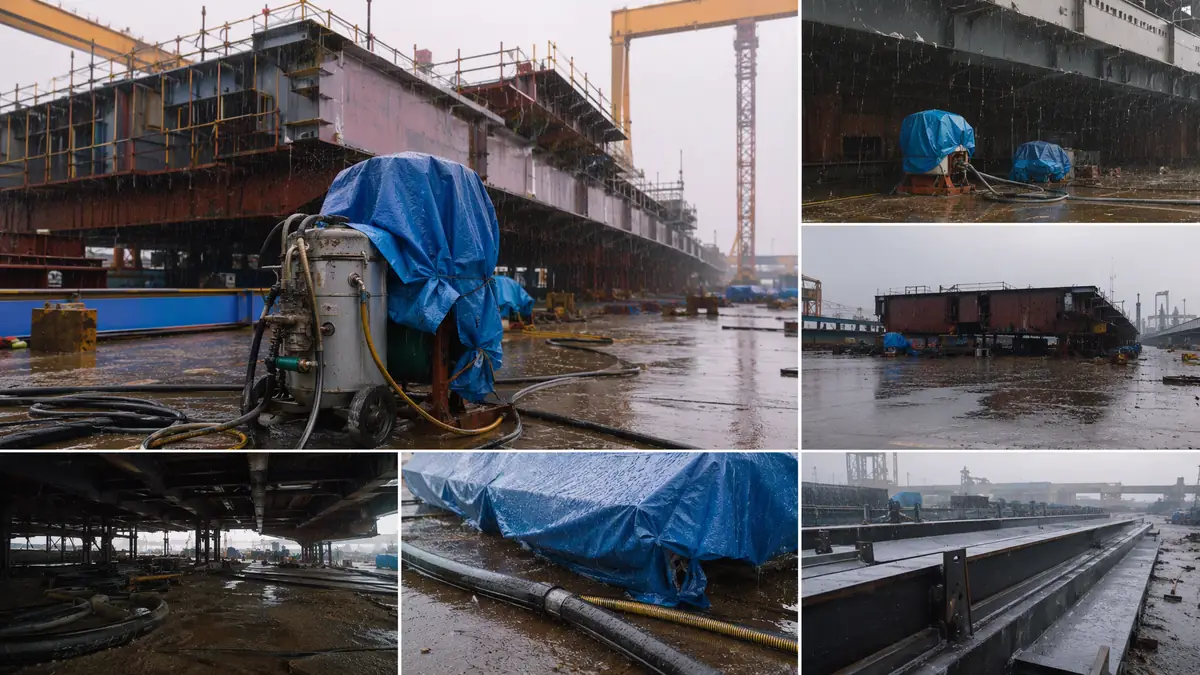
Heavy monsoon rains bring outdoor blasting operations at Indian infrastructure and marine sites to a standstill, causing a predictable seasonal drop in abrasive
A wide industrial scene showing a shipyard or bridge construction site in India during the monsoon. Outdoor sandblasting equipment is idle and protected from the heavy rain, with wet steel structures and puddles on the ground, illustrating the seasonal disruption to surface preparation projects.
Every year, the Indian monsoon — typically spanning June through September — disrupts surface preparation schedules across infrastructure, marine, fabrication, and coating projects. Outdoor blasting operations face weeks of downtime, while enclosed shop blasting and shot blasting continue, often at reduced capacity. The result is a predictable but frequently mishandled shift in abrasive media demand.
This article explains how the monsoon affects abrasive consumption patterns in India, which media types see the sharpest seasonal swings, and how distributors and industrial buyers can plan inventory to avoid shortages, wastage, or unnecessary working capital strain. The focus is practical: what changes, when, and how to prepare.
03 How the Monsoon Affects Abrasive Demand in India
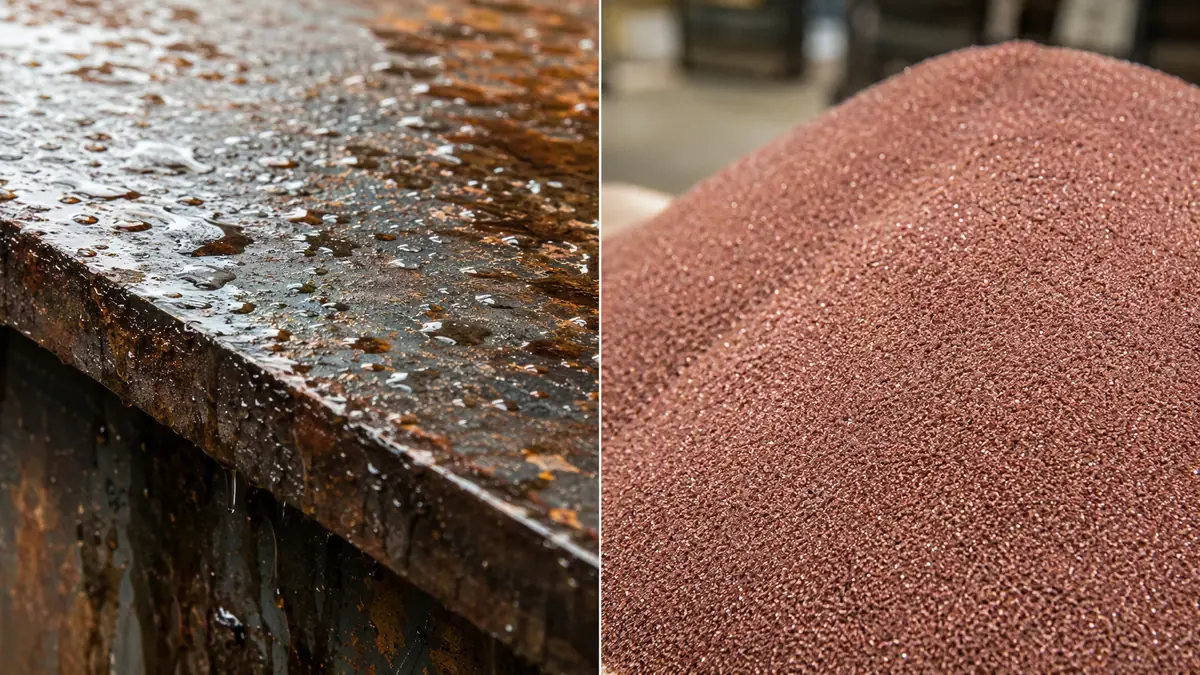
Wet surfaces prevent proper abrasive impact and risk flash rusting, directly causing a sharp decline in the consumption of media like garnet sand during the mon
A detailed split-scene industrial photograph. The left side shows a close-up of a wet, rusting steel plate with water droplets. The right side shows a pile of dry, sharp red garnet abrasive. The image visually explains the incompatibility of wet surfaces with dry blasting, a core reason for seasonal
The link between rainfall and abrasive demand is direct but not uniform. Understanding the mechanics helps separate genuine consumption shifts from panic ordering.
Outdoor Blasting: The Sharpest Decline
Open-air sandblasting — whether for bridge maintenance, pipeline coating, ship hull preparation, or structural steel — depends on dry conditions. Wet surfaces prevent proper abrasive impact, alter surface profile, and risk flash rusting before the primer is applied. During heavy monsoon periods, particularly on the western coast and in northeastern states, outdoor blasting can halt entirely for weeks.
This translates to a measurable drop in consumption of:
Garnet sand — widely used in open-air blasting for marine and infrastructure projects
Copper slag — a cost-sensitive option for large-area outdoor blasting
Silica sand (where still permitted) — used in lower-specification outdoor work
The decline is most pronounced in coastal states — Gujarat, Maharashtra, Goa, Karnataka, Kerala, Tamil Nadu, Odisha, and West Bengal — where monsoon intensity and marine project concentration overlap.
Indoor Blasting: Steady but Not Immune
Shot blasting machines, blast rooms, and enclosed sandblasting cabinets operate largely independent of weather. Foundries, fabrication shops, and powder coating lines continue production through the monsoon. However, two factors moderate indoor demand:
Humidity-related quality issues: High ambient moisture can cause abrasive clumping in storage and feed systems, particularly with finer mesh sizes. Some shops reduce throughput or switch to coarser media temporarily.
Upstream project slowdowns: If outdoor fabrication or site erection slows, the downstream blasting and coating work feeding those projects also decelerates.
Media types less affected by seasonality include:
Steel grit and steel shot — dominant in shot blasting machines for foundry and fabrication
Aluminum oxide — used in cabinet blasting for precision surface preparation
Glass beads — applied in enclosed peening and finishing operations
The Inventory Distortion Effect
A less obvious monsoon impact is inventory behaviour. Anticipating supply disruptions — flooded roads, logistics delays, port congestion — some buyers place larger pre-monsoon orders as a buffer. This creates an artificial demand spike in April–May, followed by a lull during the actual rainy months. Distributors who misread this as sustained growth can end up overstocked.
04 When Seasonal Planning Matters Most
For distributors who stock imported abrasives, monsoon planning starts months in advance, with March ordering decisions directly impacting July availability at
An interior warehouse scene in a coastal Indian city. A desk in the foreground holds shipping documents and a sample of abrasive grit. A window in the background shows a rainy port with a berthed container ship, visually connecting inventory planning with the logistical reality of long-lead-time imp
Seasonal demand planning is not equally critical for every abrasive category. The value of deliberate planning increases when:
A significant portion of your abrasive sales goes to outdoor blasting contractors — the monsoon directly affects their operating window.
You supply coastal regions — rainfall intensity and project mix amplify seasonal swings.
You stock imported abrasives — longer lead times mean ordering decisions made in March affect availability in July.
You serve multiple industries — some sectors (marine, infrastructure) are more weather-exposed than others (foundry, automotive).
Conversely, if your customer base is predominantly indoor shot blasting operations or located in relatively dry regions (parts of Rajasthan, interior Karnataka, Telangana), seasonal planning is less about demand swings and more about logistics continuity.
05 Abrasive Categories and Their Monsoon Sensitivity
Not all abrasives are equal during the monsoon. Garnet and copper slag see sharp demand drops, while indoor-use media like steel shot maintain steady consumptio
A top-down industrial photograph showing three distinct piles of abrasive media on a factory floor. Red garnet sand and dark copper slag represent high-sensitivity media for outdoor use, while a pile of metallic steel shot represents low-sensitivity media for indoor operations. The image visually ca
Different abrasives follow different seasonal patterns. The table below summarises typical behaviour — actual patterns vary by region and customer mix.
Abrasive Type
Typical Application
Monsoon Sensitivity
Planning Implication
Garnet sand
Outdoor blasting, marine, infrastructure
High — demand drops sharply
Reduce stock from May; rebuild from September
Copper slag
Large-area outdoor blasting
High — project-dependent
Align orders with confirmed project schedules
Steel grit / shot
Shot blasting machines, foundries
Low — indoor use continues
Maintain steady stock; watch humidity effects
Aluminum oxide
Cabinet blasting, precision prep
Low to moderate
Steady demand; finer meshes may need dry storage
Glass beads
Peening, finishing
Low
Minimal seasonal adjustment needed
Silicon carbide
Specialised hard-surface prep
Low
Order to specific job requirements
06 Common Planning Mistakes During the Monsoon Season
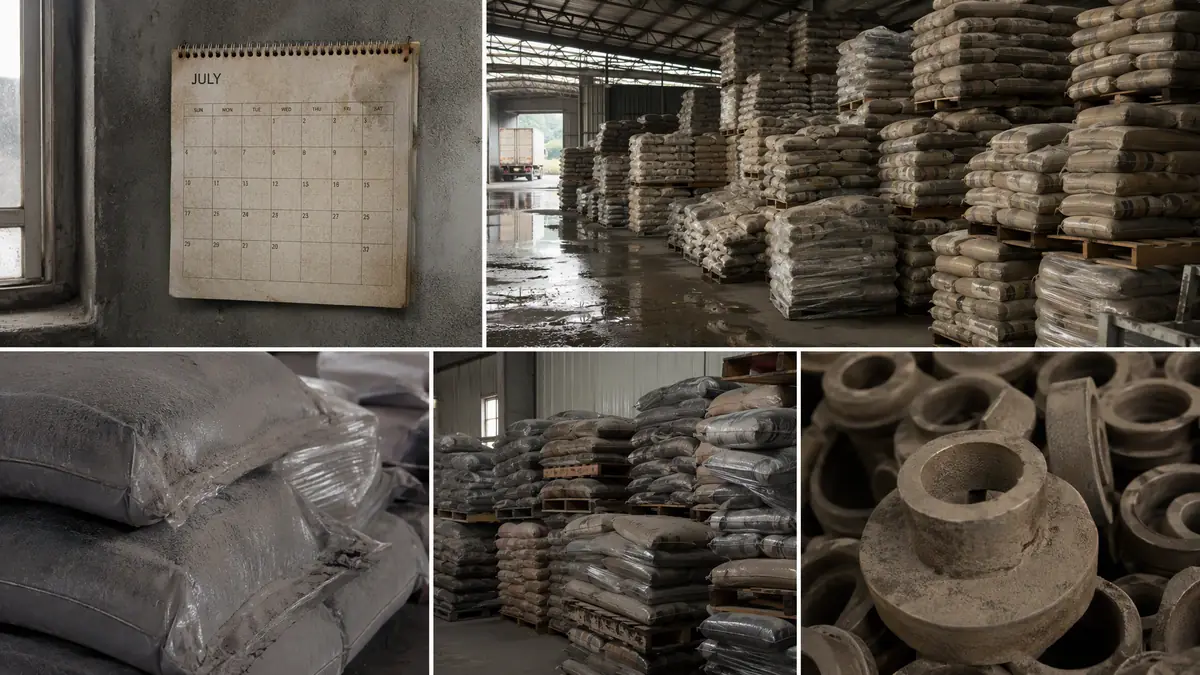
Treating a pre-monsoon buying spike as permanent growth leads to excess inventory that sits untouched through July and August, straining working capital.
An interior shot of a dimly lit industrial warehouse. Pallets of abrasive bags are stacked high and covered in dust, indicating they have been sitting idle for weeks. A wall calendar is open to the month of July. The scene represents a common planning mistake where pre-monsoon stockpiling leads to c
Even experienced buyers and distributors can misjudge monsoon demand. The most frequent errors include:
Mistaking Pre-Monsoon Buying for Growth
April and May often show elevated order volumes as contractors stockpile before the rains. Treating this as a permanent demand increase leads to excess inventory that sits through July and August. The correction: compare year-on-year quarterly patterns, not month-on-month spikes.
Ignoring Regional Variation
India's monsoon is not uniform. The southwest monsoon hits Kerala first in early June and progresses northward; the northeast monsoon affects Tamil Nadu and Andhra Pradesh from October to December. A single national inventory plan fails to capture these staggered patterns. Distributors serving multiple states benefit from region-specific stock allocation.
Overlooking Media Degradation in Storage
High humidity during the monsoon can cause clumping in moisture-sensitive abrasives, particularly finer garnet and aluminum oxide powders. Bags stored directly on concrete floors or in leak-prone godowns absorb moisture, leading to flow problems and customer complaints. The fix is straightforward: palletised storage, sealed packaging, and first-in-first-out rotation.
Delaying Post-Monsoon Restocking
The post-monsoon period — typically late September through November — sees a sharp rebound in outdoor blasting activity as projects rush to complete before year-end targets. Distributors who wait until demand is visibly back have already missed the restocking window. Lead times for imported garnet or specialty media can stretch to 4–8 weeks, meaning orders placed in August arrive for the September–October surge.
07 Practical Steps for Monsoon Inventory Planning
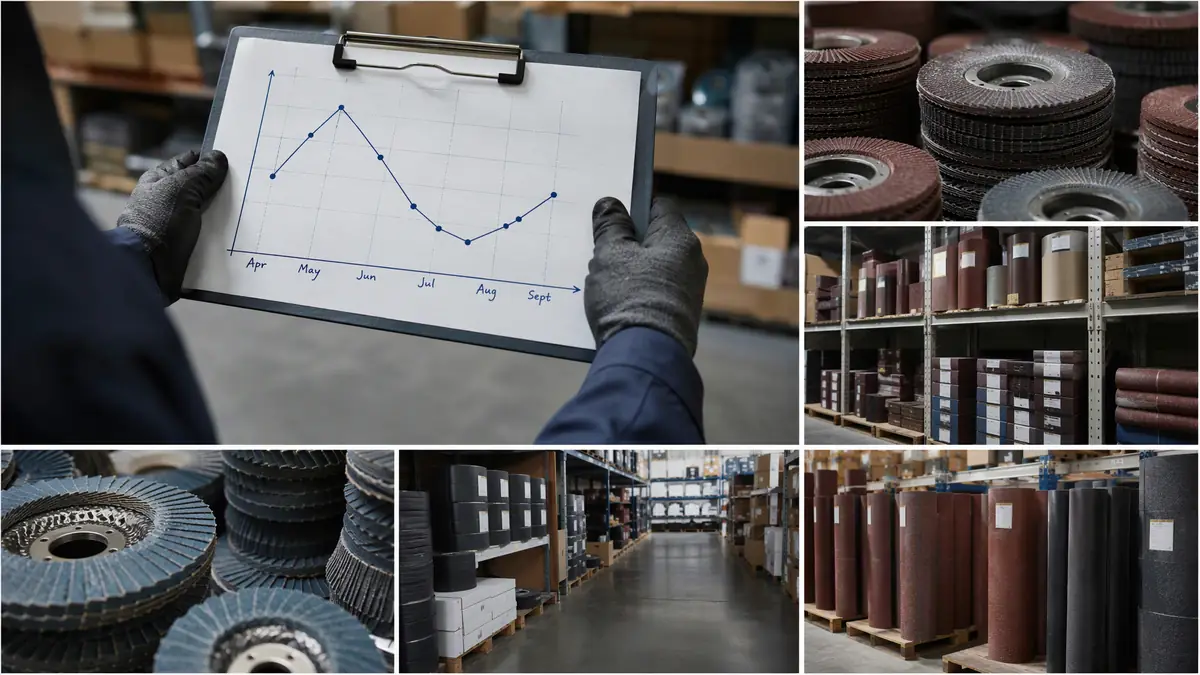
A practical monsoon plan starts with a simple seasonal baseline. Identifying the pre-monsoon peak and monsoon trough from past dispatch records guides stocking
A close-up industrial photograph. A worker's gloved hands hold a clipboard featuring a simple, hand-drawn chart with a seasonal demand curve showing a May peak and a July/August trough. The background is a softly focused warehouse with neatly organized shelves of abrasive products, connecting the pl
A workable monsoon plan does not require complex forecasting software. It does require disciplined observation and supplier coordination.
1. Segment Your Abrasive Inventory by Weather Exposure
Classify each media type and grade according to its likely monsoon demand pattern: high sensitivity, moderate sensitivity, or low sensitivity. This simple categorisation guides stocking levels without overcomplicating the process.
2. Build a Simple Seasonal Baseline
Using past sales data — even basic monthly dispatch records — establish the typical seasonal curve for each major abrasive category. Identify:
- The pre-monsoon peak month (often May)
- The trough month (often July or August)
- The post-monsoon recovery month (often October)
Even rough patterns are more useful than no pattern at all.
3. Align Procurement Lead Times with the Seasonal Calendar
For imported abrasives with 6–8 week lead times, the ordering calendar should run ahead of the demand calendar:
- Pre-monsoon buffer stock: Order by March for May delivery
- Monsoon lull: Reduce orders from May; use the period to clear older stock
- Post-monsoon restock: Order by August for October delivery
4. Communicate with Key Customers
Contractors and plant managers usually know their monsoon schedule months in advance. A brief conversation in March or April — "What does your blasting schedule look like through September?" — provides better demand signals than historical data alone. This is especially valuable for large-volume garnet and copper slag buyers.
5. Protect Stored Abrasives
Monsoon-specific storage practices prevent avoidable losses:
- Store abrasives on raised pallets, not directly on floors
- Inspect packaging integrity; reseal opened bags
- Keep finer mesh media in climate-controlled areas where possible
- Rotate stock to prevent ageing in humid conditions
08 Post-Monsoon Recovery: Preparing for the Rebound
The weeks immediately following the monsoon are often the busiest period of the year for abrasive suppliers. Outdoor projects restart, coating schedules compress, and demand can spike above pre-monsoon levels. Preparation during the quiet months determines whether a distributor captures this rebound or loses business to competitors with ready stock.
Key post-monsoon readiness checks:
- Confirm that reorder quantities are placed before the monsoon ends
- Verify that popular mesh sizes (typically 30/60 and 80 mesh for garnet) are adequately stocked
- Ensure logistics arrangements can handle the volume surge — transport availability also tightens post-monsoon
09 Conclusion
Monsoon demand planning for abrasives in India is not about complex algorithms — it is about recognising a predictable seasonal rhythm and aligning procurement, storage, and customer communication accordingly. Outdoor blasting media like garnet and copper slag see the steepest declines; indoor media like steel grit and aluminum oxide remain relatively stable. The real risk lies in mistaking pre-monsoon stockpiling for sustained growth and in delaying post-monsoon restocking until it is too late.
For distributors and plant buyers, the practical takeaway is straightforward: segment your inventory by weather sensitivity, build a simple seasonal baseline from your own dispatch data, and coordinate ordering timelines with both supplier lead times and customer project schedules. The monsoon will arrive every year — the only question is whether your stock levels are ready for it.
10 Frequently Asked Questions
Which abrasive media types are most affected by the Indian monsoon?
Abrasives used primarily for outdoor blasting, such as garnet sand and copper slag, see the sharpest demand drops during the monsoon. Indoor blasting media like steel grit, steel shot, and aluminum oxide are far less affected, though fine meshes can be sensitive to humidity. Glass beads and silicon carbide typically see minimal seasonal change.
How can I tell if a pre-monsoon order spike is real growth or just stockpiling?
Compare year-on-year quarterly sales patterns rather than focusing on month-on-month increases. A spike in April and May that is not supported by confirmed project schedules is often temporary buffer buying. This artificial demand usually leads to a lull during the actual rainy months, which can leave distributors overstocked if misinterpreted.
What is the biggest inventory planning mistake during the monsoon?
The most common error is delaying post-monsoon restocking until demand is visibly back. Since lead times for imported media can be 4–8 weeks, orders must be placed by August to arrive for the September–October surge. Waiting until October means missing the critical recovery window and losing business to better-prepared competitors.
How should I store abrasives to prevent damage during high humidity?
Store all abrasives on raised pallets, never directly on a concrete floor, and inspect bags for tears or poor sealing. For moisture-sensitive fine meshes like garnet or aluminum oxide powder, use climate-controlled storage if possible. Always practice first-in-first-out rotation to prevent product degradation from sitting in humid conditions.
Does the monsoon affect indoor shot blasting operations?
Indoor operations are largely weather-independent, but high ambient humidity can cause clumping in finer abrasive media, disrupting feed systems. Some shops may also reduce throughput if their upstream outdoor fabrication or site erection work slows down. Switching to coarser media temporarily is a common workaround.
When is the best time to order imported abrasives for the post-monsoon rebound?
For imported abrasives with 6–8 week lead times, place restocking orders by August to ensure delivery for the demand surge that typically begins in late September or October. This aligns your procurement calendar with the seasonal demand calendar, ensuring you have popular mesh sizes like 30/60 and 80 mesh garnet ready.
11 Solution
Review your current abrasive inventory against the seasonal patterns described above. If your garnet or copper slag stock levels do not reflect the approaching monsoon cycle, now is the time to adjust. For specific media grades, mesh sizes, or compatibility questions, explore the abrasive product range or contact SPA2Z for technical guidance and quotation support tailored to your regional requirements.
12 Get a quote
Get a quote
Tell us what you need. We reply within one business day.