Common Myths About Sand in Modern Industrial Blasting
Many newcomers entering the surface preparation industry still hear the term "sandblasting" and assume ordinary river or beach sand is the standard abrasive. Th...
Published
15 Nov 2021
Category
Abrasives
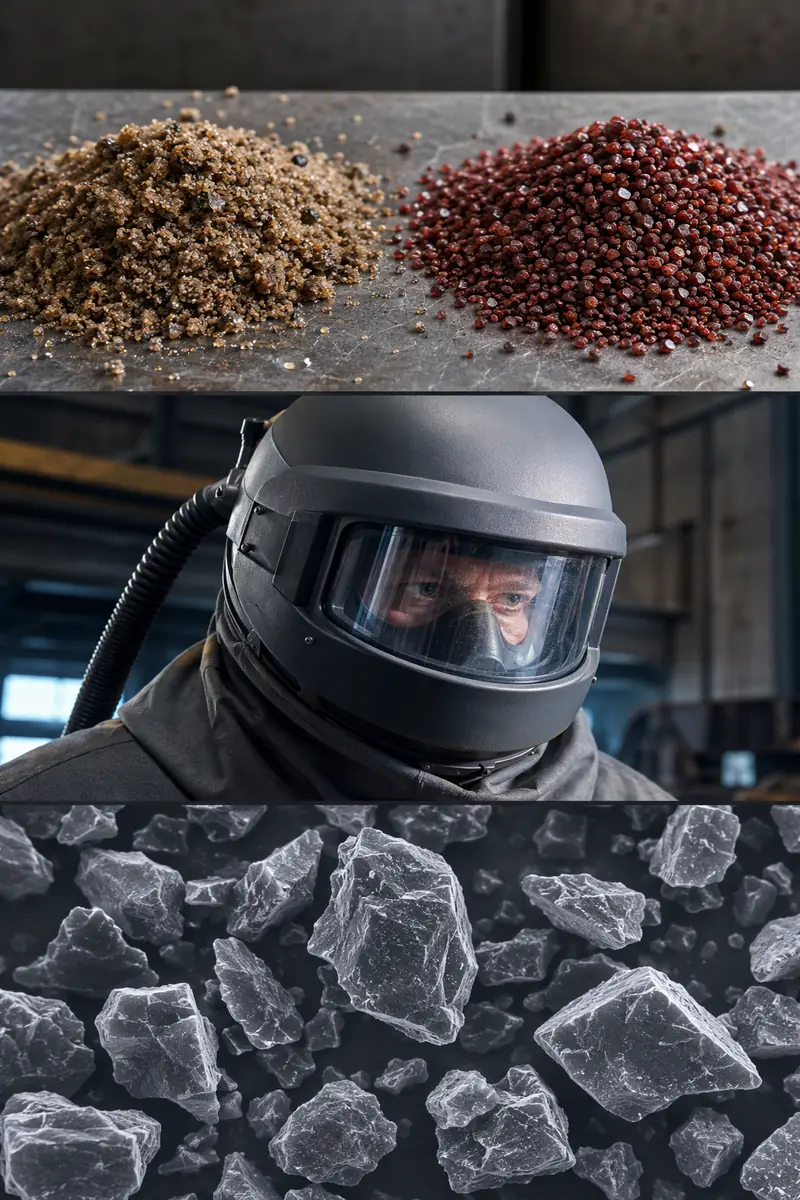
FIG. 01Modern industrial blasting has moved beyon...
A professional multi-panel editorial image for an article debunking sandblasting myths. The main panel contrasts ordinary silica sand with uniform garnet abrasive. Supporting panels show a modern blast helmet and a microscopic view of respirable crystalline silica dust, visually summarizing the safe
01 Introduction
Many newcomers entering the surface preparation industry still hear the term "sandblasting" and assume ordinary river or beach sand is the standard abrasive. That assumption is outdated and dangerous. This article separates fact from fiction so new…
02 Introduction
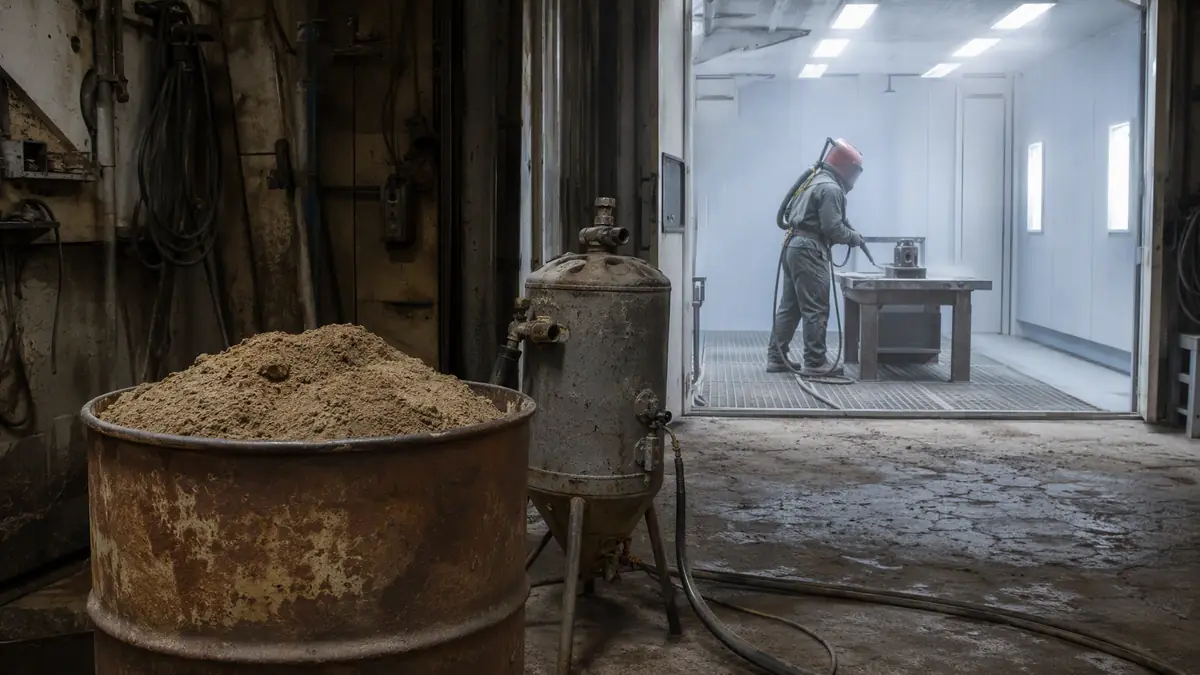
The term 'sandblasting' persists, but the dangerous practice of using ordinary river sand, shown here, is obsolete and illegal in professional settings.
A scene contrasting an unsafe, outdated blasting setup using a drum of river sand with a modern, well-lit, and safe industrial blasting booth visible in the background. The image visually defines the article's core theme of moving from dangerous myths to safe practices.
If you are new to industrial blasting, you have probably heard the term "sandblasting" used casually to describe almost any abrasive blast cleaning process. The name sticks, but the practice it implies is largely illegal and unsafe in professional settings. Several persistent myths keep dangerous, outdated methods alive in small workshops and informal operations. Understanding why silica sand was banned, what silicosis actually is, and which alternative abrasives perform better will help you build a safe, productive blasting operation from day one. This article addresses the most common misconceptions and gives you a clear, practical path toward selecting safer media.
03 Myth 1: "Sandblasting Still Uses Ordinary Sand"
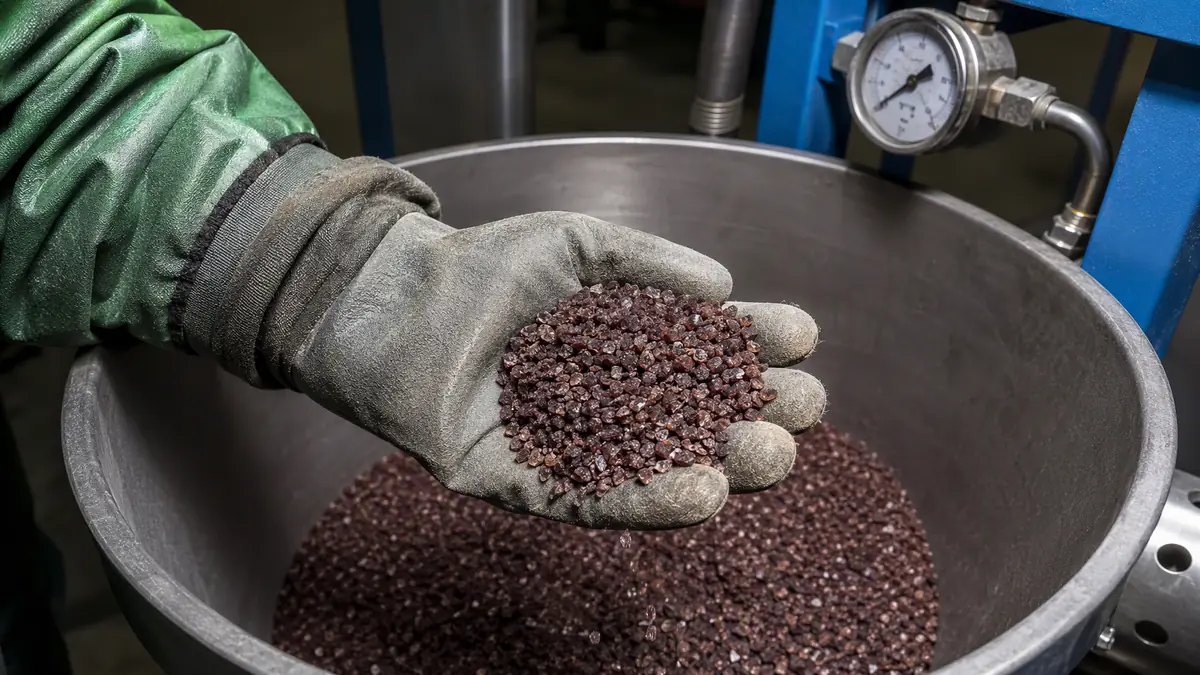
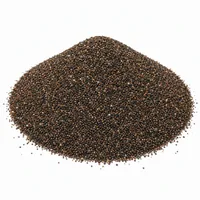
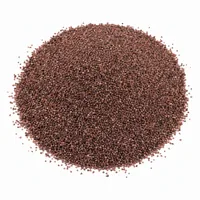
Modern 'sandblasting' uses engineered abrasives like garnet, not ordinary sand, as shown by the uniform, sharp particles in this blast pot.
A detailed close-up of a gloved hand holding high-quality red garnet abrasive inside a blast machine's hopper, visually debunking the myth that ordinary sand is the standard medium. The image emphasizes the engineered, sharp, and uniform nature of modern abrasives.
This is the most widespread and dangerous myth in the industry. In modern industrial blasting, ordinary silica sand is almost never used as a blast medium. The term "sandblasting" has become a generic label for abrasive blasting, but the material inside the blast pot today is typically aluminum oxide, garnet, steel grit, glass beads, or another engineered abrasive.
The confusion is understandable. Older equipment manuals, informal shop talk, and even some product listings still use "sandblasting" as a catch-all. However, any supplier or contractor who tells you that river sand or beach sand is a standard industrial abrasive is either misinformed or operating outside regulatory compliance. When you hear "sandblasting," think "abrasive blasting with a purpose-selected medium"—not literal sand.
04 Myth 2: "Silica Sand Is Banned Because It Doesn't Work Well"
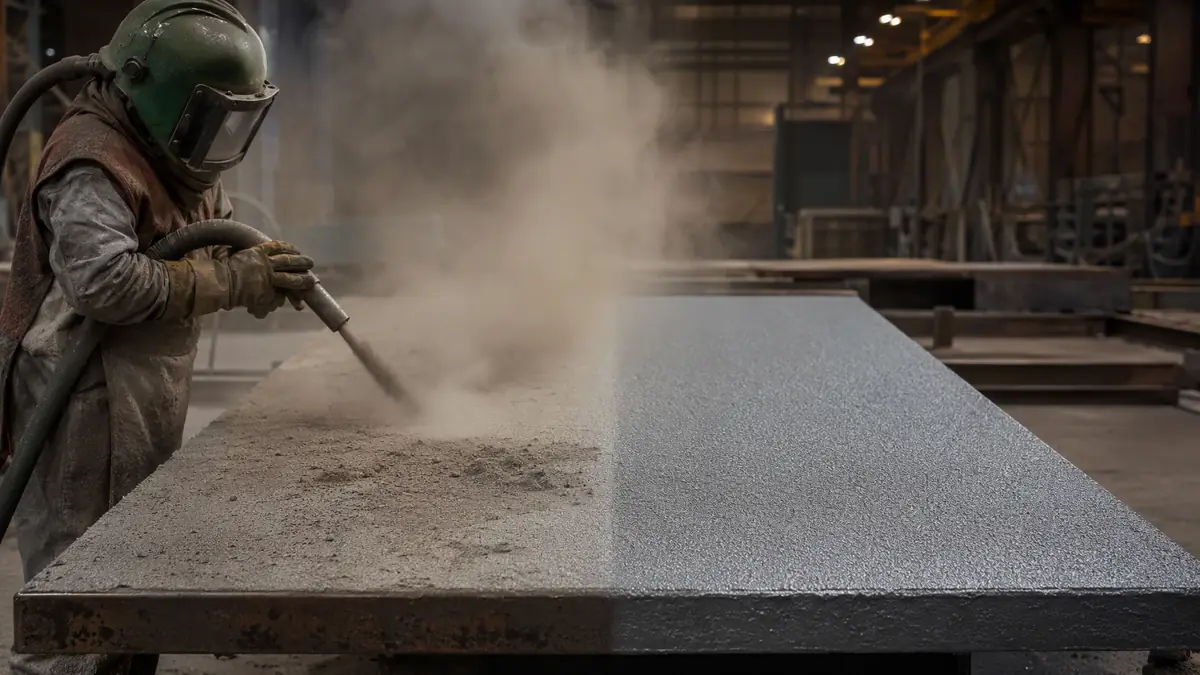
Silica sand (left) cuts but creates a hazardous dust cloud; its ban is due to the invisible health risk, not poor performance.
A split-scene on a single steel plate comparing the blasting results of silica sand and aluminum oxide. The silica sand side shows a cut surface but a massive dust cloud, while the aluminum oxide side is clean with minimal dust, illustrating that the ban is for safety, not performance.
Some newcomers believe silica sand was phased out because it is an inferior abrasive. That is not true. Silica sand cuts reasonably well on rust and mill scale, and it was once widely used precisely because it was cheap and readily available. The ban has nothing to do with performance and everything to do with worker safety.
The real reason silica sand is banned in most regulated industrial blasting operations is the health hazard it creates: respirable crystalline silica dust. When silica sand particles fracture against a steel surface at high velocity, they shatter into microscopic fragments that can be inhaled deep into the lungs. These particles are small enough to bypass the body's natural respiratory defences. Over time—sometimes after years of cumulative exposure—they cause silicosis, a progressive, irreversible, and potentially fatal lung disease.
Many countries, including India, have occupational safety regulations that prohibit or severely restrict the use of silica sand for dry abrasive blasting. Any blasting operation that still uses it exposes workers to serious long-term health risks and the business to significant legal liability. The ban is a safety measure, not a performance judgement.
05 Myth 3: "Silicosis Only Affects People Who Blast for Decades"
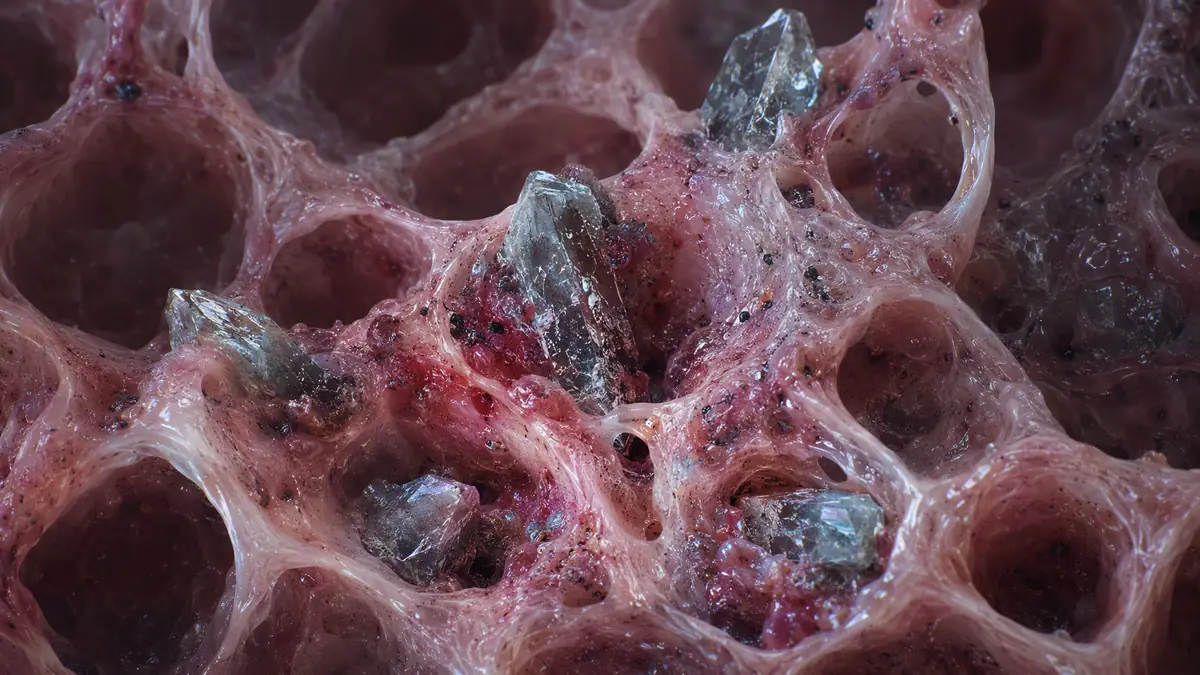
Acute silicosis can develop from short-term, high-level exposure, as these sharp silica particles cause immediate and irreversible lung scarring.
A photorealistic microscopic visualization of human lung alveoli damaged by embedded, sharp crystalline silica dust particles. The image shows inflammation and scarring to illustrate the danger of acute and accelerated silicosis from short-term exposure.
Silicosis is often described as a disease that develops after 15 or 20 years of exposure. While chronic silicosis does follow that timeline, the idea that short-term exposure is harmless is dangerously wrong.
There are three recognised forms of silicosis:
Chronic silicosis: develops after 10–30 years of low-to-moderate exposure.
Accelerated silicosis: can develop within 5–10 years of high-level exposure.
Acute silicosis: can develop within weeks or months of extremely high, concentrated exposure.
A new entrant working in a poorly ventilated blast room or inside a tank without proper air-fed respiratory protection could receive a damaging dose of silica dust in a surprisingly short period. The disease is not just a retirement-age problem for old-timers—it can affect anyone who breathes crystalline silica dust at hazardous concentrations, regardless of age or experience level.
The practical takeaway: do not assume you are safe because you are new or because you only blast occasionally. If the abrasive generates silica dust and you are not wearing appropriate respiratory protection, you are at risk.
06 Myth 4: "Wet Blasting or a Dust Mask Makes Silica Sand Safe"
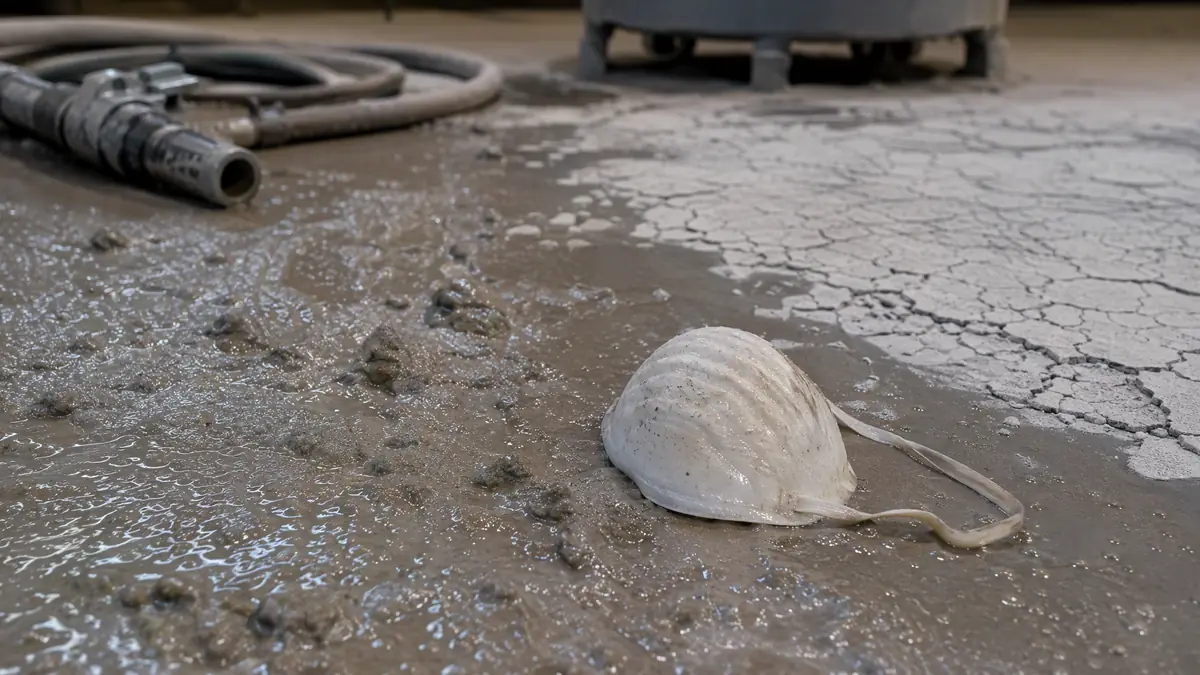
Wet methods only temporarily suppress silica dust; as the water evaporates, the hazardous respirable particles become airborne again, and a simple dust mask off
A post-blasting workshop scene showing a wet slurry of silica sand and a discarded disposable dust mask. Evaporating water reveals dried, cracked silica dust residue, visually debunking the myth that wet blasting or a basic mask makes the process safe.
Two variations of this myth circulate among budget-conscious operators.
The first claims that adding water to the blast stream—wet blasting or vapour blasting—eliminates the silica hazard. Water does suppress airborne dust significantly, which reduces the immediate visible cloud. However, it does not guarantee that respirable silica particles are kept below regulated exposure limits. Once the water evaporates, dried silica residue can still become airborne during cleanup or subsequent handling. Wet methods reduce risk but do not eliminate it, and they are not a regulatory loophole that makes silica sand permissible.
The second myth is that a standard disposable dust mask or a basic half-face respirator provides adequate protection. It does not. Silica dust particles are small enough to pass through or around poorly fitted nuisance dust masks. Abrasive blasting operations require a supplied-air respirator (an air-fed blast helmet) that delivers clean breathing air to the operator. A disposable mask is not a substitute for proper respiratory protective equipment in any blasting environment.
07 Myth 5: "All Alternative Abrasives Are Expensive and Hard to Find"
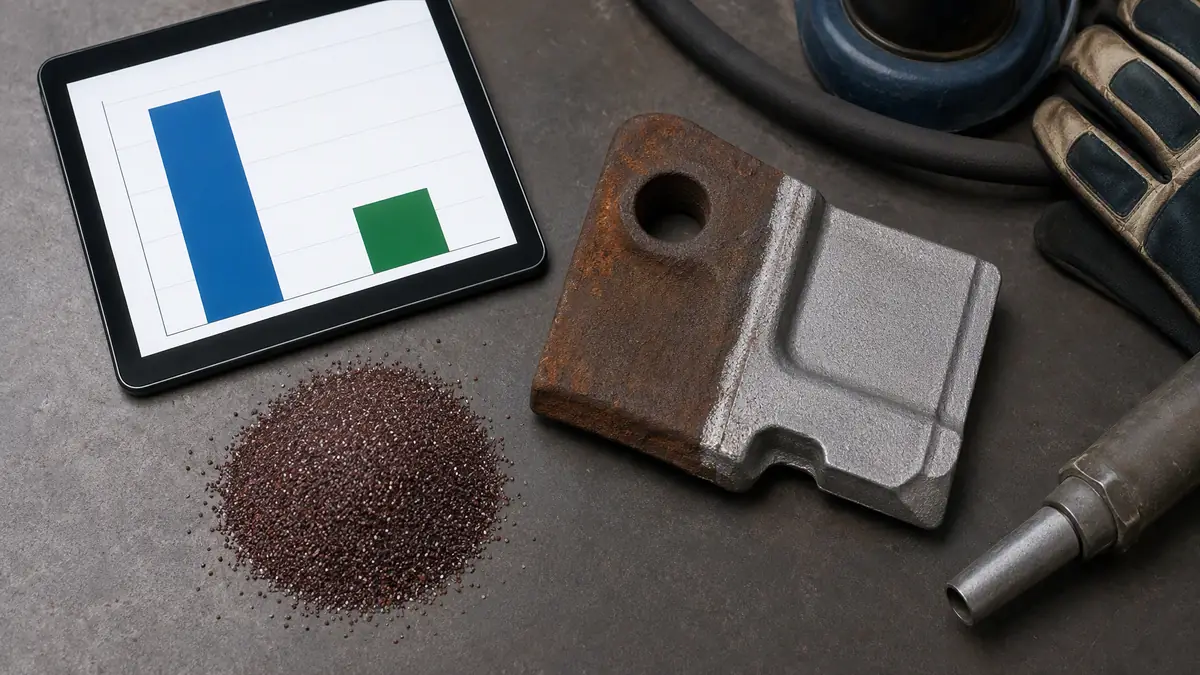
Though the upfront cost is higher, engineered abrasives like garnet are more economical per square meter due to reusability and faster cutting speeds.
A flat lay on a workbench featuring a pile of garnet abrasive, a partially cleaned rusted steel part, and a tablet displaying a cost-per-square-meter comparison graph. The graph shows garnet as more cost-effective than single-use silica sand, debunking the myth of high cost.
New entrants sometimes hear that switching away from silica sand means accepting dramatically higher abrasive costs. This is an oversimplification that ignores how abrasive blasting economics actually work.
Yes, the upfront purchase price of a 25 kg bag of aluminum oxide or garnet is higher than a bucket of river sand. But abrasive cost per square metre of cleaned surface is a different calculation. Engineered abrasives like garnet and aluminum oxide offer:
Higher hardness and faster cutting speeds, reducing labour hours and compressed air consumption.
Lower friability (they fracture less on impact), meaning less dust and better visibility during blasting.
Recyclability: some media, particularly steel grit and aluminum oxide, can be recovered, screened, and reused multiple times, dramatically lowering the effective cost per cycle.
When you factor in productivity gains, reduced cleanup time, lower dust extraction load, and the ability to reuse media, the cost gap narrows considerably. In many applications, a "more expensive" abrasive actually delivers a lower total cost per component cleaned.
Availability is also less of a barrier than many assume. Industrial abrasive suppliers—including distributors serving the Indian market—stock garnet, aluminum oxide, steel grit, glass beads, copper slag, and silicon carbide in standard grit sizes. These are not exotic materials; they are the everyday inventory of any serious abrasive supplier.
08 What Abrasives Are Used Instead of Silica Sand?
If you are setting up a blasting operation or specifying media for the first time, here are the most common alternatives to silica sand and where they fit:
Abrasive
Typical Applications
Key Characteristics
Recyclable?
Garnet
Structural steel, shipyards, pipelines, general rust and coating removal
Natural mineral; sharp, angular particles; low dust; good for achieving surface profile
Limited (2–5 cycles depending on grit size and pressure)
Aluminum Oxide
Precision work, hard metals, turbine blades, surface preparation before thermal spray
Synthetic; very hard and durable; aggressive cut; available in multiple grits
Yes (multiple cycles)
Steel Grit
Heavy rust, mill scale, foundry castings, shot blasting machines
Angular metallic particles; high impact energy; leaves an anchor profile ideal for coatings
Yes (highly recyclable)
Steel Shot
Peening, descaling, blast cleaning in wheel-type machines
Spherical metallic particles; smooth finish; strengthens surfaces through peening
Yes (highly recyclable)
Copper Slag
Open blasting of steel, ship hulls, tanks
By-product of copper smelting; sharp and angular; lower cost than garnet; moderate dust
Spherical; non-aggressive; leaves a bright, satin finish; does not remove base metal
Yes (multiple cycles at lower pressures)
This table is a starting point. The correct choice depends on your substrate material, the coating you need to remove, the surface profile your primer or coating system requires, and your blasting equipment type (pressure pot, suction cabinet, or wheel-type shot blast machine). Always confirm compatibility with your abrasive supplier and, where applicable, against the coating manufacturer's surface preparation specification.
09 How to Move Away from Unsafe Practices
If you are entering the industry or taking over an existing blasting operation, here is a practical sequence to ensure you are working safely and productively:
Audit what is currently in the blast pot. If it is silica sand, stop using it immediately and dispose of any remaining stock in accordance with local hazardous material guidelines.
Identify your most common blasting jobs. Substrate type, coating type, required surface profile, and production rate will point you toward the right alternative abrasive category.
Request samples or small trial quantities. Most industrial abrasive suppliers can provide sample bags so you can test cut rate, dust generation, and finish quality on your actual workpieces before committing to bulk orders.
Verify your respiratory protection. Ensure every operator has an air-fed blast helmet with a clean, filtered air supply. Check that the air source is not drawing from a contaminated area.
Check your dust extraction and containment. Even with silica-free abrasives, blasting generates dust that can contain heavy metals from coatings or substrate particles. Proper ventilation, dust collection, and containment are essential regardless of media choice.
Train your team on the "why." Operators who understand silicosis and the regulatory reasons behind abrasive selection are far more likely to follow safe practices than those who are simply told to use a different material.
10 Conclusion
The term "sandblasting" has outlived the material it describes. In modern industrial practice, silica sand is banned for dry blasting because it causes silicosis—not because it is ineffective. The myths that persist around sand use are not harmless traditions; they put workers at risk and expose businesses to serious liability. Safer, high-performance alternatives like garnet, aluminum oxide, and steel grit are readily available and often deliver better productivity and lower total cost when measured properly. For anyone entering the surface preparation industry, the single most important first step is understanding that "sandblasting" does not mean blasting with sand—and acting on that knowledge from day one.
11 Frequently Asked Questions
Is it true that industrial sandblasting still uses ordinary river sand?
No, that is a dangerous myth. Modern industrial blasting almost never uses ordinary silica sand. The term 'sandblasting' is a generic label, but the actual media used are engineered abrasives like aluminum oxide, garnet, or steel grit. Any supplier recommending river sand is likely operating outside safety regulations.
Why was silica sand actually banned for blasting?
Silica sand was banned due to the severe health hazard it creates, not because of poor performance. When it fractures on impact, it produces respirable crystalline silica dust that can cause silicosis, a progressive and potentially fatal lung disease. The ban is a critical worker safety measure enforced by occupational safety regulations.
Can I get silicosis from just a few months of blasting with sand?
Yes, you can. While chronic silicosis takes years, acute silicosis can develop from extremely high exposure in just weeks or months. New entrants working without proper air-fed respiratory protection in confined spaces are at immediate risk, not just after a decades-long career.
Does adding water to the blast nozzle make silica sand safe to use?
No, wet blasting only reduces the visible dust cloud; it does not eliminate the hazard. Respirable silica particles can still become airborne when the water evaporates during cleanup. Wet methods are a risk reduction, not a regulatory loophole, and do not make silica sand permissible.
Are engineered abrasives like garnet or aluminum oxide too expensive for a small shop?
Not when you calculate the total cost. While the upfront bag price is higher, engineered abrasives cut faster, create less dust, and many can be recycled multiple times. This often results in a lower cost per square meter cleaned compared to single-use silica sand when you factor in labor and cleanup time.
What is the most common direct replacement for silica sand in general blasting?
Garnet is often the most common direct replacement for structural steel and general coating removal. It is a natural, sharp, angular mineral that produces low dust and creates a good surface profile. Copper slag is another lower-cost alternative, though it breaks down faster than garnet.
What is the first step I should take to stop using unsafe blasting practices?
Immediately audit what is in your blast pot. If it is silica sand, stop using it right away and dispose of it safely. Then, identify your most common blasting jobs to determine the right alternative abrasive based on your substrate and required surface profile.
12 Solution
Now that you have a clear picture of which myths to leave behind and which abrasives belong in a modern blasting operation, the logical next step is to match the right media to your specific application. Explore the abrasive product range available for industrial blasting—including aluminum oxide, garnet, and other proven alternatives—and compare specifications against your surface preparation requirements. If you need help confirming compatibility or want to discuss trial quantities, reach out to the SPA2Z team for technical guidance and a quotation.
13 Get a quote
Get a quote
Tell us what you need. We reply within one business day.